Main line backups
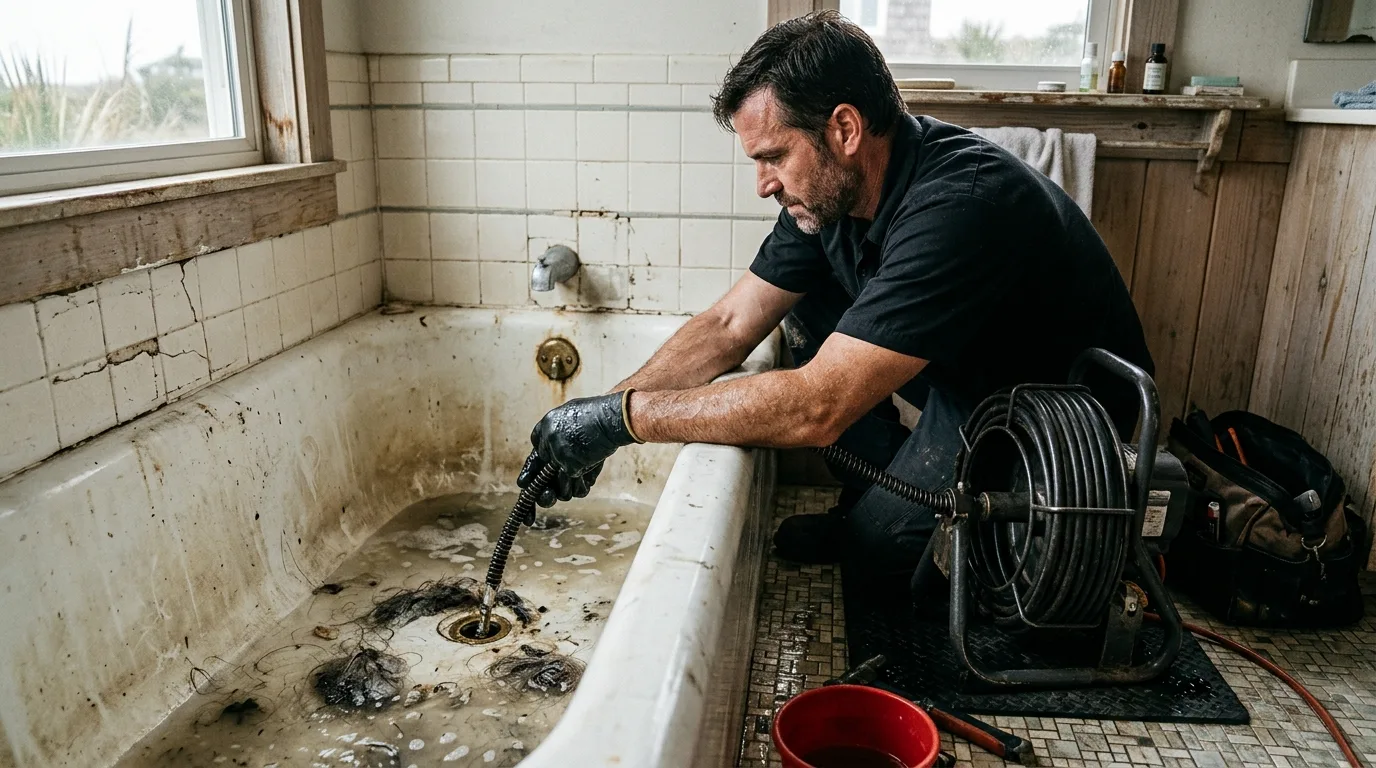
Roots in clay laterals under old street trees. Usually presents as water rising in the lowest shower in the house.
Pier, Main Street, the numbered streets
Downtown mixes 1920s cottages, 1980s infill, four-story mixed-use and a dense strip of restaurants. Almost nothing here is standard, and the plumbing reflects it.
Downtown call: 657-337-7830
Parking and event closures around Main Street affect arrival times. We will give you a realistic window, not an optimistic one.
Summer weekends, US Open week and Main Street closures change routing. Timing estimates account for it.
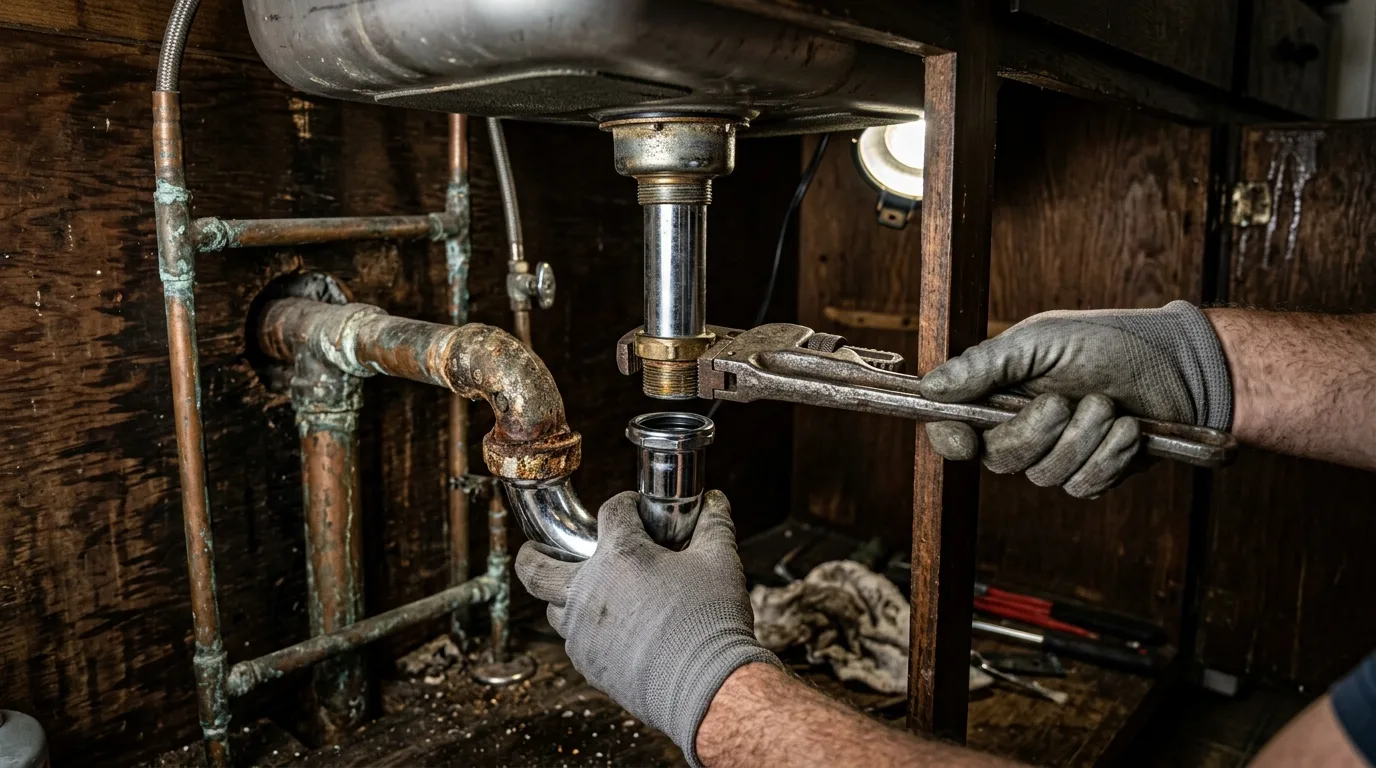
Galvanized supply, cast iron waste and mixed-era remodels. The three things that make Downtown jobs unpredictable.
Two blocks from the sand, exterior fittings and gas risers corrode faster than anywhere inland.
Short-term rentals near the pier generate the clogs and overflows nobody living there would cause.
On the ground
The area bounded roughly by Goldenwest, Yorktown, Beach and the ocean holds the city’s widest span of construction dates on the smallest lots. A plumber working the numbered streets between PCH and Palm can go from a 1924 bungalow to a 2016 three-story in the same afternoon, and the failures are completely different.
Galvanized supply lines. The genuinely old housing here: the cottages on the numbered streets, the small lots behind Main: often still runs galvanized steel. It scales from the inside until pressure drops room by room, and the transitions where someone spliced copper in during a 1970s remodel corrode from within. That is repiping territory rather than patch-and-hope.
Cast iron and clay drainage. Original waste lines are cast iron inside and clay out to the street, under mature street trees. Root intrusion at clay joints is the classic Downtown weekend backup, and it responds to cabling in the short term and lining in the long term.
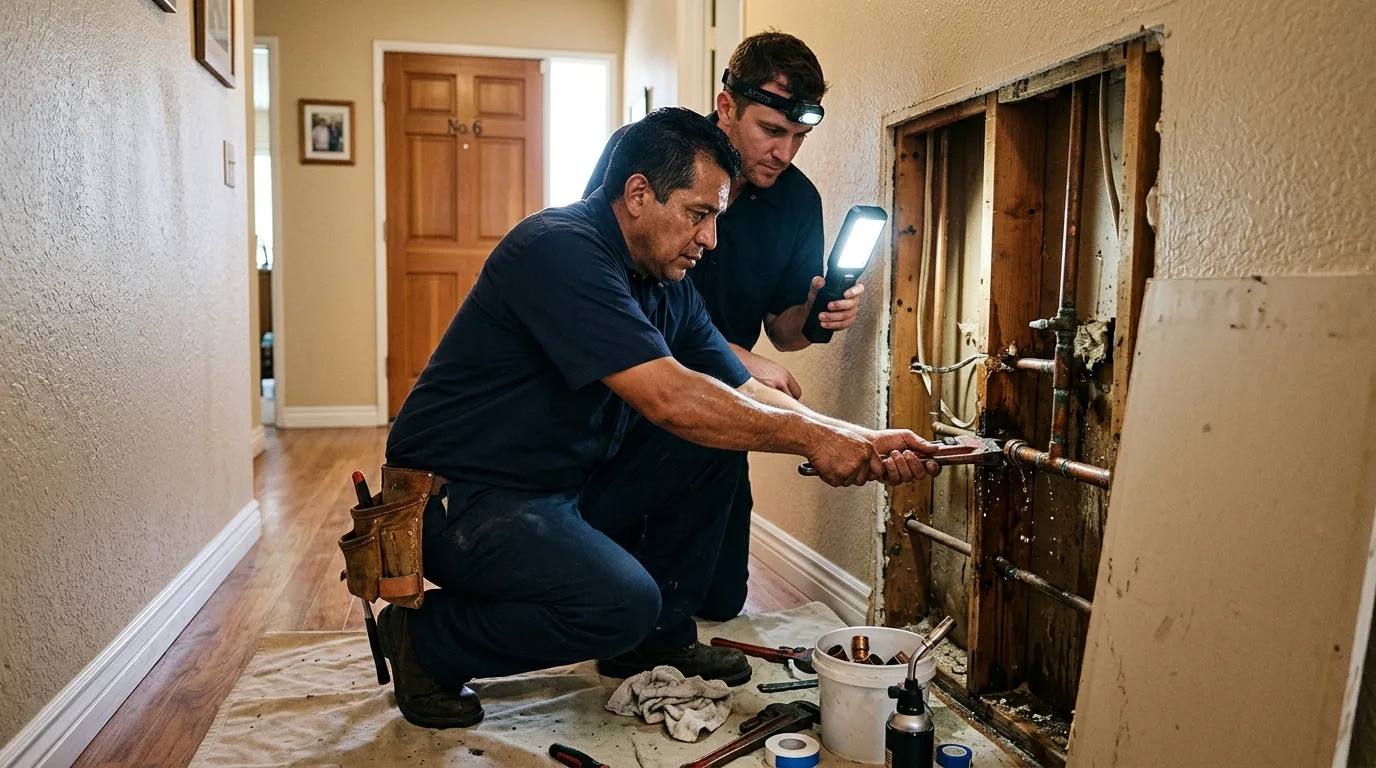
Remodel archaeology. Almost every older Downtown property has been added to. Second stories, converted garages, ADUs over alleys and kitchens moved to the other side of the house all leave junctions between eras, and those junctions are where leaks start.
Restaurant grease. The Main Street and PCH restaurant density means grease lines and interceptors that need scheduled jetting, not emergency cabling at 7 p.m. on a Saturday. That work belongs on a calendar. See commercial plumbing.
Vacation-rental abuse. Wipes, paper towels, sand and things that were never going down a drain. Changeover days concentrate it.
Salt-air corrosion. Hose bibs, outdoor showers, gas risers at the meter and exterior copper all age visibly faster this close to the water. A corroded riser is one of the most common findings on a Downtown safety check.
The numbered streets from 1st through 23rd between PCH and Palm. Main Street and the blocks either side of it. Lake Street and the older grid toward Yorktown. Delaware and the corridor up to Adams. The Walnut, Olive, Orange and Acacia rows behind Main. Pacific Coast Highway frontage between Goldenwest and Beach. The alley-loaded lots that make access its own conversation.
This is the part of the city where honesty about arrival matters most. Summer weekends, the Fourth of July, the US Open of Surfing, car shows and Main Street closures all change how long a van takes to reach a driveway that may not exist. Alley access, permit-only blocks and narrow lots mean equipment sometimes has to be carried in.
None of that changes the work. It changes the estimate, and you should get a real one on the phone rather than a hopeful one.
Newer Downtown construction puts residential over retail and stacks units against each other. Shared stacks and common-area lines mean part of the plumbing may not be yours, and a leak reaching a neighbour turns a small repair into an insurance conversation. A camera and the property documents usually settle where responsibility sits.
Calling from Downtown
Naming the nearest numbered street and whether access is alley or front tells the dispatcher more about timing than a postcode.
Cottage, condo over retail, restaurant or short-term rental. Each changes who authorizes work and what equipment comes.
Event closures and summer traffic get factored in before you are given a time, not explained afterwards.
On pre-war plumbing the plumber checks what the failure says about the rest of the system, rather than only patching the symptom.
24/7 for active leaks and backups Downtown.
Most requested here
Roots in clay laterals under old street trees. Usually presents as water rising in the lowest shower in the house.
Galvanized supply lines with dropping pressure and rust-tinted hot water. The most common large job in the old grid.
Overflowing toilets and burst supply lines in rentals, often reported by a guest rather than an owner.
Scheduled grease line service for Main Street and PCH kitchens, timed outside trading hours.
Corroded exterior risers and appliance connectors two blocks from the salt spray.
Buying a Downtown property is exactly when you want to see the lateral before closing.
Old house, new build or a restaurant. Say which and we will route accordingly.
Where we send plumbers
Downtown work often runs into the neighborhoods either side of it: the Goldenwest corridor, Seacliff above Yorktown, and the beach-adjacent condo communities south along PCH.
Straight answers
Slower than a weekday, honestly. Main Street closures, event traffic and beach parking all affect it, and anyone promising twenty minutes on a July Saturday is guessing.
You will get a realistic window on the phone. For an active leak, shutting the main while you wait matters more than the exact arrival time.
On the genuinely old housing stock here, the usual answer is galvanized supply piping that has scaled internally over decades. The bore narrows and every fixture suffers.
Testing static pressure separates that from a failed pressure regulator or a leaking service line. If it is the pipe, repiping is the fix that lasts.
Usually it is your lateral (the private line from the house to the main) and in Downtown that line is often clay under mature street trees. Roots enter at the joints and catch everything.
A camera run settles it and shows whether the defect sits on your side of the connection. If the public main is the problem, that footage is what makes reporting it to the city productive.
Constantly. Clogged toilets, jammed disposals and overflowing fixtures spike on changeover days, and guests report problems that owners never see.
Tell us on the phone who authorizes the work: owner, property manager or guest: because that is the step that otherwise stalls a job on arrival.
That is the intention. Grease line jetting and interceptor work are scheduled outside trading hours wherever the job allows: early mornings, late nights or a closed day.
Reactive cabling mid-service is the expensive version of this. A maintenance interval is cheaper and far less disruptive.
It is a consideration rather than a problem. Alley-loaded lots and narrow Downtown driveways sometimes mean equipment is carried in rather than driven up.
Mention the access when you call. It affects which pro and which van get assigned, and it is better known in advance.
Because you are a couple of blocks from the ocean. Hose bibs, outdoor showers, exterior copper and gas risers all weather far faster here than inland.
Specifying solid brass or marine-grade hardware for exterior work is worth the premium this close to the sand. Cheap plated fittings will look decades old within a couple of years.
The sewer lateral, first. It is the most expensive thing on the property that a standard home inspection does not look at, and Downtown has the oldest laterals in the city.
After that: supply pipe material, water heater age and code compliance, and whether past remodels were permitted. A camera inspection before closing is the highest-value check available.
That depends on the building and the association documents. Shared stacks and common-area lines are frequently not the unit owner’s responsibility, while everything inside the unit generally is.
A plumber can establish the physical boundary with a camera. Any approval your HOA or building management requires is between you and them.
Yes. The phone is staffed around the clock, and active leaks, sewage backups and total water loss are treated as urgent whatever the hour.
If the water is already shut off and the loss contained, ask about a daytime slot. It is usually cheaper than after-hours dispatch.
The dispatcher knows the difference between 5th Street and Brookhurst.
Downtown
Give us the cross streets, the age of the building and what it is doing. We will route someone who works these blocks.
Serving every Huntington Beach neighborhood, plus the cities next door.