Fixture count
Bathrooms, kitchen, laundry, hose bibs and any ADU. More fixtures means more runs, more terminations and more testing.
Copper or PEX • Whole system
Three leaks in two years is not bad luck. It is a supply system telling you what it has left. Repiping ends the cycle instead of moving it a few feet down the same pipe.
Leaking again? 657-337-7830
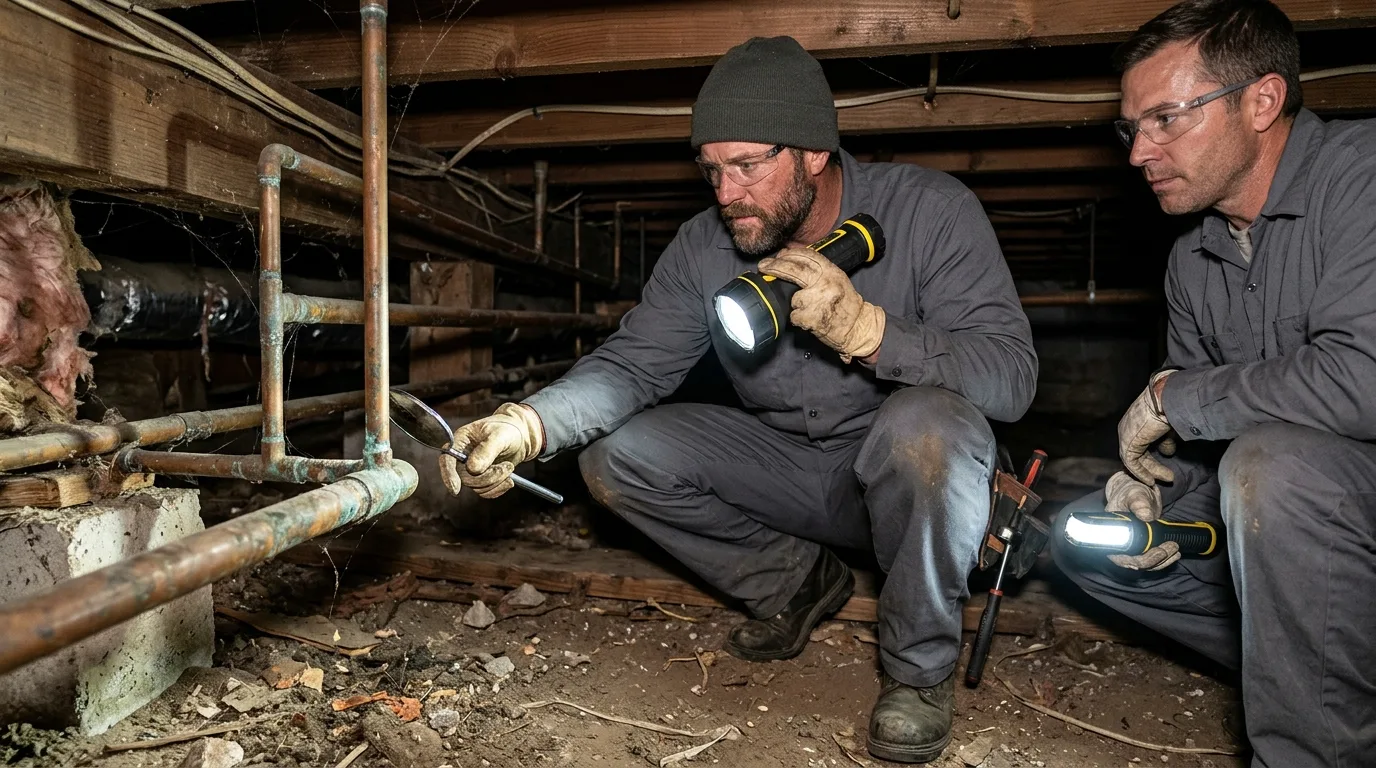
Ask the plumber to cut a short section out and show you the inside. That single look decides most repipe conversations.
The right material for each part of the system, explained rather than dictated by what is on the truck.
Where walls are opened is mapped before work starts, and openings are kept small and square.
Regulator, expansion control and static pressure are corrected so new pipe is not abused from day one.
Fixture count, access, materials, permit and testing in a single agreed price.
The signals
Repiping is a significant project and it should not be the first suggestion anyone makes. These are the conditions where it genuinely is the cheaper path:
If none of these apply, a targeted repair is the right answer, and anyone pushing a repipe should be asked to show you the evidence in the pipe itself.
Materials
Rigid, long-proven, dimensionally stable, unaffected by UV, and tolerant of high temperature. It is the material inspectors and long-term owners often prefer, and it is the sensible choice for exposed runs, stub-outs and anywhere the pipe may take physical knocks. The downsides are cost, installation time, more joints inside walls, and the fact that pitting corrosion in aggressive or hard water is precisely the failure mode that brought you here.
Flexible, fast to install with long continuous runs and far fewer concealed joints, freeze-tolerant, quieter, cheaper, and immune to pitting. It needs UV protection, correct support, and quality fittings installed properly. The failures you read about are almost always fitting or installation failures rather than the tubing. Home-run manifold layouts also give you a shutoff per fixture, which is genuinely useful.
A hybrid: PEX for concealed distribution through walls and attic, copper stub-outs at fixtures, copper where runs are exposed in a garage, and a manifold or trunk-and-branch layout chosen to suit the house. That combination gets you PEX’s installation advantages with copper where durability and appearance matter.
Neither material fixes high pressure. If static pressure is running above roughly 80 psi, a regulator and expansion control belong in the same project, or the new system starts its life under the same stress that shortened the old one.
Walk and plan. Every fixture is counted, routes are chosen through attic and walls, and access points are marked. On a slab home with no attic access over part of the plan, routing gets creative and the plan matters even more.
Protect and open. Floors and furnishings are covered, and drywall is opened only where the plan requires: small, square, and in predictable places rather than wherever is convenient.
Install and test. New distribution is run, tied in, and pressure tested before anything closes. Inspection happens with the walls still open, which is the whole point of pulling a permit.
Close and finish. Drywall patching, texture and paint are usually a separate trade, and matching an existing texture is real work. Some repipe contractors include patching; many include drywall but not paint. Get this explicitly in writing. It is the largest source of disappointment on repipe jobs.
Most repipes on an average local home run a few days. Water is off during working hours and restored each evening in most cases. Expect dust, noise, and people in most rooms of the house at some point.
For rentals and short-term rental properties, scheduling between bookings is worth planning around. A repipe is not a job to run with guests in the building.
Repiping is permitted and inspected. Keep the permit, the inspection record and the material documentation together; a documented repipe is a genuine selling point on a fifty-year-old house, and buyers’ inspectors ask.

Project sequence
Pipe material identified, pressure tested, and a section cut where practical so you can see the inside before committing.
Fixture count, routing plan, materials, access points, permit, testing and what happens to the drywall: all in writing.
New distribution run and pressure tested, then inspected while the walls are still open.
Openings closed per the agreed scope, fixtures flushed and checked, and the paperwork handed over for your records.
Assessment first: plenty of houses turn out to need a repair instead.
Cost drivers
Bathrooms, kitchen, laundry, hose bibs and any ADU. More fixtures means more runs, more terminations and more testing.
A single-story home with attic access is the easy case. Two stories, no attic over part of the plan, or plaster and lath make it harder.
Copper costs more in material and labor than PEX. A hybrid layout sits in between and is what most local jobs use.
Rerouting overhead to abandon under-slab lines changes the layout and the number of wall openings.
Patch only, patch and texture, or patch, texture and paint. Three different numbers: agree which one you are buying.
Pressure regulator, expansion tank, new angle stops, hose bibs and shutoffs cost far less inside the project than after it.
A repipe quote without a drywall clause is an incomplete quote.
Related work
Where we send plumbers
Galvanized supply lines are still in service across Downtown Huntington Beach, Oak View and parts of Goldenwest, while pinholed copper shows up throughout the postwar tracts along Adams, Garfield and Brookhurst, plus the cities listed below.
Straight answers
Most average single-family homes here run a few days from first opening to final testing, with water restored each evening in most cases.
Larger houses, two-story layouts, plaster walls or extensive rerouting extend that. Drywall finishing and painting happen after the plumbing and add their own days.
Almost everyone does. Water is off during working hours and back on for the evening in most cases, and the crew works room by room.
Expect dust, noise and access to most of the house. If someone in the household works from home or sleeps during the day, plan for that specifically.
For concealed distribution, PEX has real advantages: fewer joints, faster installation, no pitting failure mode, and a shutoff per fixture with a manifold layout. For exposed runs and stub-outs, copper is the better choice.
Most good local repipes use both. Be sceptical of anyone who insists one material is universally correct without discussing your house.
No, but they will be opened in planned places: typically small, square openings at fixture walls, corners and route changes. A good crew keeps them minimal and predictable.
What matters is the finish scope. Establish in writing whether the quote includes patching only, patching and texture, or full paint.
No. A repipe replaces pressurized supply piping. Drain, waste and vent piping is a separate system with separate failure modes. That work sits under sewer and drain services.
If both are aging, it is worth asking about sequencing. Some access work can serve both and save money.
On a galvanized house, usually dramatically. You are replacing pipe whose internal diameter has been shrinking for fifty years.
On a copper house with pinholes, pressure may already be fine, and the benefit is reliability rather than flow. A plumber should tell you which outcome to expect.
Yes, and you want one. The inspection happens while walls are open, which is the only time anyone can verify what was actually installed.
Keep the permit and inspection record. A documented repipe is a real asset when selling an older home.
Often yes, on a home with galvanized pipe or a leak history, because buyers and their inspectors price that risk aggressively: usually higher than the job costs.
If you are selling immediately, discuss it with your agent. Sometimes a credit is cleaner than a project; sometimes the project sells the house.
Yes, though shared walls, common-area piping and association rules complicate it. Some of the plumbing may not be yours to replace.
The plumber can establish the boundary, but any approval your HOA requires, and there usually is one: is between you and the association.
Concealed sections are generally abandoned in place, capped and isolated, because removing them would mean opening far more wall for no benefit. Accessible sections are usually removed.
Ask the plumber to keep a cut piece of the old pipe. Seeing the inside of it is the clearest confirmation you spent the money for a reason.
Many houses need a repair. We will say so when that is the case.
Third leak this year
Tell us the age of the house, the pipe material if you know it, and how many leaks you have had. That is enough to know whether an assessment is worth booking.
Serving every Huntington Beach neighborhood, plus the cities next door.