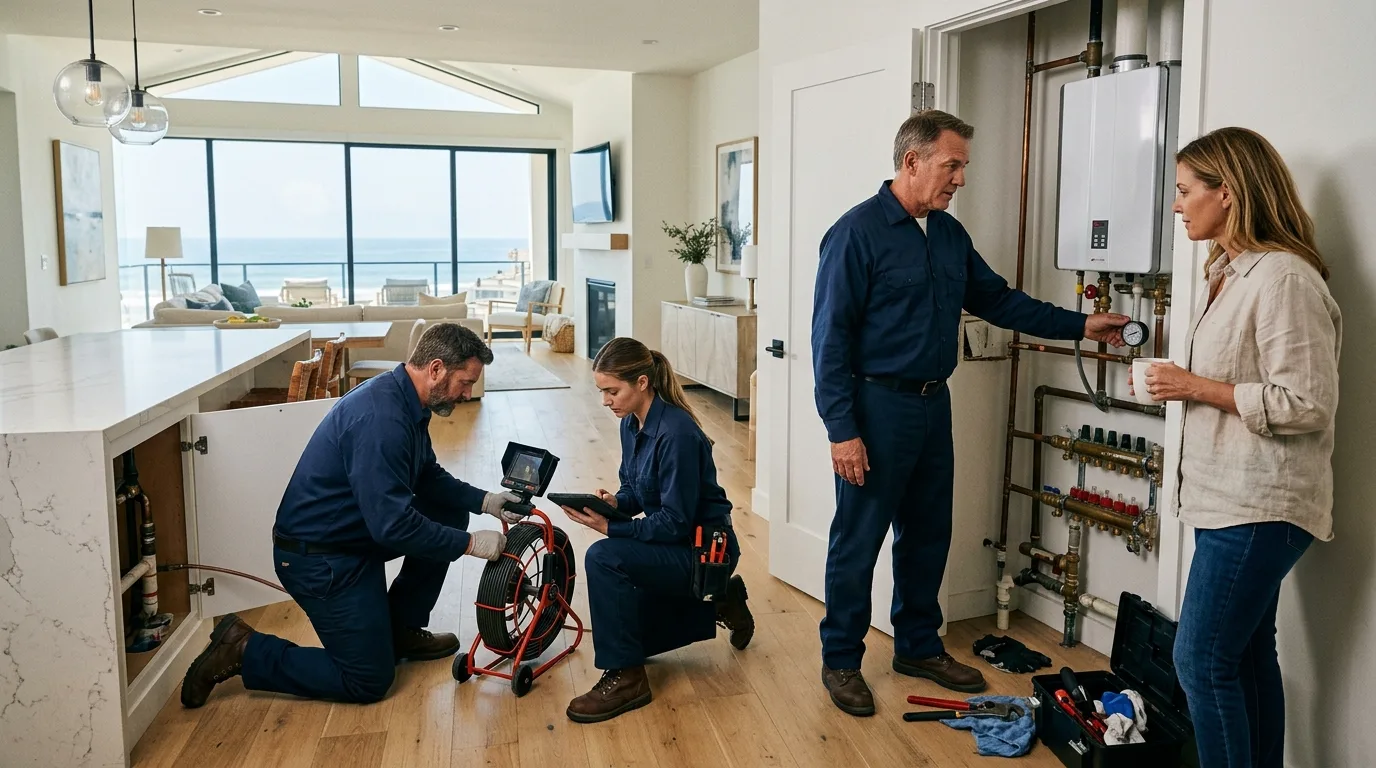
The 80 psi question
Water pressure regulator service in Huntington Beach: the cheapest way to protect everything else
High static pressure quietly destroys pipes, water heaters, supply hoses and fixture cartridges. A gauge on a hose bib settles it in two minutes.
Pressure feels strong? 657-337-7830
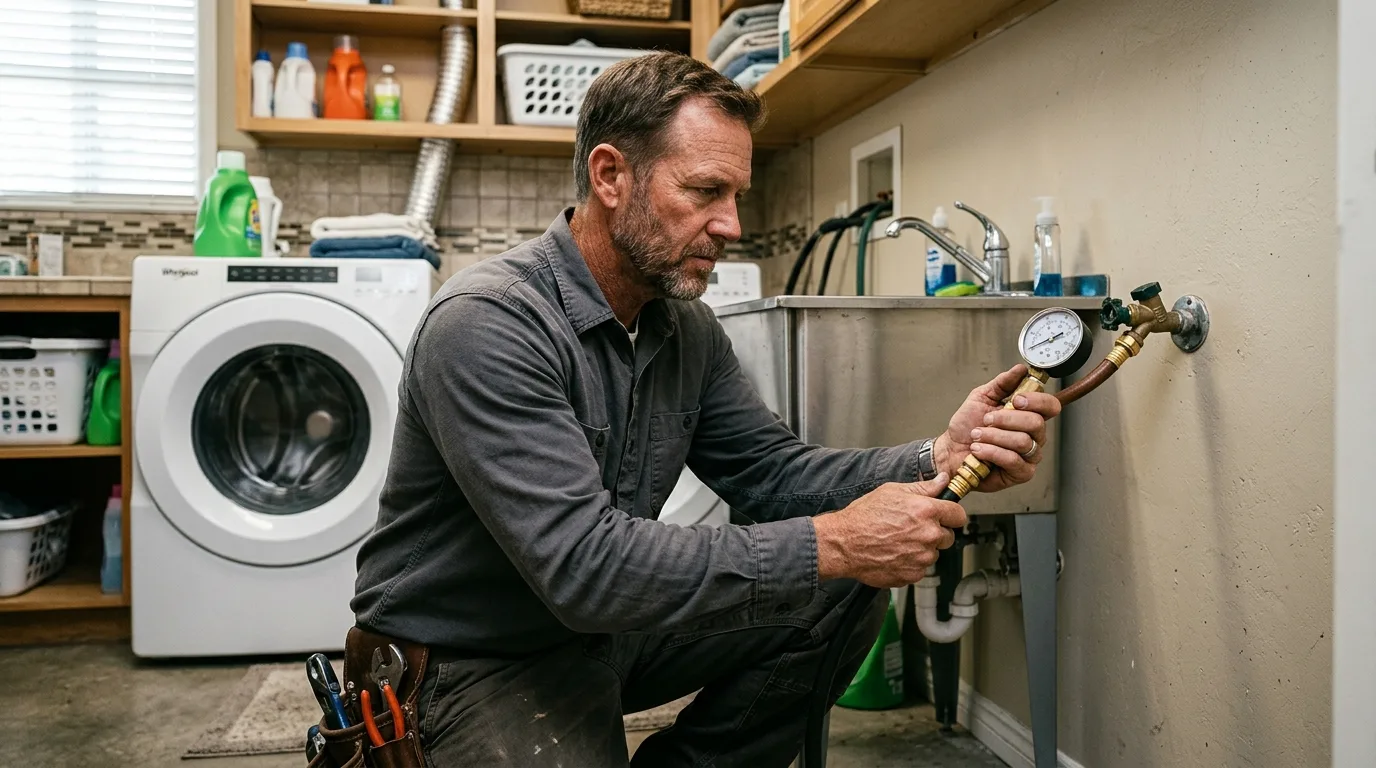
A hardware-store pressure gauge on an outdoor hose bib costs almost nothing and tells you whether to keep reading.
At a glance
Measured, Not Guessed
Static pressure at rest and under draw, plus a check for overnight pressure spikes.
Regulator Replaced
A failed or absent PRV at the main is a contained job with outsized benefits.
Expansion Control
A regulator creates a closed system, so thermal expansion needs a properly charged tank.
Small Job, Big Return
One of the least expensive visits here, and it protects the most expensive parts of the house.
The damage
What high pressure actually costs you
Uniform plumbing code limits pressure to residential fixtures to 80 psi, and there is a reason. Municipal supply in parts of coastal Orange County can arrive well above that, and every component in the house pays for it.
- Pipe and joint failures. High pressure accelerates pinhole development in copper and stresses every fitting and solder joint. It is a contributing factor in a meaningful share of the burst pipe calls we take.
- Water heater life. Constant over-pressure plus thermal expansion in a closed system stresses the tank and cycles the T&P relief valve. Heaters fail years early.
- Appliance supply hoses. Washing machine and dishwasher hoses are a common failure point, and the resulting flood is one of the more expensive claims a household makes.
- Fixture cartridges and fill valves. Faucets that drip within a year, toilet fill valves that whine and fail, shower cartridges that need replacing repeatedly.
- Water hammer. Banging pipes when a valve closes fast. Loud, and it works fasteners and joints loose over time.
- Wasted water. Every fixture in the house delivers more water than needed for the same task, which shows up on a bill you never questioned.
The reverse problem exists too. A regulator that has failed closed or partly seized produces weak flow throughout the house: often misdiagnosed as old pipe or a supply-line issue. Testing distinguishes them cheaply.
Testing
How pressure is diagnosed properly
Static pressure
A gauge on an outside hose bib with no water running gives the resting pressure. Anything from the mid-50s to the mid-70s is comfortable. Above 80 psi is over code for the fixtures and worth correcting. Above 100 psi is actively destructive.
Dynamic pressure and flow
Pressure with fixtures running shows whether the house also has a flow restriction: scaled galvanized pipe, an undersized service line, or a partially closed valve. High static plus poor dynamic pressure is a specific and common pattern in older homes.
Overnight and off-peak spikes
Municipal pressure often rises at night when demand drops. A regulator that reads acceptably at 2 p.m. may be letting 95 psi through at 3 a.m., which is when supply hoses fail and nobody is awake to notice. A recording gauge left on overnight catches this, and it is worth asking for if failures keep happening without explanation.
Is there a regulator at all?
Many older Huntington Beach homes were built without one, or have a regulator that is decades old and long past adjustment range. It typically sits near the main shutoff at the front of the house, in the garage wall, or in a side-yard riser. If nobody has ever looked, that is the first thing to establish.
Expansion control
Fitting a regulator makes the system closed. Water can no longer push back into the street main. Heated water expands and has nowhere to go, so pressure spikes every heating cycle. A correctly sized and pre-charged expansion tank solves it, and it should be part of any regulator installation on a system with a tank water heater.
Replacement, not adjustment
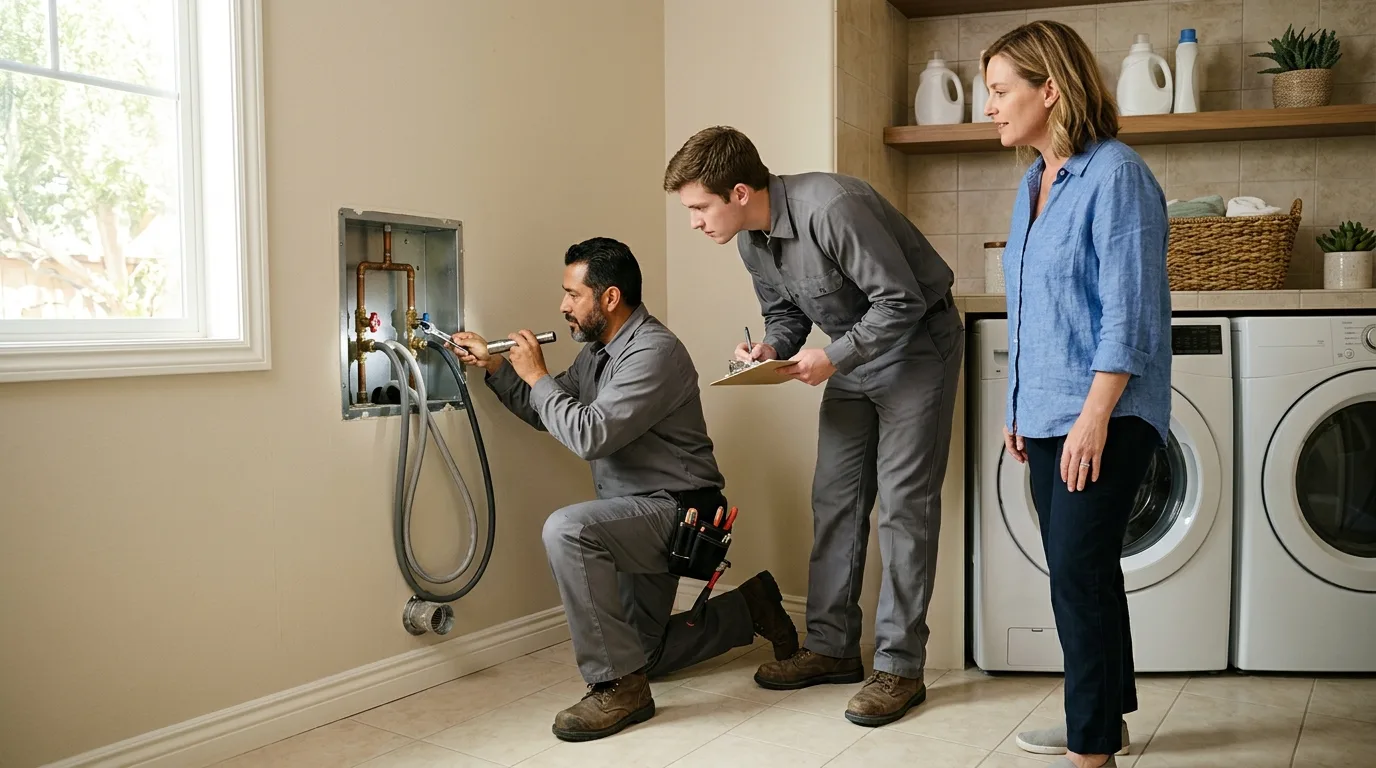
Regulators are adjustable, and a healthy one can be dialled to a sensible set point. But a unit that has been in coastal soil and salt air for twenty-five years, with a corroded body and a seized adjustment screw, is not a candidate for adjustment. Forcing one frequently finishes it off.
Replacement is a contained job: isolate at the main, cut out the old unit, fit a new regulator with unions so the next replacement is simple, set the pressure, and verify at multiple fixtures. Where the surrounding pipe or the main shutoff is also corroded: which is common on ocean-facing walls. That gets addressed at the same time rather than left for a future emergency.
What to set it to
Most households are comfortable in the 55–65 psi range, which protects components while still feeling strong at a shower head. Higher set points feel better for a week and cost more over a decade. If someone in the house has a strong preference, say so and the plumber can set it toward the top of the safe range rather than the bottom.
The bundling argument
Pressure work belongs alongside other jobs. During a water heater installation, a repipe, or service line replacement, the water is already off and the area is already open. Adding a regulator and expansion tank then costs a fraction of a standalone visit, and it means the new work does not start its life under the same stress that damaged the old.
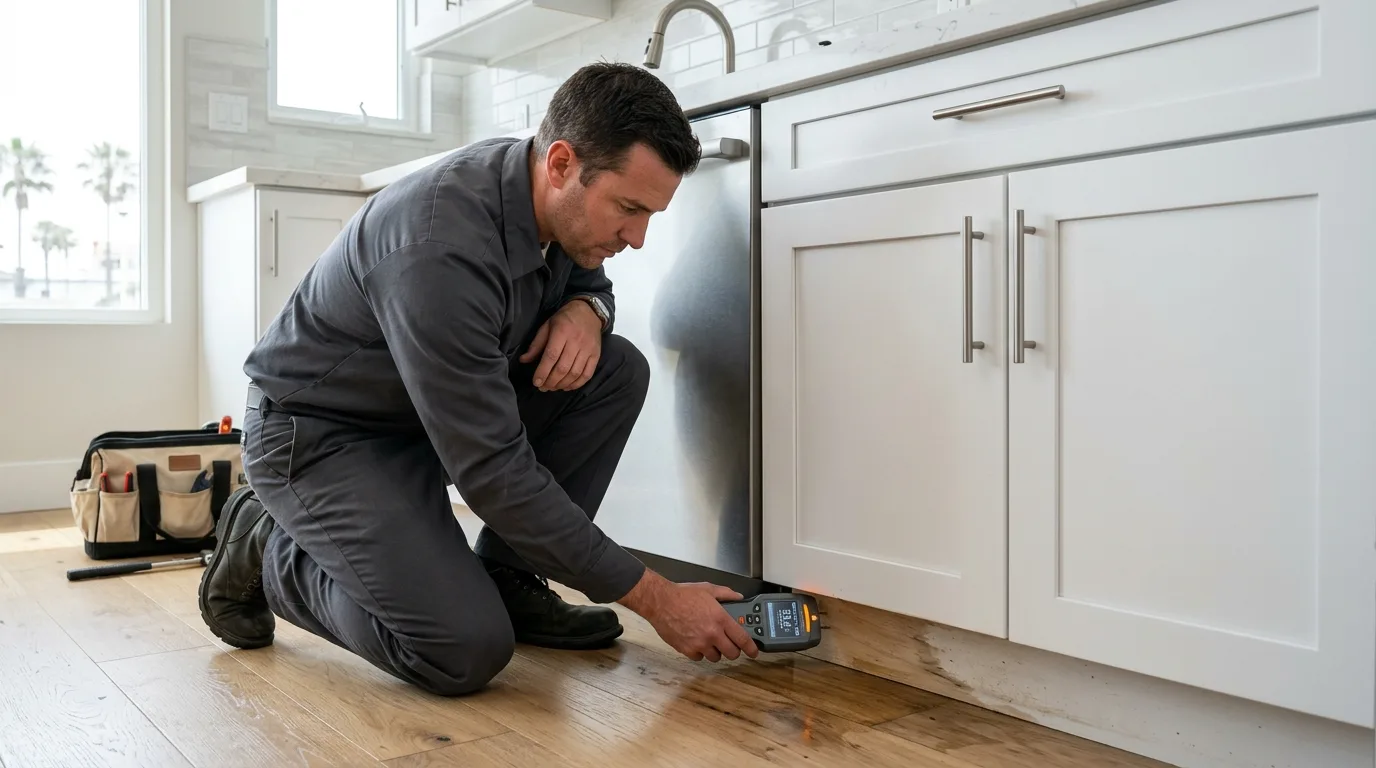
The visit
Measure, explain, correct
Gauge the system
Static and dynamic pressure recorded, and the existing regulator located and assessed if one is fitted.
Explain the reading
What the number means for your pipes, heater, hoses and fixtures, and whether it explains the failures you have had.
Replace or adjust
A healthy unit gets set correctly. A corroded or failed one gets replaced with unions for easy future service.
Add expansion control
On a closed system, a properly charged expansion tank so heating cycles no longer spike the pressure.
Short visit, and one of the highest-value checks on an older home.
Related work
What pressure work protects
Where we send plumbers
Pressure testing across the city
Older homes with no regulator at all in Downtown, Oak View and Goldenwest; corroded units on salt-exposed walls in the Harbour, Sunset Beach and the beach blocks; and high-pressure zones across the inland tracts.
Straight answers
Water pressure questions
Somewhere in the 50s to 70s psi static is comfortable and safe. Code limits pressure to fixtures at 80 psi, so above that is worth correcting.
Above 100 psi, damage is not hypothetical: it shortens the life of pipes, the water heater, appliance hoses and every fixture cartridge in the house.
A screw-on pressure gauge from any hardware store fits an outdoor hose bib. Close all fixtures, thread it on, open the bib fully and read it.
Check it again late in the evening if you can. Municipal pressure often climbs overnight, and that is when supply hoses tend to let go.
Not necessarily. Plenty of older Huntington Beach homes were built without one, and others have a unit so old it no longer regulates anything.
It usually sits near the main shutoff: front of the house, garage wall, or a side-yard riser. A plumber can confirm in a couple of minutes.
If it is in good condition, yes. There is an adjustment screw and a healthy unit responds to it.
A corroded twenty-five-year-old regulator on a coastal wall often does not, and forcing a seized adjustment can finish it. The plumber will tell you which you have.
A regulator that has failed closed or partially seized is a common cause, and it is easily mistaken for old pipe.
Other candidates are scaled galvanized supply lines, an undersized or leaking service line, or a partly closed valve. Testing separates them before anyone starts replacing pipe.
A regulator makes your plumbing a closed system, so when the water heater heats, the expanding water cannot push back toward the street. Pressure spikes every cycle.
An expansion tank absorbs that. It is a small part, it needs to be pre-charged to your house pressure, and it should accompany any regulator installation on a tank water heater system.
Often, yes. Water hammer is aggravated by high pressure, and it works joints and fasteners loose over time.
Correcting pressure usually reduces it substantially. Loose pipe supports and fast-closing appliance valves contribute too, and both can be addressed.
Typically a couple of hours for a straightforward installation, plus setting and verifying the pressure at several fixtures.
If the surrounding pipe or the main shutoff is corroded: frequent on ocean-facing walls: addressing that at the same time adds to it, and is worth doing while the water is off.
Not at a sensible set point. Most people cannot tell the difference between 65 and 80 psi at a shower head, and modern heads are designed for the lower figure.
If someone in the household is particular about it, say so. The plumber can set toward the upper end of the safe range rather than the middle.
It is genuinely worth doing on its own, because it is inexpensive and it protects everything downstream.
That said, if you have a water heater replacement, a repipe or service line work coming up, bundling it into that job costs far less than a separate visit.
A number and an explanation; what you do next is your call.
Fixtures failing early?
High pressure explains a surprising number of plumbing bills
If you have had repeat drips, early heater failure or a burst supply hose, get the pressure measured before replacing anything else.
Serving every Huntington Beach neighborhood, plus the cities next door.