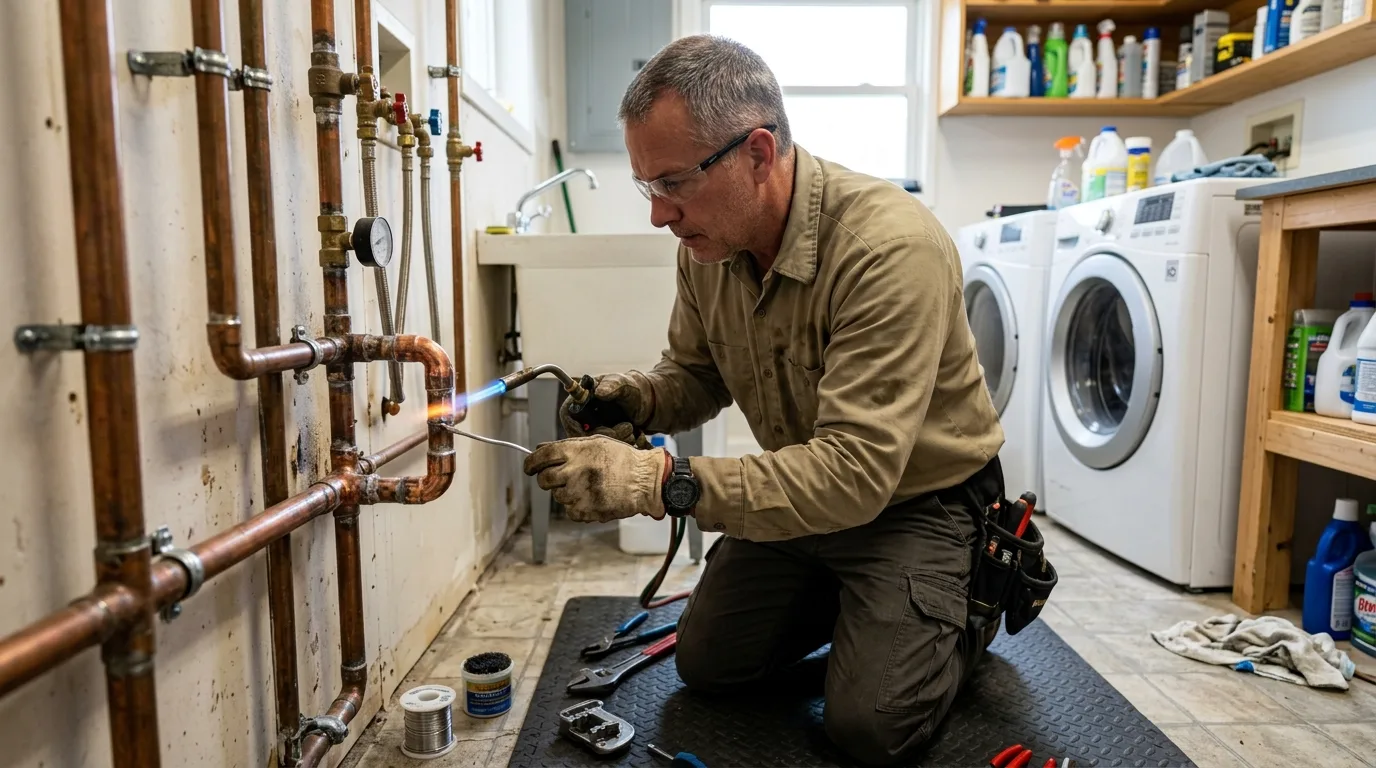
Tankless installation
Wall-hung units with gas and venting sized correctly for the house.
The strip between PCH and the sand
A few blocks wide, sand underneath, and houses built tall because they cannot build wide. That combination produces a very specific set of plumbing problems.
Sunset Beach call: 657-337-7830
Vertical houses on shallow ground. Pressure and access are the recurring themes.
Three stories of supply and drainage in a narrow footprint. Pressure and venting matter.
Sand and a high water table make any excavation slow, pumped and expensive.
Short-let properties where a failure has to be fixed today, not this week.
A block from the water. Exposed metal has a shorter life than the label suggests.
On the ground
Sunset Beach is a handful of streets between Pacific Coast Highway and the sand, with the greenbelt running down the middle where the rail line used to be. Lots are small and often narrow, and because there is no room to spread out, most rebuilds go up: three stories, roof decks, a garage at grade and living space above. Original cottages remain scattered among them, so a single street can hold 1940s beach shacks and current-code towers next door to each other.
Height changes the plumbing. Every additional story costs pressure at the top-floor fixtures, and drainage over three levels needs venting done properly or you get slow drains and gurgling that no amount of cabling fixes. Long hot-water runs from a ground-level heater to a third-floor bathroom mean a long wait for hot water, which is why recirculation and point-of-use decisions actually matter in these houses.
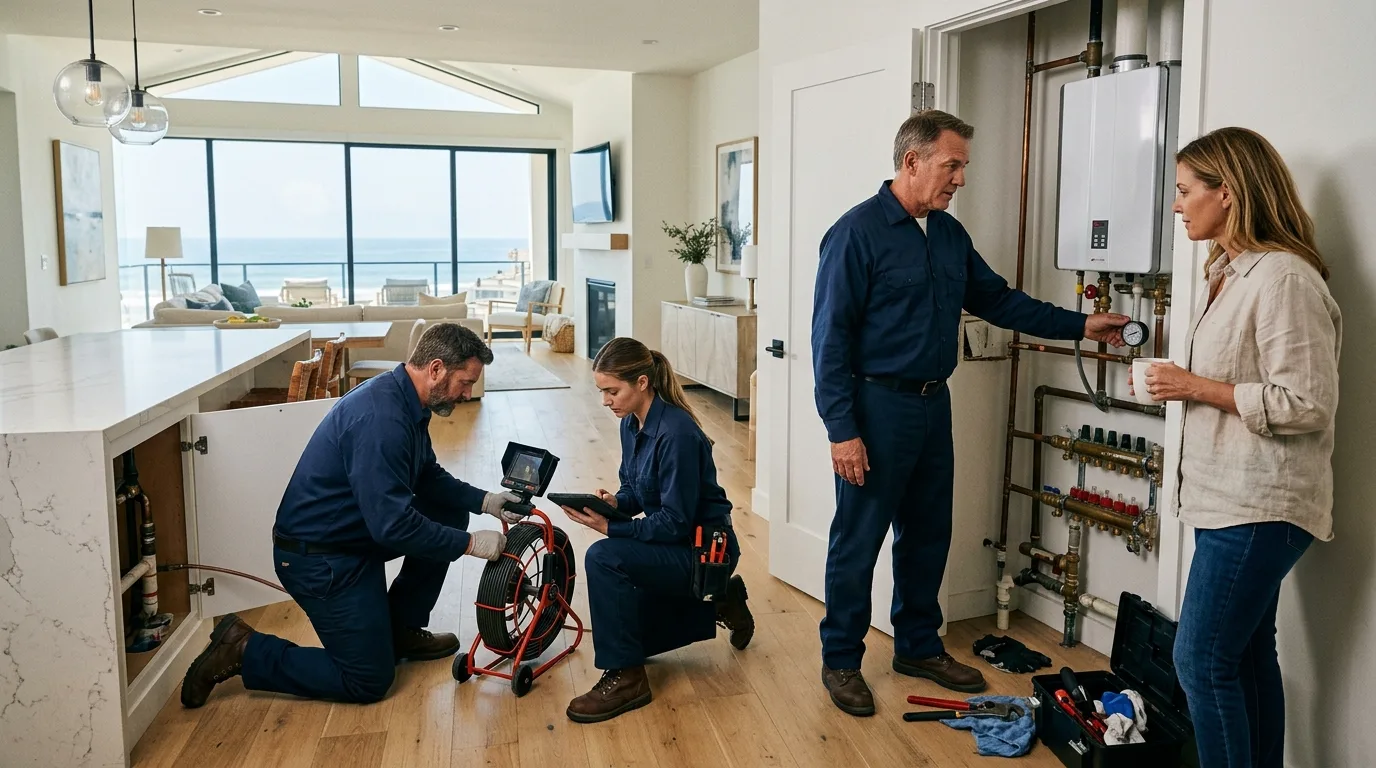
Tankless suits these houses, with caveats. Floor space is scarce, so a wall-hung tankless unit is often the right call. Two honest caveats: gas supply and venting have to be correct for the unit’s demand, which frequently means new pipe rather than reusing what served the old tank; and with hard water, annual descaling is required maintenance, not an optional service plan.
Sand and groundwater under everything. Excavating for a lateral or water service here means hitting damp sand quickly, with the added problem of nowhere to stage spoil on a small lot between two houses. Trenchless rehabilitation is often not merely preferable but the only sensible route. Where digging is genuinely required, it needs shoring and pumping, and anyone quoting it as a simple trench has not looked.
Rentals need a different response. A large share of properties here are short-term or seasonal lets. A failed heater or a blocked main on a changeover day is a business problem, not just an inconvenience. Where a property is rented, it is worth knowing in advance where the main shutoff is, who can grant access, and which failures justify an out-of-hours call.
Salt air, again. One block from the water, exposed metal corrodes: hose bibs, exterior heater housings, angle stops, valve stems, deck drains and fixings. An annual look at anything metal and outdoors catches most failures while they are still inexpensive.
All of Sunset Beach, PCH to the sand and the full length of the greenbelt, plus the adjoining Warner Avenue and Anderson Street frontages and the marina-side properties.
Three options, honestly stated: a recirculation loop with a timer or demand control, a tankless unit sized for the whole house, or a small point-of-use heater at the far bathroom. Which is right depends on how many fixtures run at once and how the house is used.
Beware of solving a wait-for-hot-water complaint by turning the thermostat up. That is a scald risk, not a fix.
Narrow streets, alleys and summer congestion. Early slots run more smoothly, and knowing whether there is alley access changes what we bring.
Label the main shutoff and tell your guests or manager where it is. Ten seconds of knowledge has prevented more water damage than any device sold for the purpose.
On changeover days, say so when you call. Scheduling around a check-in is usually possible if we know about it.
Calling from Sunset Beach
On a multi-story house, where the symptom appears narrows the cause immediately.
Read at the source and at the top floor. The difference explains most complaints in these homes.
With sand and groundwater beneath, avoiding a dig is usually the biggest cost saving available.
A fixed number first, including access and reinstatement. No mid-job changes.
Same-day is standard. Emergency and changeover-day calls dispatched 24 hours.
Most requested here
Wall-hung units with gas and venting sized correctly for the house.
Lateral rehabilitation without trenching wet sand between houses.
Burst lines and blocked mains on rental changeover days.
Multi-story leaks traced to the floor and wall they are actually in.
Slow and gurgling drains on tall stacks, with the venting checked too.
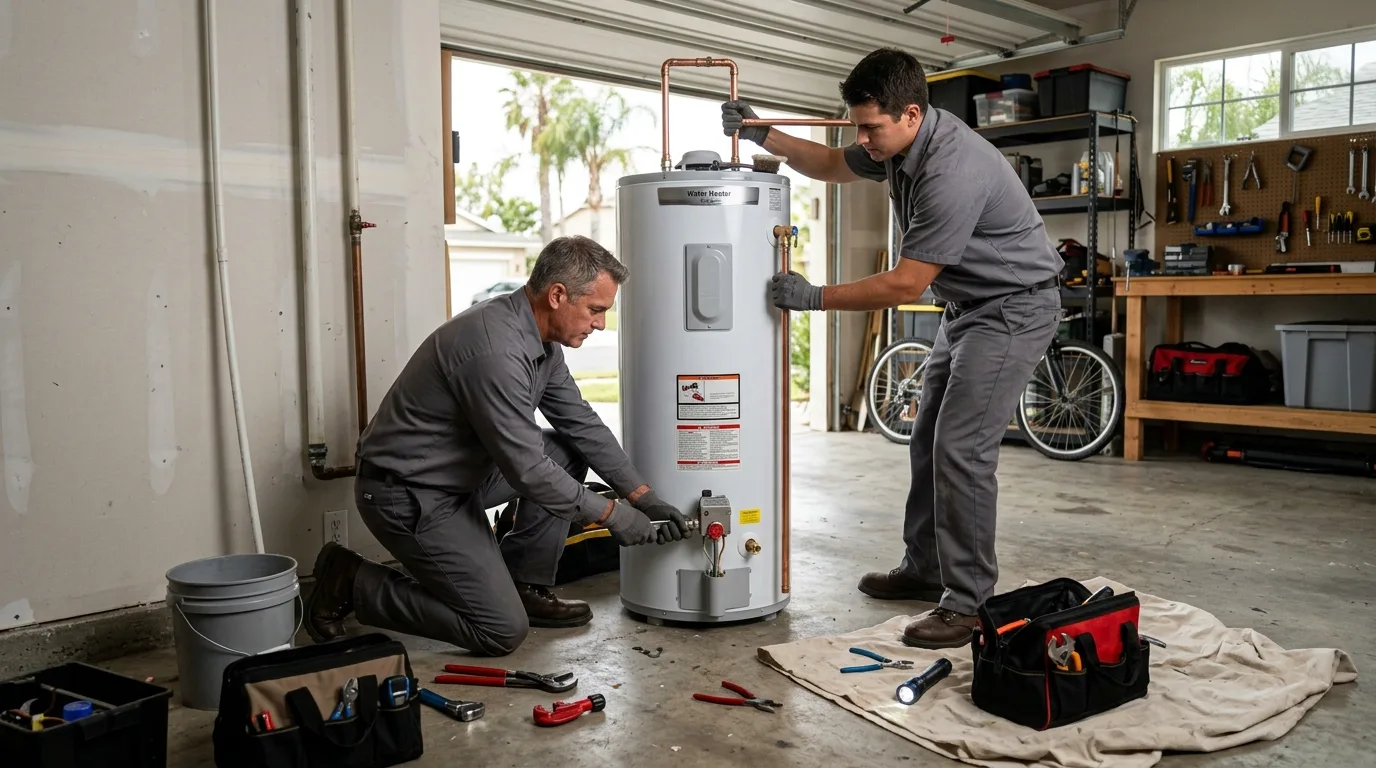
Tank replacements where tankless is not the right answer.
Measured, not guessed. Priced before work starts.
Where we send plumbers
Sunset Beach sits between Huntington Harbour and Seal Beach along PCH, with Bolsa Chica and the wetlands to the south.
Straight answers
Some of it is unavoidable physics: every story costs pressure. But poor top-floor pressure is often a failing regulator, a partly closed valve or undersized supply pipe rather than height alone.
We read static pressure at the source and at the top-floor fixture. The gap between the two tells us whether the problem is supply, regulation or restriction inside the house.
A recirculation loop with a timer or demand button, a tankless unit sized for the house, or a small point-of-use heater near the distant bathroom. Each has different running costs and installation implications.
What is not a solution is raising the thermostat. That does not shorten the wait; it just makes the water that eventually arrives dangerous.
Usually yes. It frees floor space, mounts on a wall and suits the vertical layout. Two conditions: gas supply and venting must be correct for the unit, which often means new pipe; and it needs annual descaling with water this hard.
If nobody will keep up the descaling, an honest recommendation is a good tank instead. Neglected tankless units fail early and expensively.
Usually, and here it matters more than most places. Excavation hits wet sand quickly and there is rarely anywhere to put the spoil.
Lining works when the host pipe still holds its shape. If it is collapsed we will say so and price real excavation properly, with shoring and pumping included rather than discovered later.
It can be, but on a three-story stack gurgling frequently points to venting rather than an obstruction. Air has to enter the system for water to leave it smoothly.
Cabling a vent problem clears nothing. We check the vent path before assuming a blockage, which is why the same complaint sometimes returns after a cleaning elsewhere.
Yes, if you tell us it is a changeover when you call. Scheduling around a check-in or check-out is usually possible, and we treat it as a hard deadline rather than a preference.
It also helps to have a named contact for access and an agreed spend limit, so we are not waiting on approval with a guest arriving.
Choose materials with that in mind: brass and stainless where they are exposed, and proper dielectric separation where dissimilar metals meet. It does not eliminate corrosion but it slows it markedly.
Then inspect annually: hose bibs, exterior heater housings, angle stops, deck drain fixings. Replacing a crusted valve is cheap; replacing a floor is not.
Shut the main off, then call. On a multi-story house water travels along framing before it appears, so the stain is often not below the leak.
We trace the source rather than opening the ceiling where the damage shows. That means less repair and a genuine answer about what failed.
Yes. Dispatch is live 24 hours and Sunset Beach is a short run up PCH from the core service area.
For a burst line, call before doing anything else. The main shutoff and a fast phone call are the two things that limit the damage.
Live dispatch, 24 hours a day.
Sunset Beach
Pressure measured, venting checked, excavation avoided where a camera and a liner will do. Straight numbers.
Serving every Huntington Beach neighborhood, plus the cities next door.