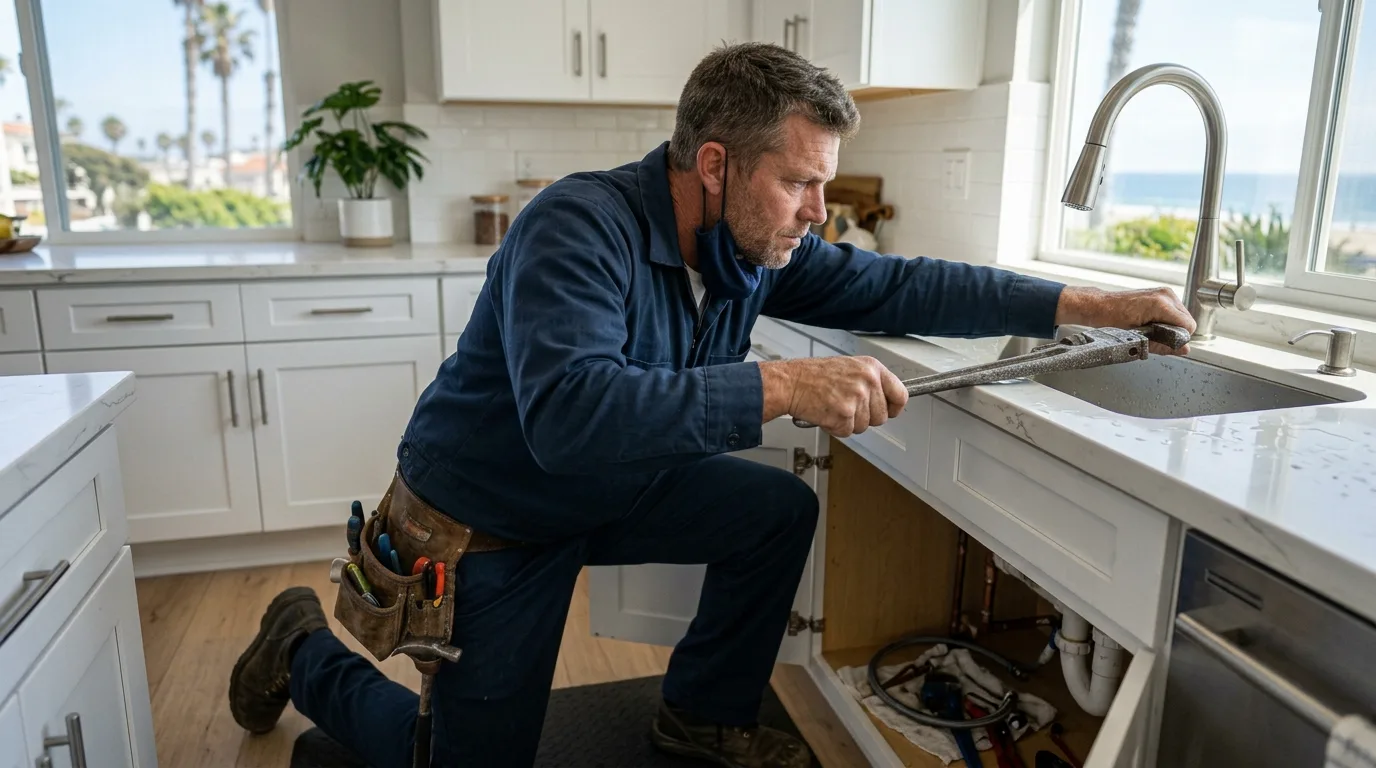
Endless hot water • Done properly
Tankless water heater installation in Huntington Beach, and the maintenance nobody mentions
Tankless is genuinely better for some houses and a poor fit for others. The difference is gas supply, venting, hot-water habits, and whether anyone descales it.
Considering tankless? 657-337-7830
Ask any installer what gas line size your unit needs before you commit. It is the number that makes or breaks a conversion.
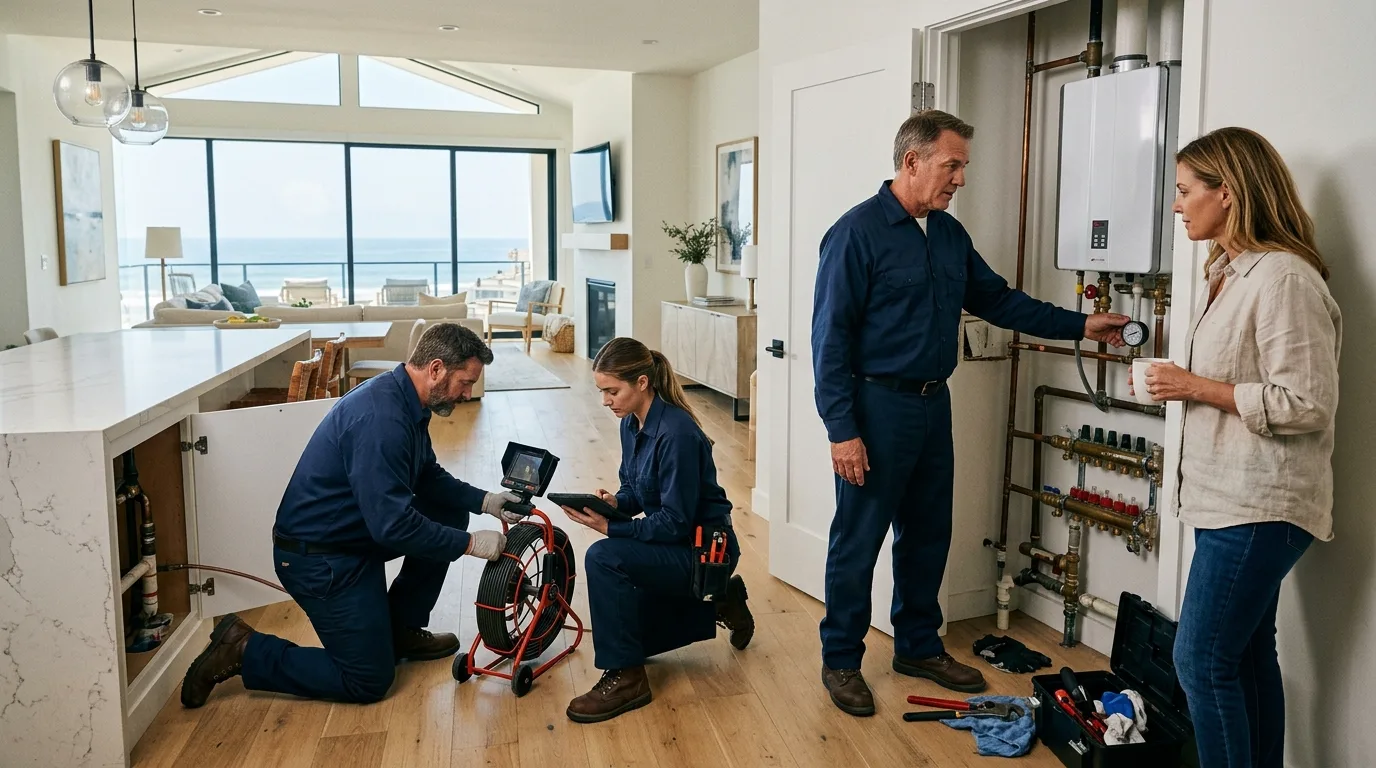
At a glance
Endless Supply
Hot water for as long as you run it, within the unit’s flow rating: no tank to empty.
Gas and Vent Work
Most conversions need a larger gas line and dedicated stainless or PVC venting. Both are in the quote.
Descaling Included
Hard water makes annual descaling mandatory here. Service valves get installed so it is quick and cheap.
Wall Space Freed
A wall-mounted unit returns the garage floor space a 50-gallon tank occupied.
Honest assessment
Who should go tankless, and who should not
Good fit:
- Households that run out of hot water with a tank: back-to-back showers, a soaking tub, a large family.
- Homes where floor space matters, especially garages already crowded with storage, boards and bikes.
- Owners planning to stay long enough for efficiency savings and a longer service life to matter.
- Properties with adequate gas supply, or where upgrading the gas line is straightforward.
- Second units and ADUs where a dedicated small unit beats extending an existing system.
Poor fit:
- Houses where the gas meter and line cannot support the demand without significant upgrade cost.
- Situations where venting cannot be routed sensibly: interior closets with no practical exterior path.
- Owners who will not maintain it. In hard water an undescaled tankless unit degrades and eventually faults.
- Very low usage households, where the efficiency benefit never repays the installation premium.
- Anyone needing the cheapest possible same-day replacement of a failed tank.
A plumber who recommends tankless for every house is not assessing anything. Ask what would rule it out for your property. The answer tells you whether you are getting advice or a product.
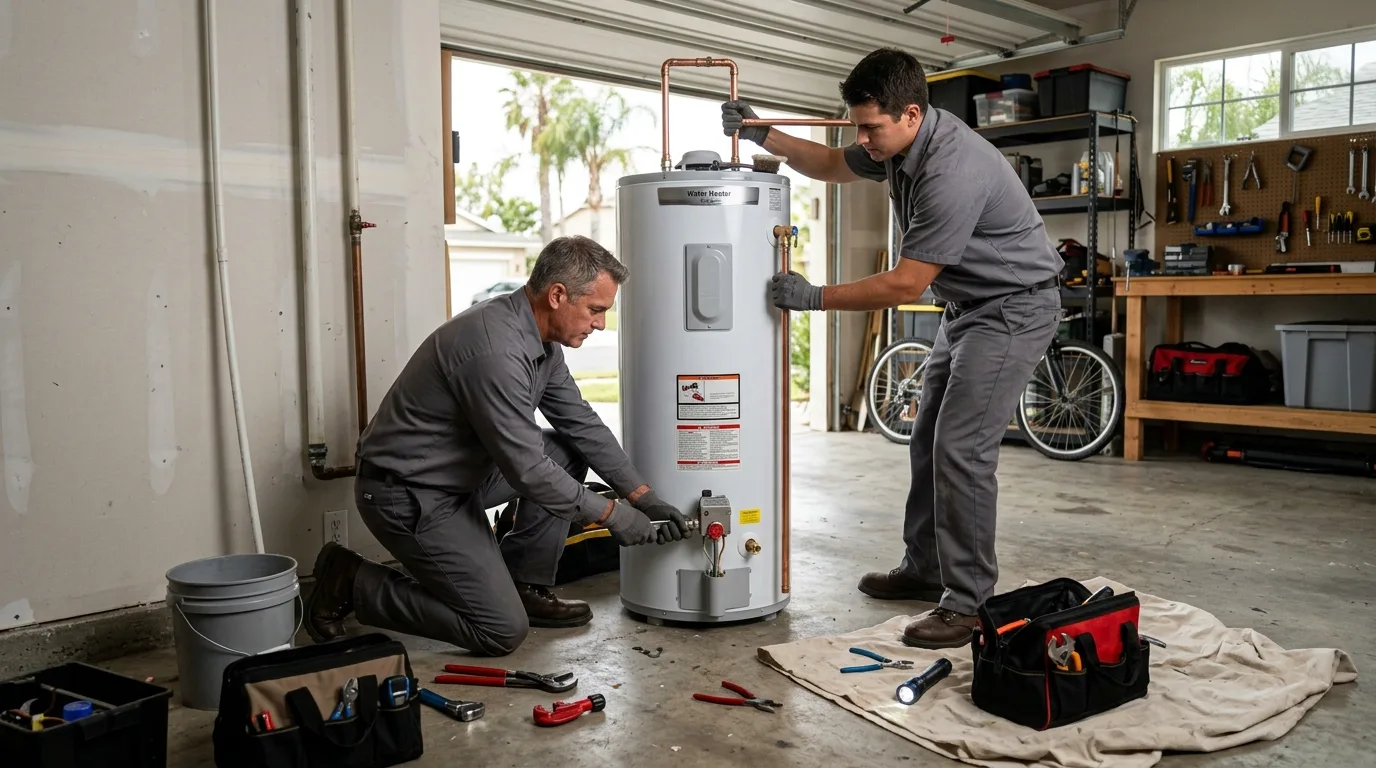
The install
What a conversion actually involves
Gas line sizing
This is the item that surprises people. A tank heater might draw 40,000 BTU; a whole-house tankless unit can demand 150,000 to 199,000. The existing gas line and sometimes the meter cannot deliver that, so the line is upsized from the meter or a dedicated run is added. Any quote that omits this is not a real quote.
Dedicated venting
Tankless units use their own sealed venting (stainless steel or approved PVC depending on the model) and cannot share an old atmospheric flue. Where the unit goes is largely decided by where the vent can run.
Condensate
Condensing units produce acidic condensate that needs a drain and often neutralization. In a garage installation that is straightforward; in an interior location it needs planning.
Water connections and service valves
Isolation valves with service ports are essential, not optional. They are what makes annual descaling a short, inexpensive visit instead of a plumbing job. Any installation without them is building in future cost.
Recirculation, if you want instant hot water
Tankless units heat on demand, so a long run to a far bathroom still means waiting for hot water to arrive. A recirculation pump with a dedicated return, or a comfort-valve arrangement, solves that: decide before installation, because retrofitting is more disruptive.
Electrical
Gas tankless units still need power for controls and the fan, so a receptacle at the unit is part of the job. Electric tankless is a different animal entirely and usually needs service capacity most local homes do not have spare.
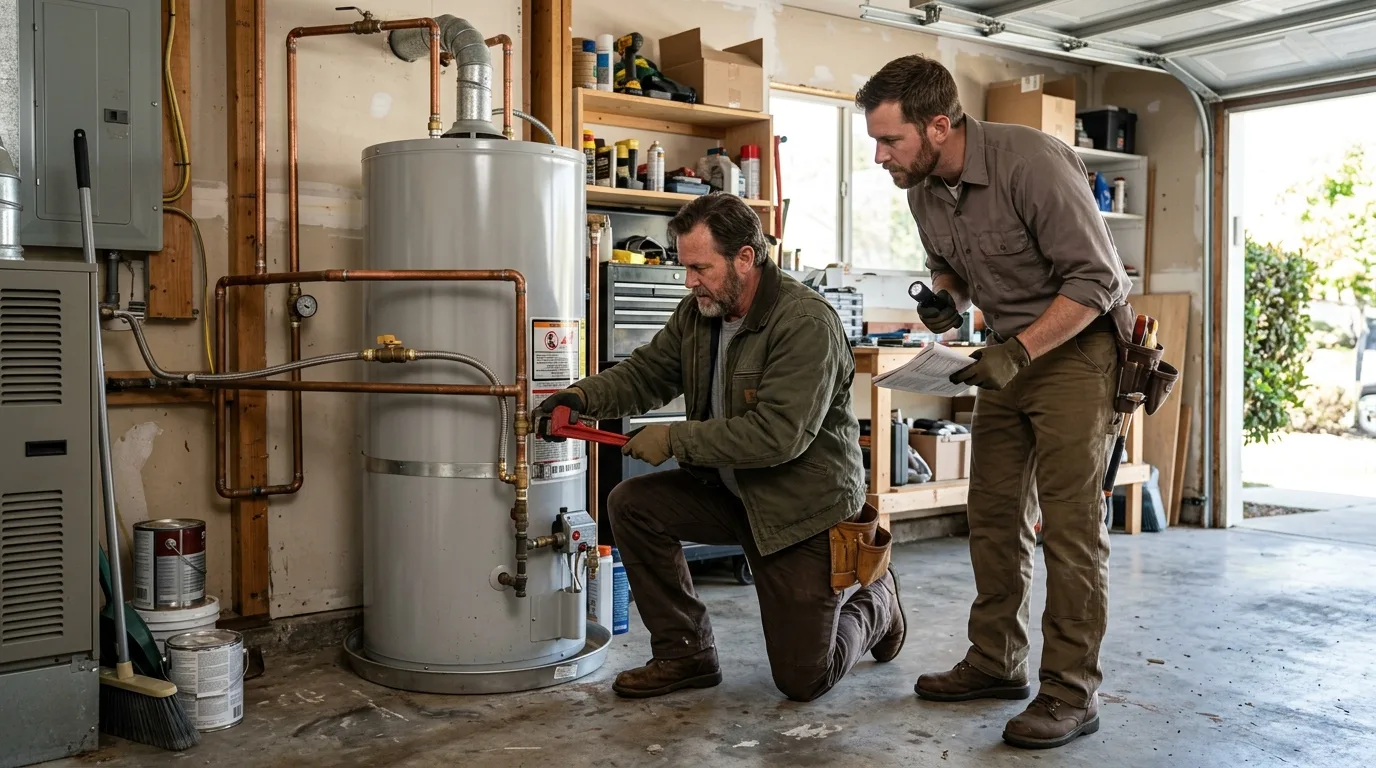
Hard water is the whole story here
Tankless units heat water across a compact heat exchanger, which is exactly where scale forms fastest. In this part of Orange County, with hard imported water, a unit that is never descaled loses efficiency, then flow, then throws error codes.
Descaling annually: a circulation of descaling solution through the service valves: keeps the exchanger clean. Homes with a softener or scale-reduction system extend that interval considerably and protect fixtures at the same time. Manufacturers increasingly reference water hardness in warranty terms, so it is worth reading yours.
What it costs and what it saves
Installed cost is higher than a tank, sometimes substantially, because of the gas and vent work. Running cost is lower, because there is no standby loss keeping 50 gallons hot around the clock, and service life is typically longer with maintenance.
The honest framing: tankless is a good investment if you are staying, if your hot-water demand justifies it, and if you will maintain it. It is a poor investment as a distress purchase when a tank fails on a Sunday.
Coastal notes
Exterior-mounted tankless units are popular locally for the space saving, and salt air does work on the cabinet and vent terminals. If the unit will sit on an ocean-facing wall, discuss enclosure and the manufacturer’s coastal guidance before choosing a model.
How a conversion runs
Assess, upgrade, install, maintain
Load and gas assessment
Fixture demand sets the unit size; the meter and existing gas line decide what has to be upgraded to feed it.
Plan the vent and location
Where the vent can run usually decides where the unit goes. Condensate drainage is planned at the same time.
Install with service valves
Gas, water, vent, condensate and power, with isolation valves fitted so descaling is quick and cheap.
Commission and schedule service
Flow and temperature verified, controls explained, and the first descaling interval set before the plumber leaves.
Ask for the tank price alongside it: comparing both is the point.
Related work
Compare and combine
Where we send plumbers
Tankless conversions around Huntington Beach
Space-constrained garages in the older tracts, larger households in Seacliff and Huntington Harbour, ADUs and rental conversions across the city, plus the neighboring cities below.
Straight answers
Tankless questions
Continuous, yes: within its flow rating. It heats water as it passes, so there is no tank to empty.
What it will not do is exceed its rated gallons per minute. Run three showers and a dishwasher at once and temperature drops. Sizing is what prevents that, which is why fixture count matters more than household size.
A whole-house tankless unit can demand three to five times the gas input of a tank heater. Existing lines and occasionally meters are not sized for it.
If a quote does not mention gas sizing, it is incomplete. An underfed unit will underperform permanently and may fault under load.
Annually is the sensible default with untreated local water, and manufacturers often specify it in the warranty. Heavy-use households sometimes benefit from more frequent service.
With a softener or scale-reduction system the interval stretches considerably. Service valves installed at the outset make each descaling a short, inexpensive visit.
Yes, outdoor-rated models are common locally and free up interior space. Salt air is the trade-off: cabinets and vent terminals weather faster near the water.
If the wall faces the ocean, ask about the manufacturer’s coastal guidance and whether an enclosure is worthwhile.
Yes, unless you add recirculation. The unit heats instantly but the water still has to travel the pipe run.
Decide on recirculation before installation. Adding a dedicated return line later is more disruptive than including it up front.
Generally yes, because there is no standby loss keeping a tank hot when nobody needs it. The size of the saving depends on your usage pattern.
It rarely pays back purely on gas savings in a low-use household. The stronger arguments are endless hot water, reclaimed space and longer service life.
If gas is available at the property, a gas tankless conversion is usually the sensible route and involves new gas and vent work.
Electric tankless exists but typically demands electrical service capacity most local homes do not have spare, and upgrading a panel changes the economics entirely.
Longer than a tank when maintained. The heat exchanger is serviceable and many components are replaceable rather than terminal.
Unmaintained in hard water, they underperform early and fault. The maintenance is not optional here; it is the deal you make when you buy one.
Yes. Gas work, venting and water heater replacement are all permitted and inspected in Huntington Beach.
Given that a conversion involves gas sizing and combustion venting, the inspection genuinely matters. Ask for the permit number.
Sometimes, if total simultaneous demand fits the unit’s flow rating and the pipe runs are reasonable. Often two smaller units, one per dwelling, works better and simplifies metering and control.
It depends on the layout and how the ADU is used. A plumber should walk both spaces before answering.
Gas size, vent route and flow rate: the three numbers that decide it.
Thinking about the switch
Tankless is excellent when the install is done properly
Tell us your fixture count, where the current heater sits and whether gas is available. We will quote both options so you can compare.
Serving every Huntington Beach neighborhood, plus the cities next door.