Annual flush
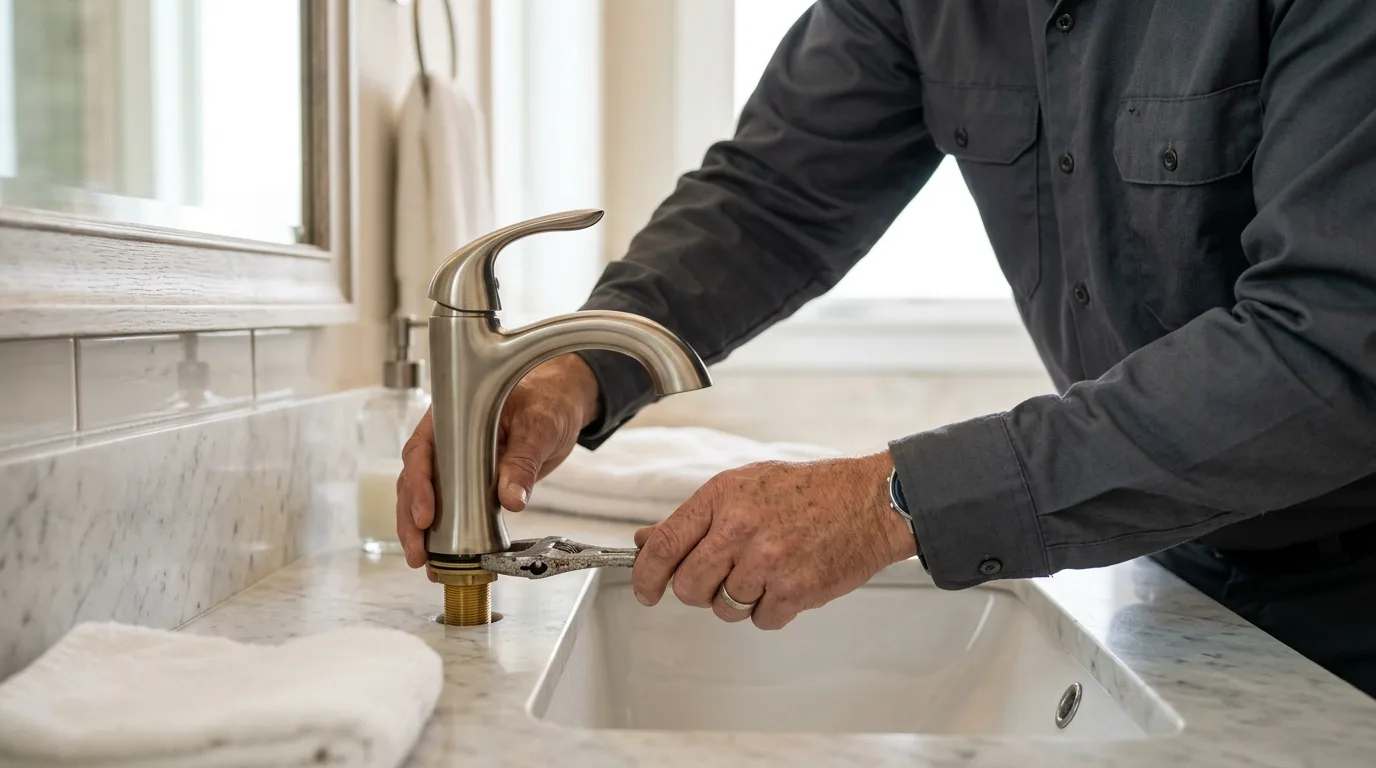
Draining sediment once a year is the highest-value maintenance on a tank unit in hard water. It preserves capacity and reduces the rumbling that shortens tank life.
Tank & tankless • Repair first
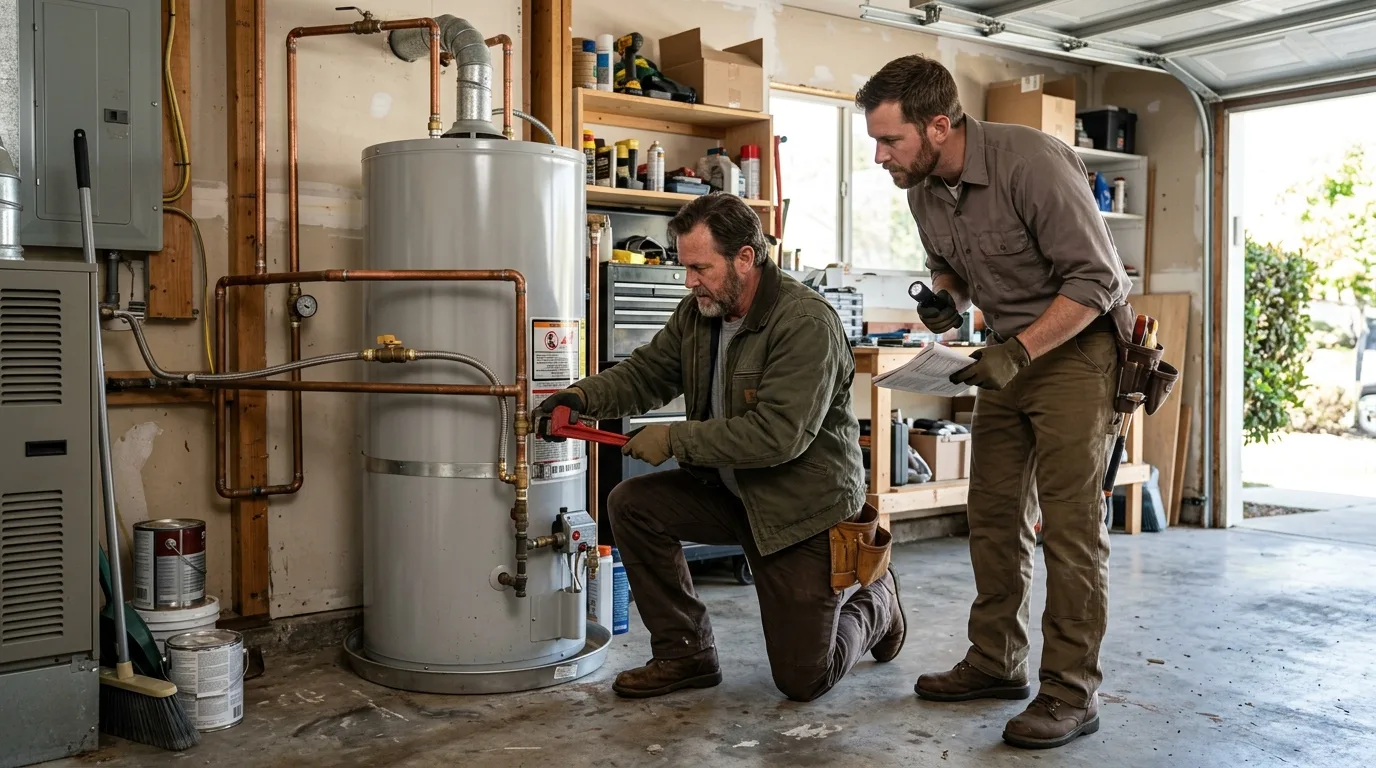
Not every cold shower means a new water heater. A thermocouple, an element, a thermostat or a sediment flush often restores hot water for a fraction of a replacement.
Cold showers? 657-337-7830
If water is pooling under the tank, shut the gas or breaker and close the cold inlet on top before you call.
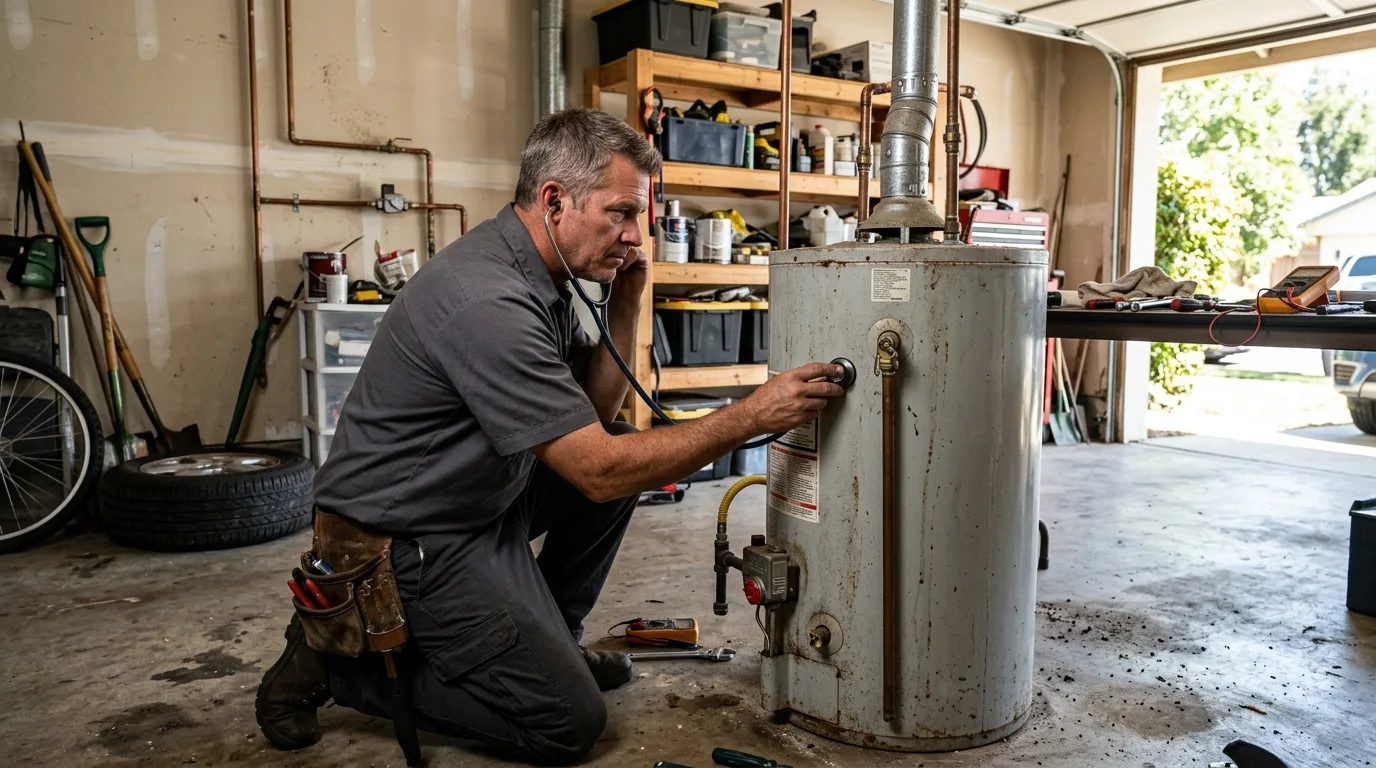
Pilots, thermocouples, gas valves and burners; elements, thermostats and high-limit switches.
Sediment and scale drive most local failures. Flushing and descaling are part of the diagnosis.
Seismic strapping, T&P discharge, venting and expansion control get looked at while the plumber is there.
You hear the repair price and the replacement price, then decide which makes sense.
Diagnosis
Water heaters fail in recognizable patterns. None of these is a diagnosis on its own, but each points somewhere specific.
Repair or replace
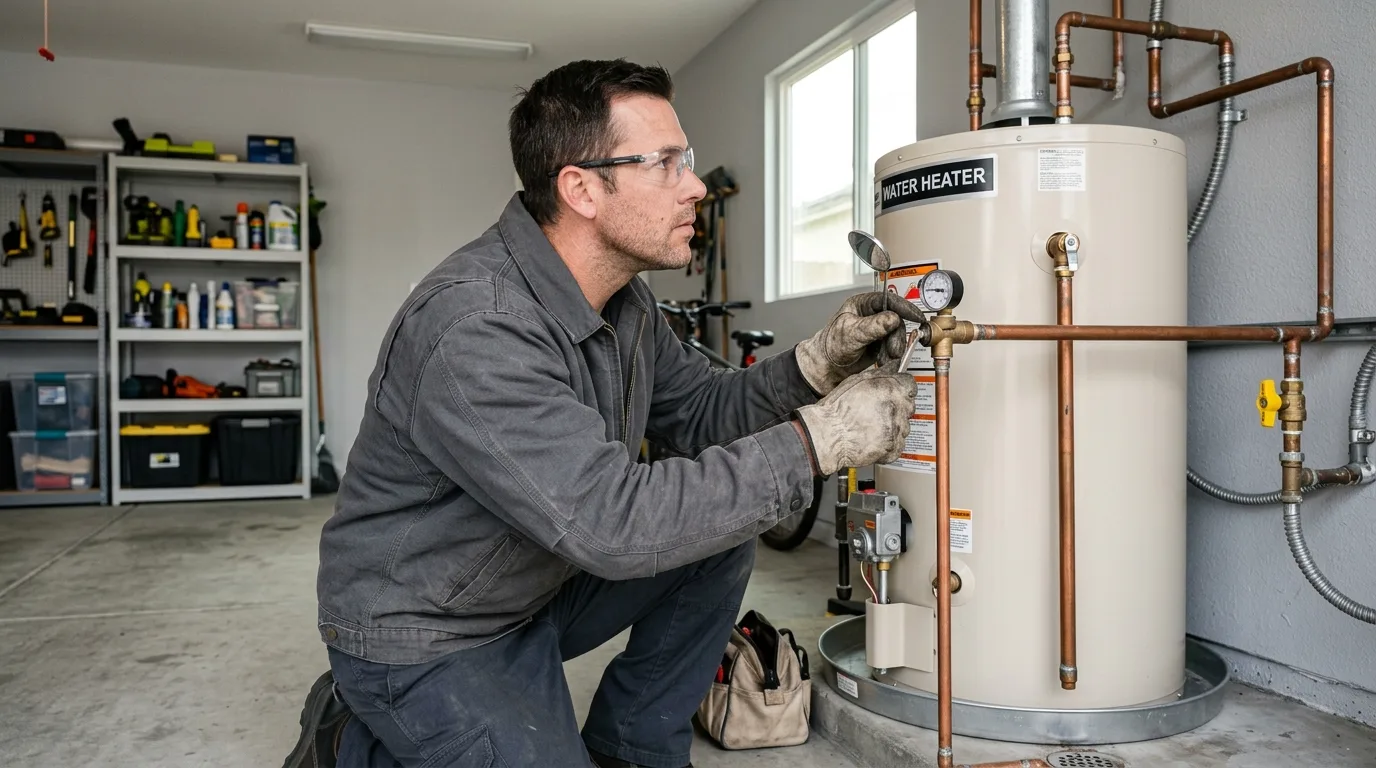
The unit is under about eight years old, the tank itself is sound, and the fault is a component: thermocouple, gas valve, element, thermostat, anode, drain valve, T&P valve or a supply connection. These are inexpensive parts and the labor is modest. A sediment flush on a rumbling tank falls in the same category: cheap, worthwhile, occasionally transformative.
The tank is leaking from its body, because the glass lining and steel shell have failed and nothing reverses that. Also when the unit is past twelve years or so and needs a significant part, when it has already had multiple repairs, or when the capacity no longer suits the household. In a hard-water area, a tank that has never been flushed in a decade is often at the end regardless of what the current symptom is.
Imported water in this part of Orange County is hard. Scale accumulates faster here than in soft-water regions, which means local tanks tend to show sediment symptoms earlier and reach the end of their practical life sooner. Annual flushing genuinely extends life; a softener or filtration system extends it further and protects fixtures and appliances at the same time.
Many local units live in a garage or exterior closet that breathes salt air. Flue sections, draft hoods, gas connectors and the sheet metal jacket corrode from the outside, and a rusted flue is a combustion-safety issue rather than a cosmetic one. Any competent visit includes a look at the venting, not just the tank.
Seismic strapping. California requires water heaters to be strapped at two points. Plenty of older local installations have one strap, a loose strap, or none. It is a small correction with real consequences in an earthquake.
T&P discharge piping. The temperature and pressure relief valve needs a full-size discharge line terminating safely. Capped, upward-sloping or missing discharge lines are common and genuinely dangerous.
Combustion air and venting. Garage installations need adequate combustion air and correct flue assembly. Rusted or disconnected vent sections mean exhaust in the space.
Expansion control. Where a pressure regulator creates a closed system, thermal expansion needs somewhere to go. A missing or dead expansion tank shortens the life of the heater and everything else.
Elevation and ignition source. Older gas units in garages have rules about ignition-source height. Newer sealed-combustion designs handle this differently.
Drain pan and drainage. Interior-closet and attic installations need a pan with a drain to somewhere sensible: not into the ceiling below.
A plumber should mention these while they are already on site. Fixing them alongside a repair costs a fraction of a separate visit.
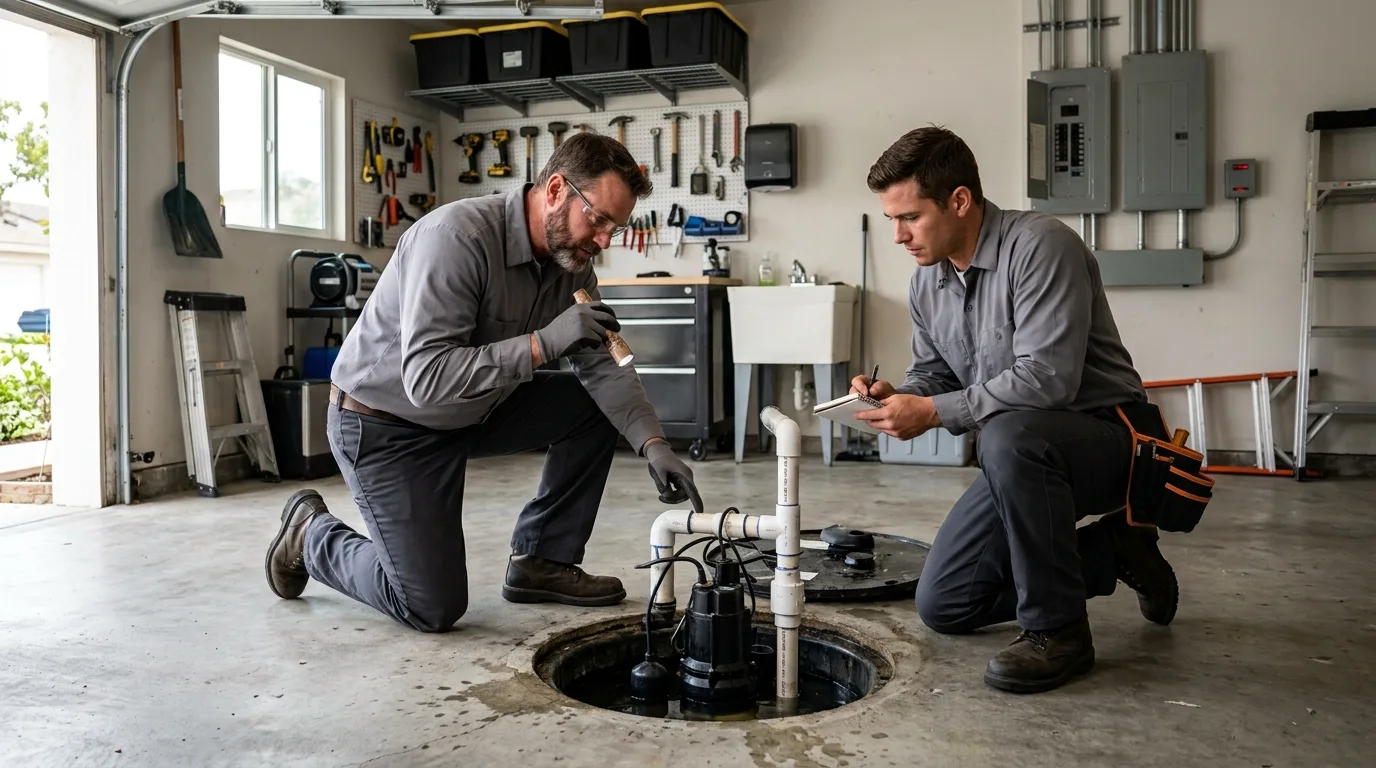
The visit
Gas pressure, thermocouple output, element resistance, thermostat function and combustion are measured, not assumed.
Where the water is actually coming from decides everything. A weeping fitting and a failed shell look similar on a garage floor.
The repair cost and the replacement cost, with the realistic remaining life of the unit stated plainly.
Repair made, temperature and recovery confirmed, and code items flagged with what it would take to bring them current.
Most single-component repairs are completed on the first visit.
Maintenance
Draining sediment once a year is the highest-value maintenance on a tank unit in hard water. It preserves capacity and reduces the rumbling that shortens tank life.
The anode is a sacrificial part. Replacing it every few years is cheap; ignoring it means the tank corrodes instead.
A quick manual test confirms the safety valve is not seized. It is the only device standing between a runaway thermostat and a serious accident.
Around 120°F is the usual balance of comfort, scald safety and scale control. Hotter accelerates scale and raises the gas bill.
Treating hard water protects the heater, the fixtures, the dishwasher and the washing machine at the same time.
In salt-air garages, flue corrosion is a safety issue. A visual check every year costs nothing and catches it early.
Cheapest appointment on this site, and the one that prevents the most expensive one.
Related work
Where we send plumbers
Garage-installed tanks in the postwar tracts, closet and attic units in Seacliff and newer construction, and salt-exposed installations in the Harbour, Sunset Beach and the beach blocks, plus the cities below.
Straight answers
Usually. A failing thermocouple or flame sensor is an inexpensive part and a short job, and it is the most common cause of a pilot that will not stay lit.
Repeat outages can also mean a dirty burner, inadequate combustion air, or a downdraft in a corroded flue. Those are worth diagnosing rather than relighting again, because two of the three are safety issues.
Hard water shortens tank life, so local units often show sediment symptoms earlier than a general estimate would suggest. A well-flushed tank does considerably better than a neglected one.
The practical markers are age plus condition: past about twelve years, with a significant fault, replacement usually wins. Before eight, with a component fault, repair almost always does.
No: where the water comes from is what matters. Leaks at the cold or hot connection, the drain valve, the T&P valve or a flexible connector are all repairs.
Water seeping from the body of the tank is different. The steel shell has corroded through and no repair restores it, so replacement is the only option.
Sediment on the tank floor. Water trapped underneath flashes to steam and lifts the deposit, which is what you hear.
A flush often quiets it and restores usable capacity. If the tank has gone many years without one, flushing can dislodge enough sediment to reveal a leak at the drain valve, which the plumber will warn you about first.
It is a reasonable homeowner job if you are comfortable with a hose, the gas or breaker, and the drain valve. Plenty of people do it annually.
Two cautions: an old plastic drain valve can fail when opened, and a tank that has never been flushed can clog the valve with sediment mid-job. If either happens you need the water off and a plumber, so factor that in.
That points at the tank rather than the supply. A depleted anode rod stops protecting the steel, and the tank starts corroding internally.
If it is caught early, replacing the anode can add years. If the rust is heavy and the unit is older, it is telling you the tank is near the end.
Yes. The common issues are scale in the heat exchanger, flow sensors, ignition components and venting, and most respond to service rather than replacement.
Descaling on a regular interval is essential in this area: a tankless unit in hard water without maintenance will underperform and eventually fault. Details on the tankless page.
Yes. California requires seismic strapping at two points, and an unstrapped tank in an earthquake can shear its gas and water connections.
It is an inexpensive correction and it will be flagged during any service visit. It also comes up at resale, when an inspector notices it.
Yes, though access and drainage matter more. Attic and closet installations need a drain pan piped to somewhere safe, because a leak there damages ceilings rather than a garage floor.
If the pan or its drain line is missing or wrong: which is common in older conversions. The plumber will tell you what correcting it involves.
No hot water is treated as a priority but not usually as a middle-of-the-night emergency, and same-day service is normal on weekdays.
If the unit is leaking as well as cold, say so on the phone. That combination does get treated as urgent, because water damage is running while you wait.
Both numbers, stated plainly, before you decide.
Cold shower this morning
Tell us the age of the heater, whether it is gas or electric, and exactly what it is doing. Most repairs are one visit.
Serving every Huntington Beach neighborhood, plus the cities next door.