Safety first • Permitted work
Gas line services in Huntington Beach: corroded risers, leaks and new appliance runs
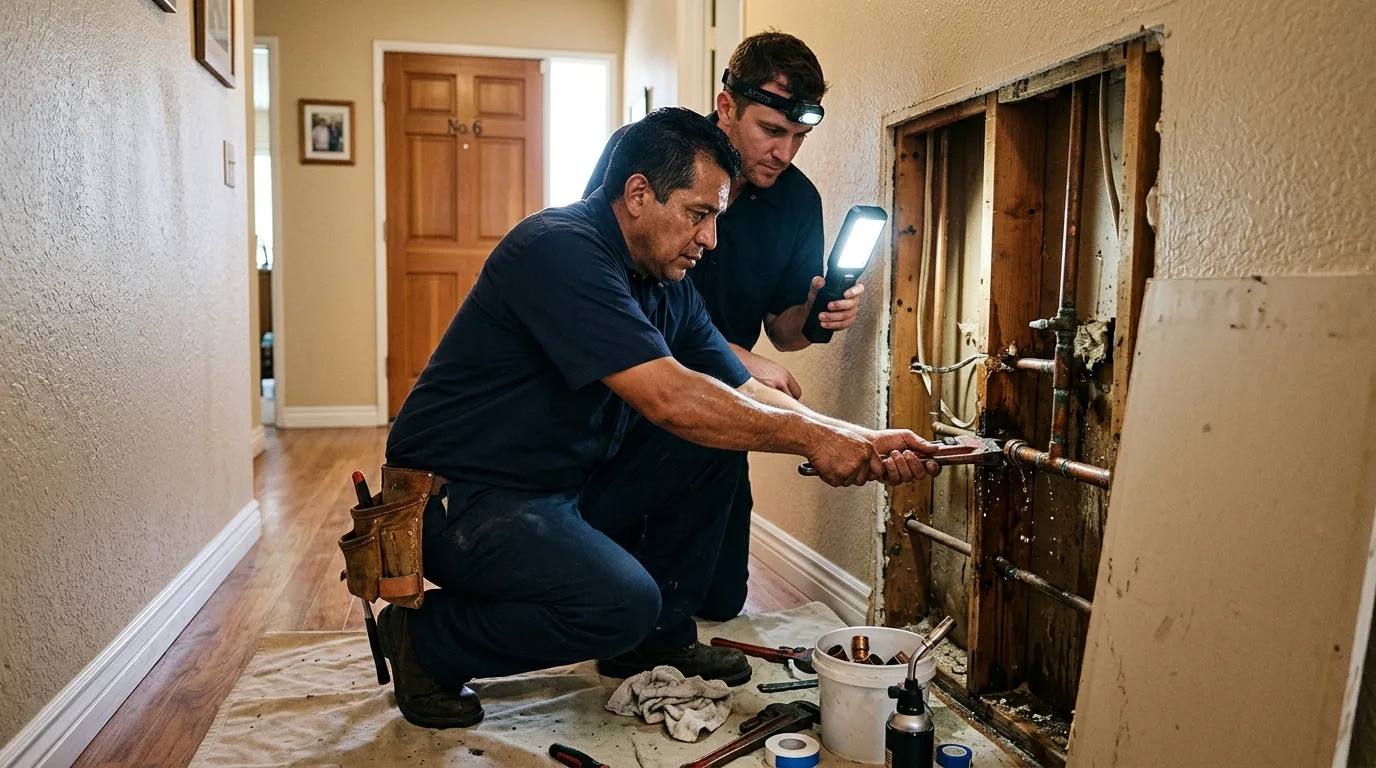
Salt air eats exterior gas piping, and a corroded riser at the meter is one of the most common findings on a coastal property. This is permitted, pressure-tested work: not a handyman job.
Smell gas? 657-337-7830
If you smell gas: leave the building, do not touch switches, and call the gas utility from outside before you call anyone else.
At a glance
Utility First
On an active leak the gas company makes it safe at the meter. We handle the repair to your house lines afterwards.
Coastal Corrosion
Exterior risers, unions and appliance connectors near the ocean fail years earlier than inland equivalents.
New Appliance Runs
Ranges, dryers, outdoor kitchens, fire pits, pool heaters and generators, sized correctly.
Permit and Test
Gas work is permitted and inspected. Pressure testing is part of the job, not an extra.
If you smell gas
The order of operations that matters
Natural gas is odorized specifically so you notice it. If you do, act in this order and do not deviate:
- Get everyone out of the building. Do not investigate, do not look for the source.
- Touch no switches or ignition sources. No light switches, no garage door opener, no appliances, no phone use inside the building.
- Do not use a vehicle in an attached garage. Starting an engine is an ignition source.
- Call the gas utility from outside, at a distance from the building. They respond to gas odor calls as emergencies and will shut supply at the meter.
- Only then call a plumber for the repair to piping and appliances on your side of the meter.
That sequence is not caution for its own sake. The utility owns and controls the meter and the service, and they have the equipment to make a building safe. A plumber’s role starts once it is.
Signs of a gas problem that is not an emergency but still needs attention: a faint smell near an appliance connection that comes and goes, a pilot light that will not stay lit, a yellow rather than blue burner flame, soot around a burner or vent, dead vegetation in a line above a buried gas run, or a hissing sound near an exterior riser. Any of those warrants a test.
The work
What gas line service covers
Leak testing and locating
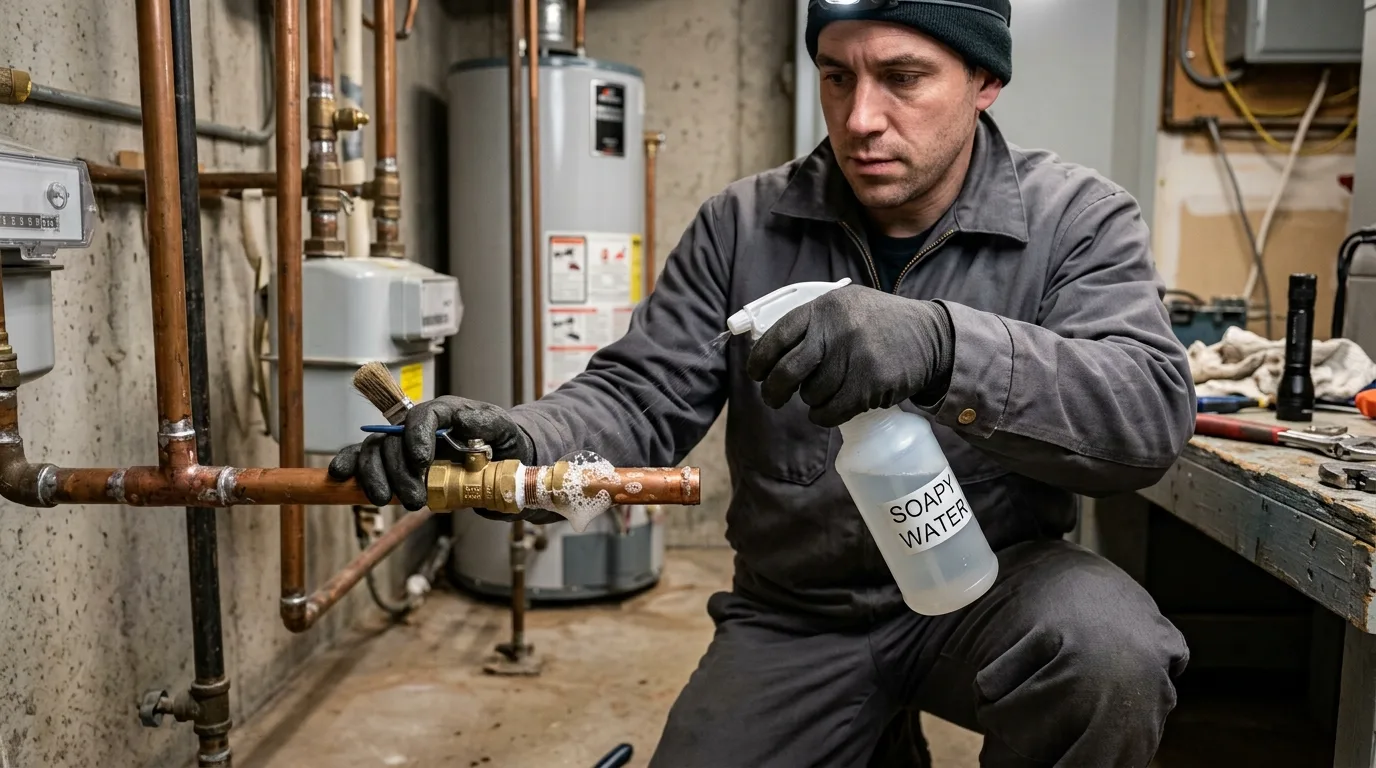
The system is isolated and pressure tested with a gauge to establish whether it holds. If it does not, the leak is located with electronic detectors and solution testing at joints, working section by section. Guessing is not a method here.
Corroded risers and exterior piping
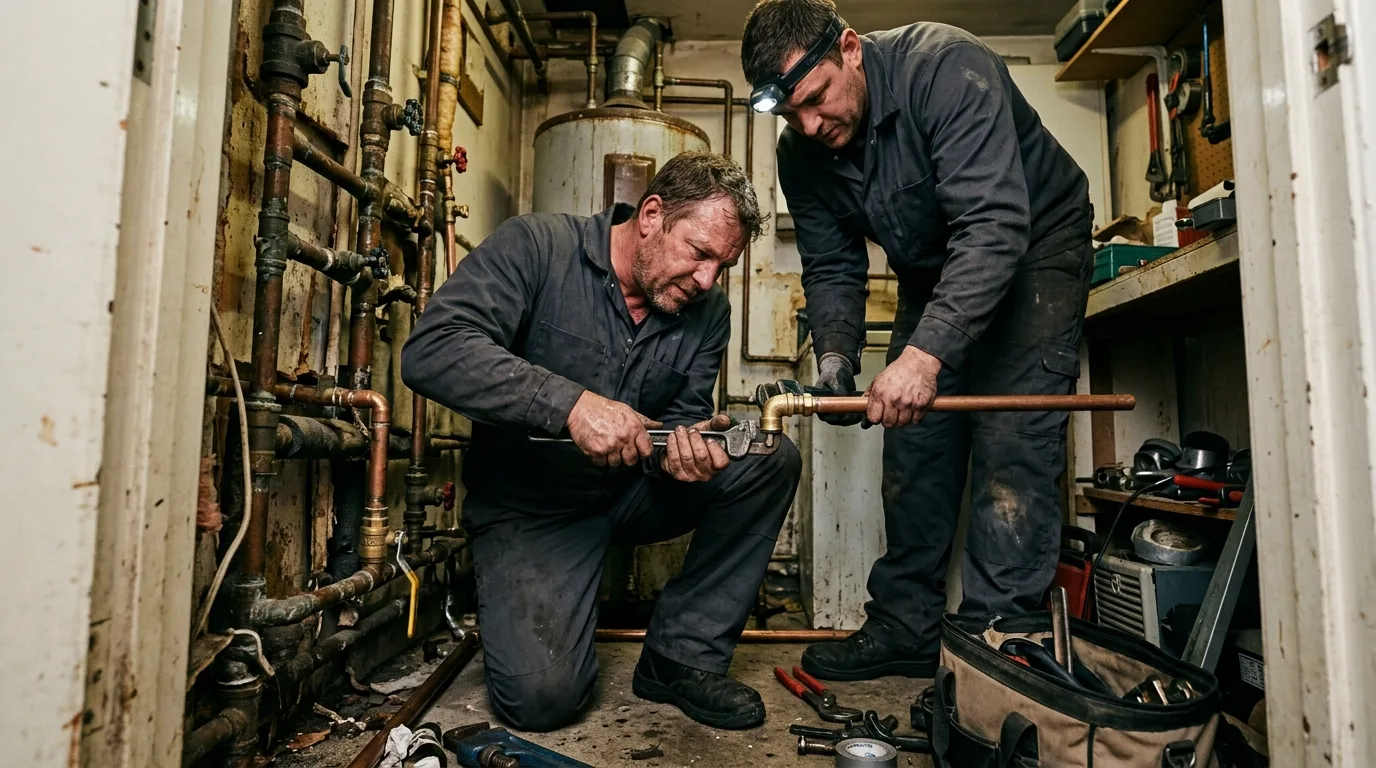
The riser at the meter and any exterior black-iron piping are the most weather-exposed gas components on a property, and salt air is unkind to them. Replacement with correctly coated and protected material is routine work on coastal homes and one of the more common findings during a safety check.
Shutoff valves
Every gas appliance should have an accessible shutoff. Plenty of older local installations have none, or have a valve buried behind cabinetry where nobody could reach it in an emergency. Adding proper valves is inexpensive and genuinely useful.
Appliance connectors
Flexible connectors have a service life and should not be reused between appliances. Old uncoated brass connectors are a known failure risk and get replaced on sight.
New appliance runs
Gas ranges replacing electric, dryers, outdoor kitchens and barbecues, fire pits and fire tables, pool and spa heaters, patio heaters and standby generators. Each needs the line sized for its BTU demand and the length of the run, and the total demand checked against what the meter and existing piping can actually deliver.
Sizing for tankless
Worth its own mention because it surprises people: a tankless water heater can demand several times the gas of a tank unit, and the existing line frequently cannot feed it. Gas sizing is part of that conversion, not an afterthought.
Materials and methods
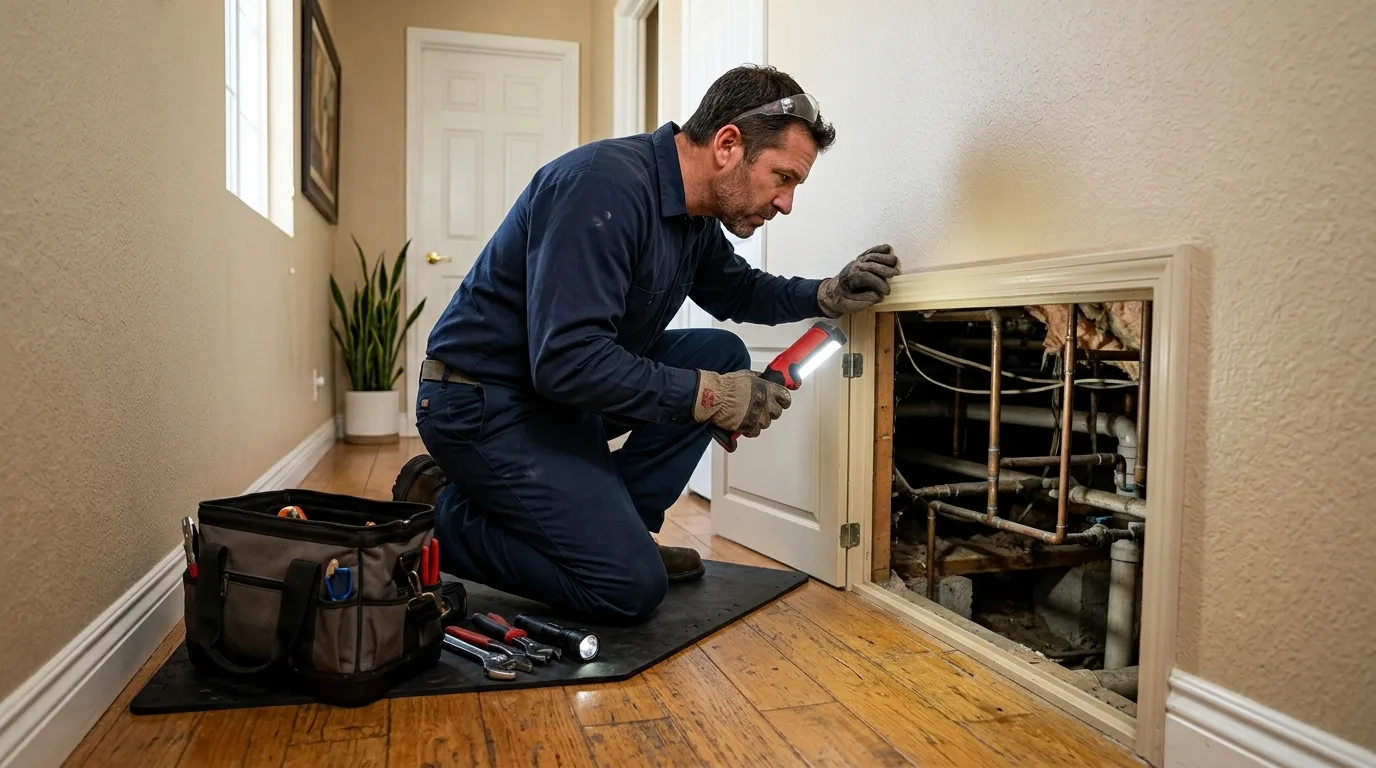
Black iron pipe remains the standard for interior and exterior runs and is what most local homes have. CSST: flexible corrugated stainless tubing: installs faster in walls and attics and is common in newer work, but it has specific bonding and protection requirements that are not optional. Underground runs to a detached garage, ADU, pool heater or fire pit use coated steel or approved polyethylene with a tracer, at proper depth.
Whichever material, the non-negotiables are correct sizing, proper support, protection where pipe passes through framing or paving, accessible shutoffs, and a documented pressure test.
Permits and inspection
Gas work is permitted and inspected in Huntington Beach. That is not bureaucratic friction. It is a second set of eyes on a system that can level a building. Ask for the permit number, and be sceptical of anyone offering to run a gas line quietly on a weekend.
Earthquake shutoff valves
Seismic gas shutoff valves close automatically when shaking exceeds a threshold. They are required in some circumstances and voluntary in others, and plenty of local owners choose to fit one regardless. It is a reasonable thing to ask about while a plumber is already at the meter.
What we will not do
We will not work on the utility side of the meter, we will not repair a leak that the gas company has red-tagged without their process being followed, and we will not skip a permit because it would be faster. Anyone who would is not someone you want on a gas line.
How gas work runs
Test, permit, install, prove
Establish the situation
On an active leak, the utility has made it safe first. On planned work, the existing system and total demand are assessed.
Design and permit
Line size, route, material and shutoffs specified for the appliance load, and the permit pulled before work starts.
Install with protection
Correct support, sleeving where pipe passes through structure or paving, and accessible valves at every appliance.
Pressure test and inspect
The system is proved under test and signed off at inspection. Appliances are relit and checked for correct combustion.
For an active gas smell, call the utility first, then us.
Related work
Gas-connected services
Where we send plumbers
Gas work across coastal and inland properties
Corroded risers and exterior piping in the Harbour, Sunset Beach, Bolsa Chica and the beach blocks; outdoor kitchens and fire features across Seacliff and the inland tracts; and older appliance connections throughout Downtown and Oak View.
Straight answers
Gas line questions
The gas utility, from outside the building, after getting everyone out. Do not touch switches or use a phone inside. They treat gas odor as an emergency and will make the meter safe.
Once the situation is safe, a plumber handles the repair to piping and appliances on your side of the meter. That order is not negotiable.
Because the riser at the meter and any exterior black-iron piping sit in salt air permanently. Coastal properties see corrosion on that component years earlier than inland homes.
It is one of the most common findings on a gas safety check near the water, and replacing a riser is contained, routine work.
Yes. Gas work is permitted and inspected in Huntington Beach, and for good reason: sizing, support, protection and testing all get verified.
Ask for the permit number. An unpermitted gas line is also a problem at resale, when a buyer’s inspector asks about it.
Yes, and it is popular work locally. The run needs to be sized for the appliance BTU demand and the distance, with an accessible shutoff and appropriate underground material where it is buried.
Total household demand gets checked too. Adding a large outdoor appliance to a system already near capacity causes performance problems at every appliance.
Corrugated stainless steel tubing, a flexible alternative to black iron that installs faster in walls and attics. It is code-approved and widely used in newer construction.
It has specific bonding and physical-protection requirements that must be followed. Properly installed it is fine; improperly installed it is not, which is another argument for permitted work.
Usually it is the appliance. A failing thermocouple is the most common cause. But inadequate gas pressure, a partially blocked line or a venting problem can produce the same symptom.
A plumber will check gas pressure at the appliance rather than assuming, particularly if more than one appliance is misbehaving.
Many local owners do. A seismic valve closes gas supply automatically when shaking exceeds a set threshold, which addresses the specific risk of a post-earthquake gas leak in an unoccupied building.
They are required in some circumstances and optional in others. It is worth asking about while a plumber is already working at the meter.
If gas is available at the property, yes. It means running a properly sized line to the kitchen with a shutoff and connector at the appliance.
The electrical side of removing an old range circuit is an electrician’s job. The plumber will tell you where the boundary is.
The system is isolated and pressure tested to prove whether it holds. If it does not, joints and sections are checked with electronic detectors and solution testing until the leak is located.
Underground leaks are harder and may need excavation at a located point. The test comes first either way: nobody should be digging on a hunch.
Yes: restaurant equipment, water heating and rooftop appliances are regular work, and Downtown Huntington Beach has plenty of it.
Commercial work has additional requirements and is usually scheduled around service hours. Details on our commercial plumbing page.
Pressure test, riser condition, connectors and shutoffs in one visit.
Corroded riser, new appliance
Gas work is the wrong place to save money
Tell us what you need: a leak found, a riser replaced, a line run to a new appliance. It gets permitted, pressure tested and inspected.
Serving every Huntington Beach neighborhood, plus the cities next door.