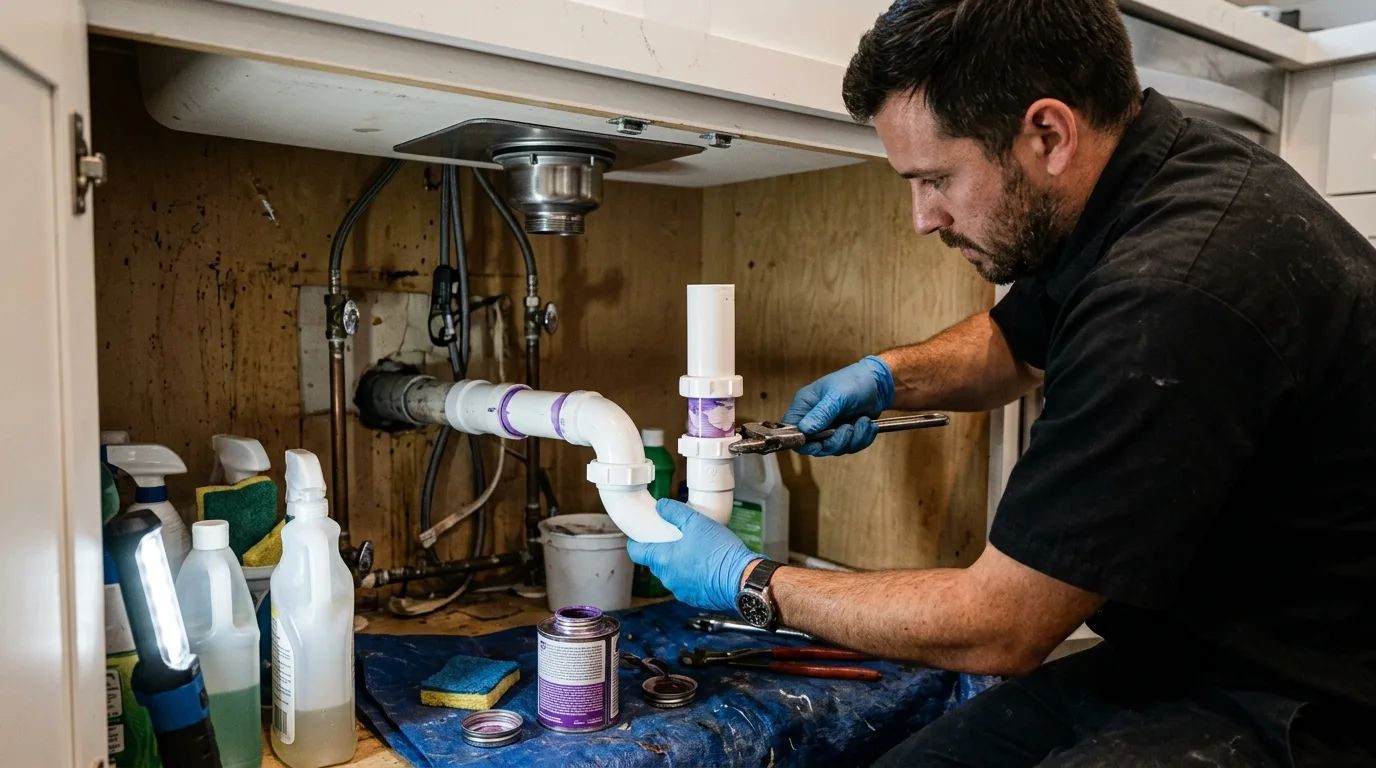
Find it first • Then open the wall
Leak detection in Huntington Beach: pinpoint it before you tear anything out
A rising bill and a stain on the ceiling tell you there is water where it should not be. They do not tell you where. Detection is the step that keeps a repair from becoming a renovation.
Not sure where it is? 657-337-7830
Take a meter photo now and another in an hour with the water unused: that reading alone narrows the search.
At a glance
Isolation Testing
The system is split and pressurized in sections so the loss is proven to be hot, cold, drain or irrigation.
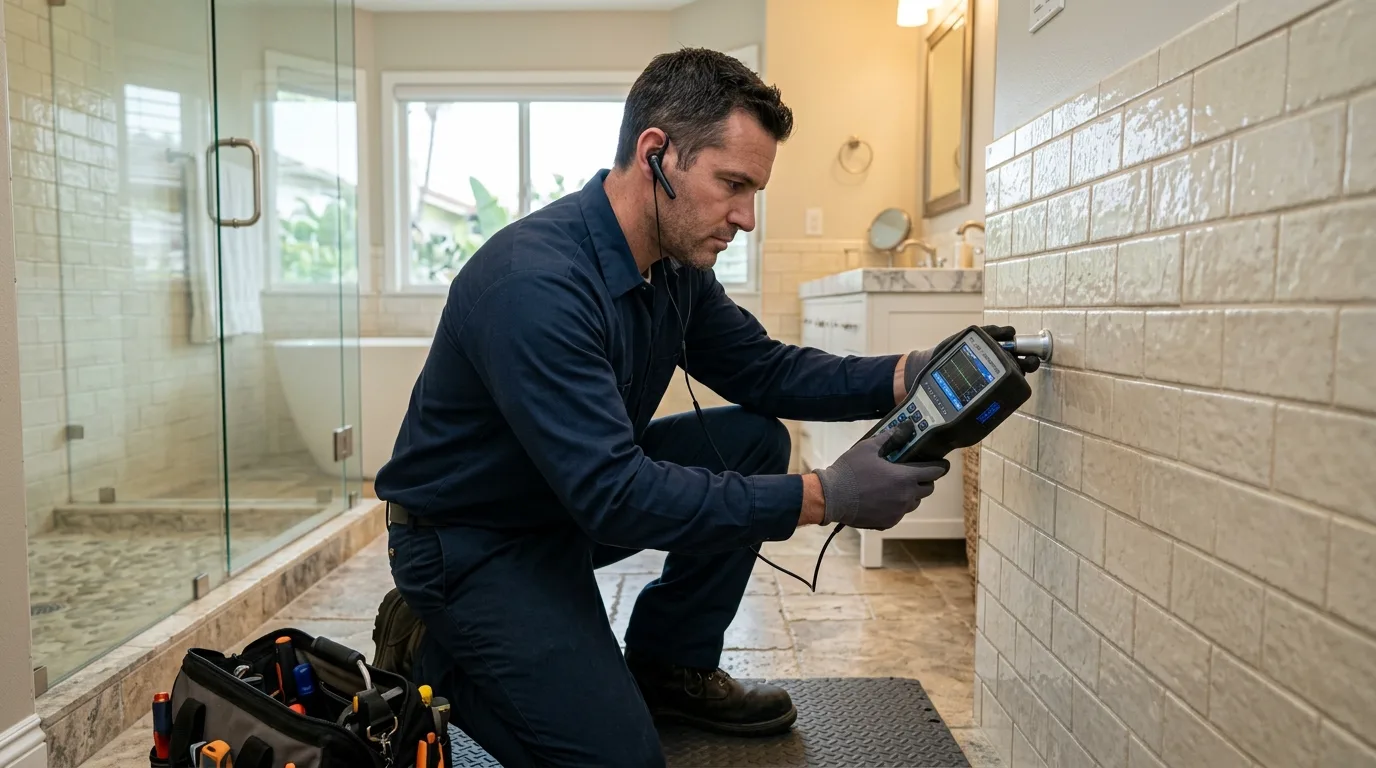
Acoustic & Thermal
Ground microphones and infrared imaging read what is happening behind tile, drywall and concrete.
Tracer Gas Backup
For stubborn locates, inert gas migrates up from the line and gets picked up at the surface.
Minimal Openings
The point of detection is that only the spot that matters gets opened: nothing exploratory.
Symptoms
What tells you there is a hidden leak
Hidden leaks announce themselves indirectly. Water follows framing, slabs and gravity, so the visible symptom is often nowhere near the failure. Any of these is worth a detection visit:
- The water meter moves with the house shut down. Turn off every fixture and appliance, then watch the small triangular or gear-shaped low-flow indicator. Movement means loss.
- A bill that jumped without a lifestyle change. No houseguests, no new irrigation schedule, and 30% more water used than the same month last year.
- Stains, bubbling paint or sagging drywall on a ceiling or wall, especially below an upstairs bathroom or along a wet-wall run.
- Warm or damp flooring, which points at an under-slab hot line: the case handled on our slab leak repair page.
- A musty smell in a closet, cabinet or hallway with nothing visibly wet.
- Pressure that has quietly dropped at fixtures on one side of the house.
- Persistently wet soil or unusually green grass in a strip across the yard, which often means the buried supply line between meter and house is leaking.
- A water heater or boiler cycling more than it used to, which can indicate hot water escaping somewhere in the loop.
The value of a detection visit is not just finding the leak. It is ruling things out. A significant share of suspected slab leaks in this city turn out to be a toilet flapper, an irrigation valve or a pool autofill. Proving that costs a fraction of opening a floor.
The toolkit
Four methods, used in order
Meter observation and isolation
Everything starts at the meter, because it is the only instrument that measures the whole system. The plumber establishes a loss rate, then isolates: house valve closed to separate irrigation from domestic supply, water heater isolated to split hot from cold, individual branches shut to narrow the zone. On a well-plumbed house this alone can cut the search area to a single wing.
Acoustic listening
Water escaping a pressurized pipe generates a broadband hiss that travels through pipe walls, soil and concrete. Ground microphones with electronic filtering let the technician sweep the floor and find the peak. It is genuinely accurate in quiet conditions, and it is the workhorse method for both under-slab and buried yard lines.
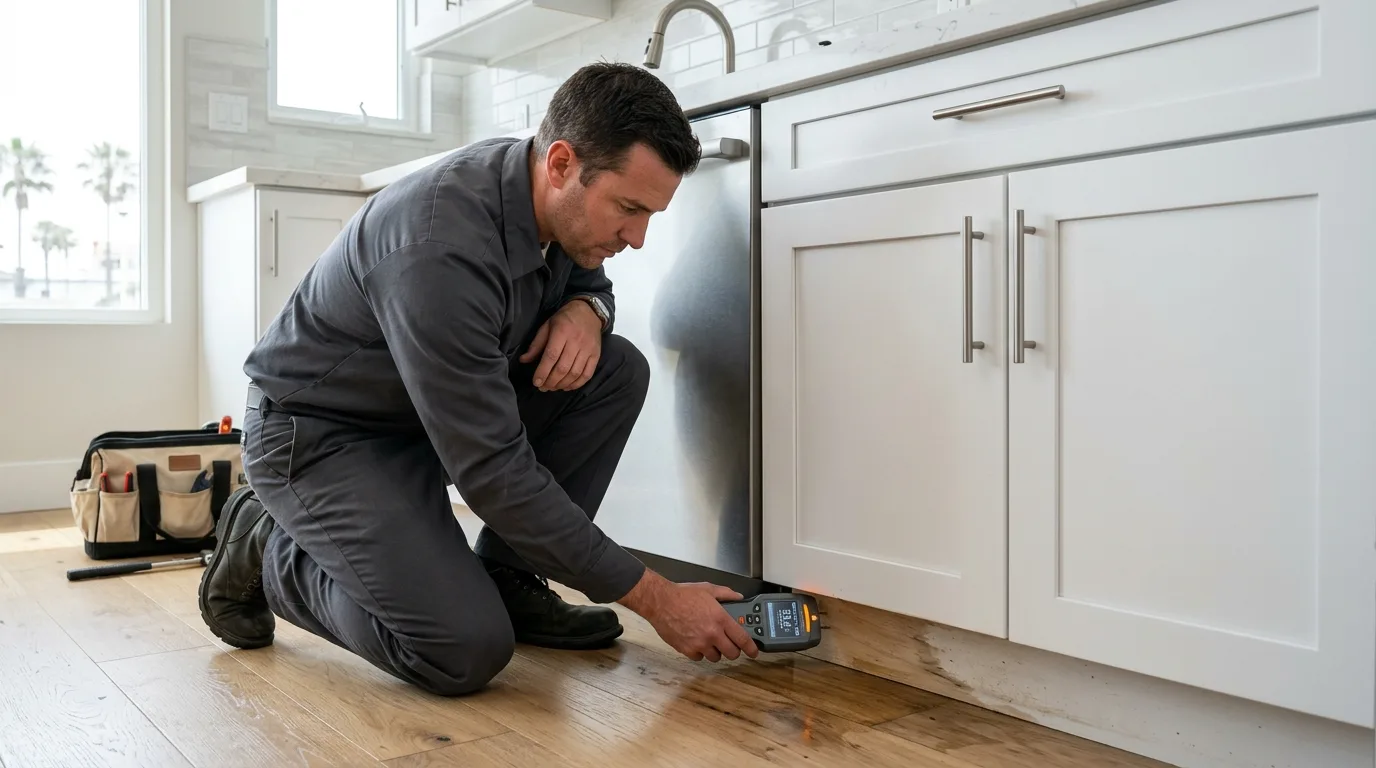
Thermal imaging
An infrared camera does not see water: it sees temperature differences. A hot-water leak under tile produces an unmistakable plume, and evaporative cooling from a cold-water leak inside a wall shows up as well. It is fast, entirely non-contact, and excellent for confirming what the acoustics suggested.
Tracer gas and pipe cameras
When a locate resists the first three methods, the line is drained and charged with an inert hydrogen-nitrogen mix. The gas escapes at the failure and rises through the slab or soil, where a surface detector picks it up. For drain-side problems the answer is a camera instead: pushed through the line with a locator so the exact depth and position of a break can be marked on the ground. That work is detailed on our camera inspection page.
Where leaks hide in Huntington Beach homes
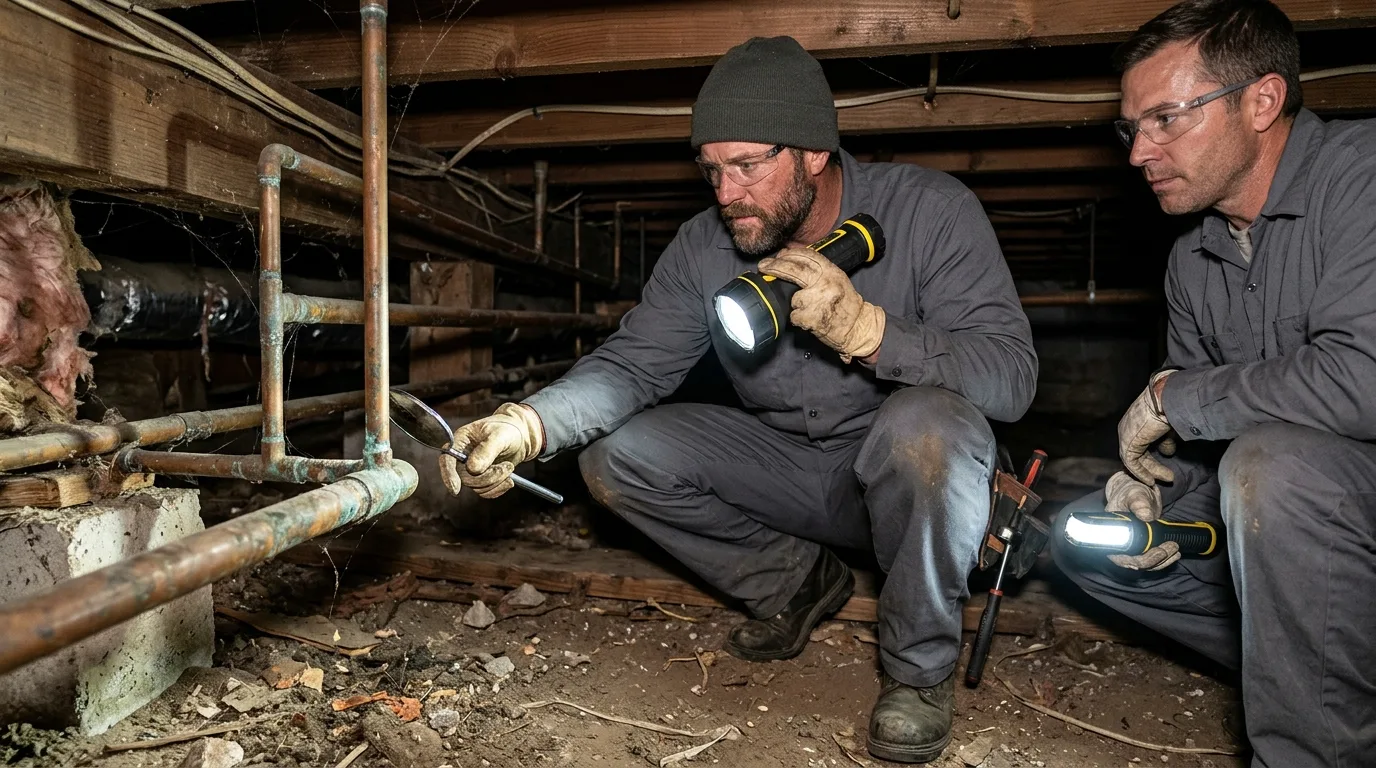
Under the slab. The postwar tracts across South and Southeast HB, the Adams and Garfield corridors and Oak View put copper under concrete. Hot lines fail first.
In the yard, between meter and house. Long runs of older copper or galvanized in coastal soil. A green stripe in a dry lawn is the giveaway, and the repair belongs to main water line work.
Behind a shower valve. Tiled showers from the 1960s and 1970s with original valve bodies weep into the wall cavity for years before anything shows on the outside.
At exterior fittings. Hose bibs, outdoor showers and irrigation tie-ins on salt-exposed walls near the sand corrode faster than anything else on the property.
Inside second-story wet walls. Additions and two-story remodels put drains and supply lines above living space, so a small failure lands on a ceiling below.
At the water heater. Not the tank itself but the flex connectors, the T&P discharge line and the expansion tank fitting: all of which corrode in a garage that breathes ocean air.
What you get at the end of the visit
A marked location, a description of what is leaking and why, a repair recommendation with the honest alternatives, and a price. If the finding is that nothing is wrong with your plumbing and the loss was irrigation, you get that too, in writing, so you can hand it to the landscaper.
How the visit runs
From "somewhere" to a mark on the floor
Establish the loss
Meter reading, low-flow indicator and a timed observation give a real number for how much water is escaping and how fast.
Divide and rule out
Irrigation, pool fill, toilets and the hot side are eliminated one at a time. Half of all callers stop here with a cheap fix.
Pinpoint
Acoustic sweep, thermal confirmation and tracer gas if needed, then the spot is marked and measured.
Quote the repair
You get the method options, the access required and the price before anything is opened up.
Same-day slots most weekdays across all five HB zip codes.
Related work
Once the leak is found
Detection is a diagnosis. These are the repairs it usually leads to.
Where we send plumbers
Detection calls across Huntington Beach and nearby
Detection gear travels to every part of the city (slab-heavy inland tracts, older Downtown and Oak View homes on mixed materials, and the salt-exposed properties in the Harbour, Sunset Beach and Bolsa Chica) plus the neighboring cities listed here.
Straight answers
Leak detection questions
On a pressurized supply line in reasonable conditions, a good technician with acoustic gear typically marks the leak within a foot or two. Close enough to make a small, targeted opening.
Accuracy drops with depth, heavy tile, high ambient noise and very small leaks. That is exactly when tracer gas gets used instead of guessing, and a plumber should tell you when they are at the limit of a method rather than pushing on.
Locating it, yes. That is the point of the equipment. Repairing it eventually requires access to the pipe, and there is no method that fixes a hole in a buried line without reaching it or replacing the run.
What detection buys you is the difference between one small opening and a series of exploratory holes across a floor or wall.
It is priced as its own service, because it is a specialised visit with specialised tools, and the fee is quoted before dispatch.
Set against the cost of opening the wrong section of slab or drywall, it is the cheapest part of the job. Ask on the phone whether the detection fee is credited toward the repair if you proceed the same day.
Close the house shutoff and watch the meter again. If it keeps moving, the loss is between the meter and that valve: usually the buried supply line or an irrigation tie-in. If it stops, the leak is inside the house or under the slab.
That two-minute test tells a plumber more than a long description, so do it before you call if you can safely reach both the meter and the shutoff.
Gas work is handled separately and takes priority over convenience. If you smell gas, leave the building, call the gas utility from outside, and let them make it safe at the meter first.
Once the situation is safe, the repair to your house lines: corroded risers, failed shutoffs, appliance connections: is covered on our gas line services page.
Yes, and it is common. A slow weep behind a shower valve or a pinhole spraying into an insulated cavity can run for a long time before the moisture reaches a painted surface.
Thermal imaging and moisture meters catch those before they become visible, which is why a detection visit is worth booking on suspicion rather than waiting for proof on a ceiling.
That combination usually points at something intermittent: a toilet that runs periodically, an irrigation valve that leaks only while the zone is pressurized, or a pool autofill that cycles.
The plumber will run the system through those states rather than only testing it at rest. Bring the bills: the usage pattern across months often identifies the culprit on its own.
Most residential locates run one to three hours. Simple confirmations are quicker; a difficult under-slab locate with tracer gas can take most of a day.
The plumber will tell you when a locate is turning into a long job, and what the options are, before the clock runs on.
Irrigation and pool plumbing can be tested and located with the same methods, and it is a frequent finding on a suspected slab leak call.
Repairs on irrigation controllers, sprinkler heads and pool equipment are usually a landscape or pool trade rather than plumbing. The plumber will identify and mark the leak, then tell you plainly who should fix it.
If the house still runs galvanized supply lines or has had multiple leaks, detection can become an expensive way to keep confirming what the system is telling you.
In those cases the honest advice is often to spend the money on repiping rather than a fourth locate. A plumber who says that is saving you money, not turning down work.
Scope, tools and fee explained before anyone drives out.
Water somewhere, not sure where
Stop guessing and get the leak marked
Describe the symptom and the meter behaviour. We will route a plumber with detection gear who works these neighborhoods and knows where local homes fail.
Serving every Huntington Beach neighborhood, plus the cities next door.