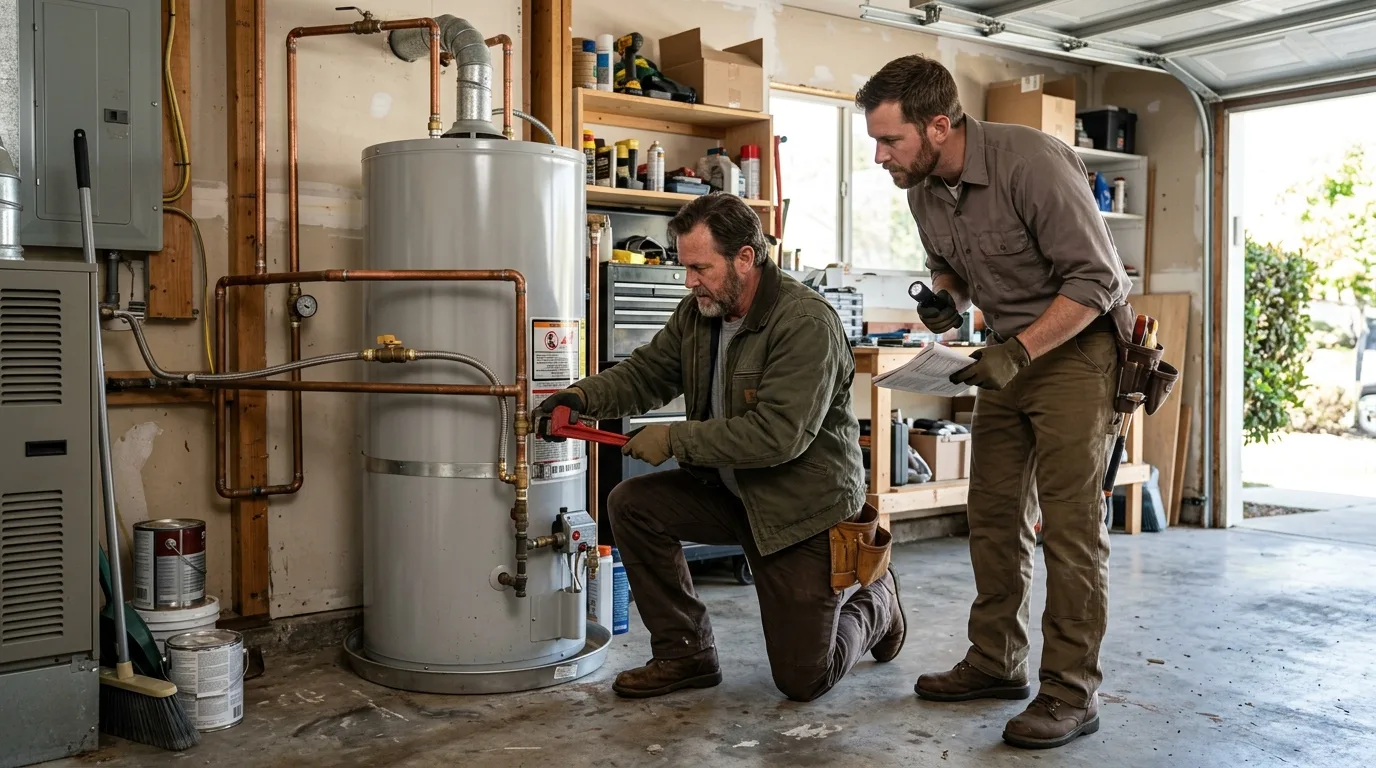
Valves • Diverters • Drains
Shower and bathtub plumbing in Huntington Beach: behind the tile is where it matters
A dripping shower valve wastes water and warns you about the pipe in the wall. In older local bathrooms, that wall is where slow leaks live for years.
Shower dripping? 657-337-7830
A shower that drips when off is a cartridge or seat issue: fixable, and worth doing before it wears the valve body.
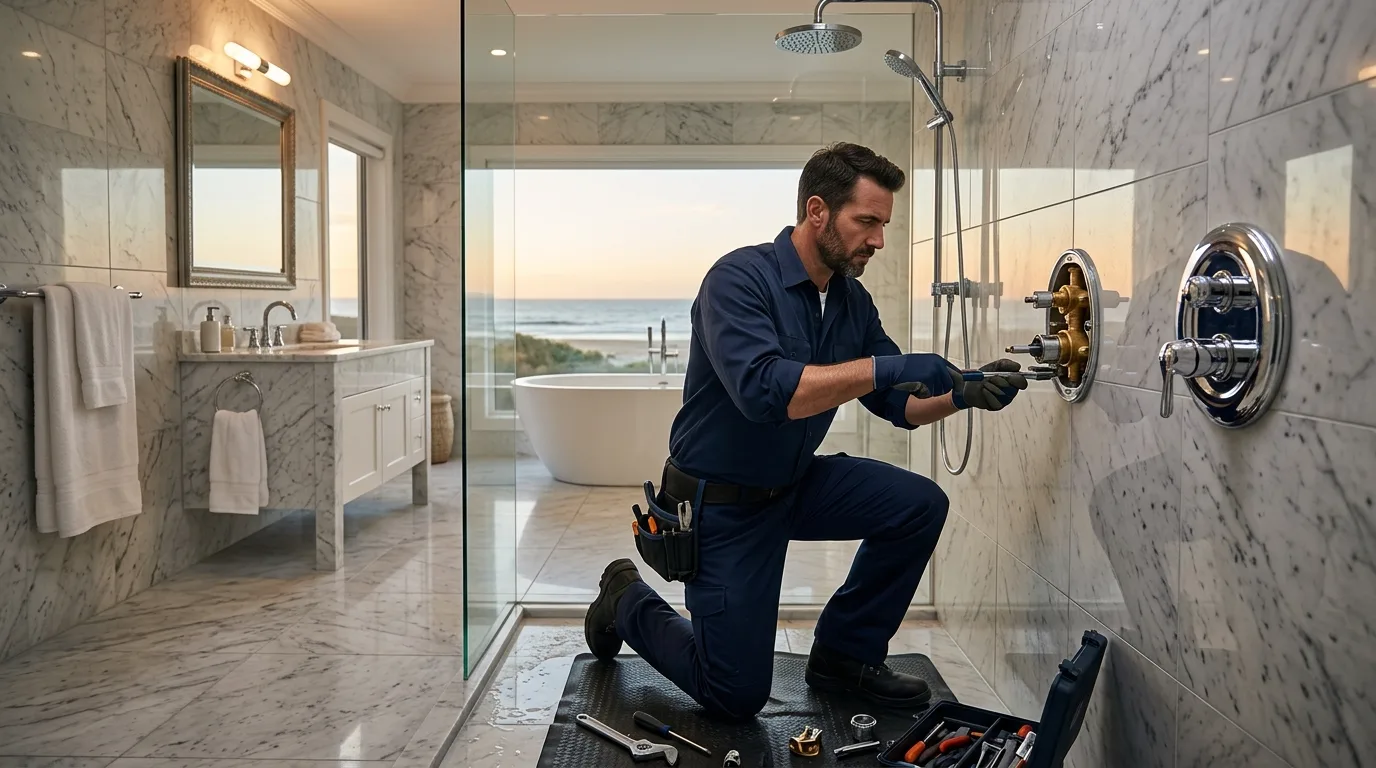
At a glance
Cartridges & Valves
Dripping, stiff or scalding valves rebuilt, or replaced with pressure-balancing and thermostatic units.
Drains & Pans
Slow tub drains, failed strainers, leaking shoe fittings and pan problems in tiled showers.
Anti-Scald Compliance
Modern valves protect against temperature spikes when another fixture runs. Older two-handle sets do not.
Wall Leaks Found
Suspected leaks behind tile are located with thermal and moisture tools before anything is opened.
Symptoms
What goes wrong in showers and tubs
- Drips when the valve is off. A worn cartridge or damaged seats and springs. Cheap to fix, and worth doing before the constant flow erodes the valve body itself.
- Temperature swings when a toilet flushes. An older two-handle or non-balancing valve. Modern pressure-balancing and thermostatic valves exist specifically to prevent this, and it is a genuine safety issue with children or older residents.
- Handle stiff, loose or spinning. Scale in the cartridge, a stripped stem, or a broken handle adapter. Common in hard water.
- Weak flow from the shower head. Usually a scaled head or a clogged screen, occasionally a partially closed valve or a supply problem. Rarely the valve itself.
- Water coming from both the tub spout and the shower head. A failed diverter. On a tub spout that is a spout replacement; on a three-valve set it is a diverter cartridge.
- Slow tub or shower drain. Hair and soap in the branch line, or a failed pop-up assembly. Straightforward, and covered further on our drain cleaning page.
- Stains on a ceiling below a bathroom. A shower pan, drain shoe, or supply leak inside the wall. This one needs proper leak detection before anything is opened.
- Musty smell in the bathroom. Moisture behind tile or a failed seal at the pan perimeter, both of which get worse quietly.
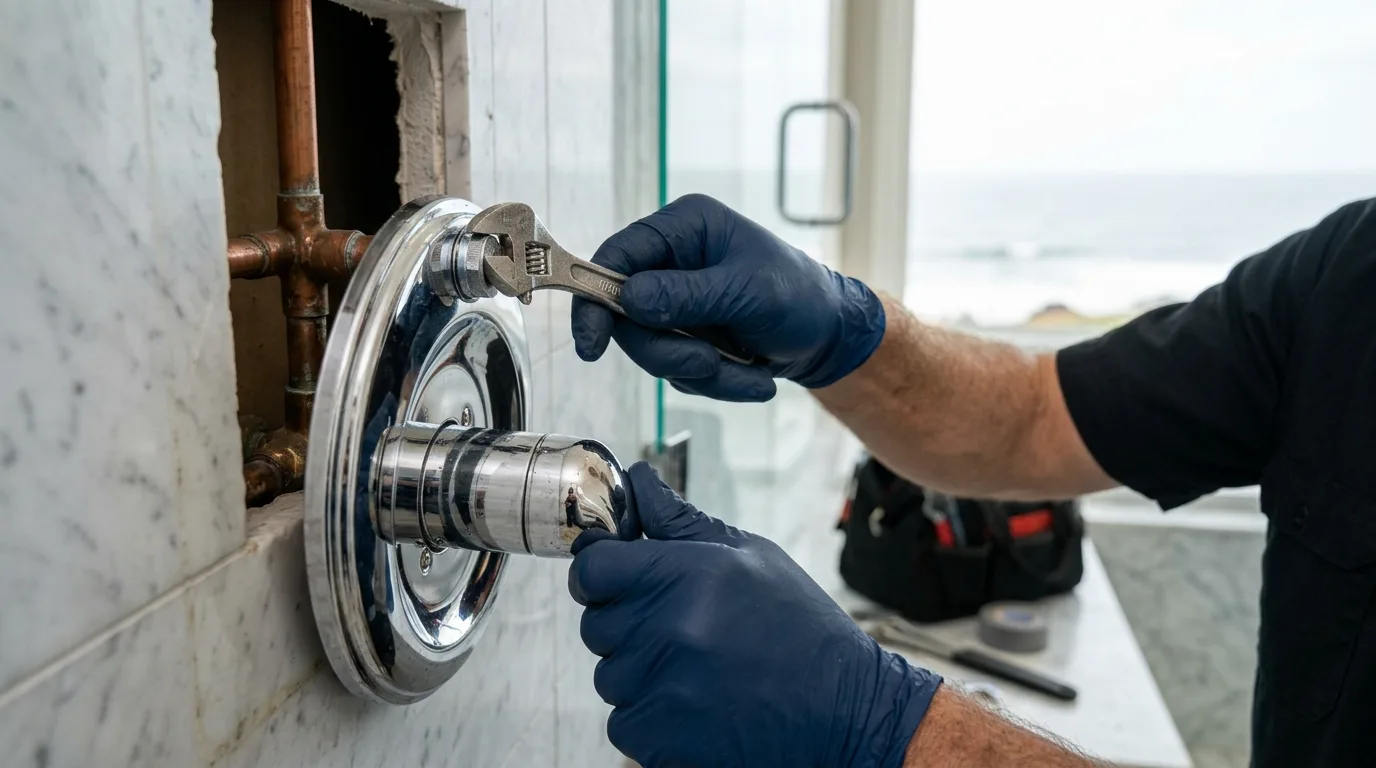
Valves
Rebuild, replace or upgrade
Rebuild the existing valve
If the valve body is sound and parts are available, a new cartridge or a seats-and-springs kit restores it for very little. This is the right first move on most name-brand valves less than a couple of decades old.
Replace with a modern valve
Where the body is eroded, the brand is obsolete, or parts simply do not exist: a real issue on 1960s and 1970s fixtures in older Huntington Beach bathrooms: replacement is the answer. That means opening the wall behind the valve, which is why the access conversation matters.
Upgrade to pressure-balancing or thermostatic
Pressure-balancing valves hold temperature when another fixture draws water. Thermostatic valves hold a set temperature and allow separate volume control, which is the premium option and genuinely nice in a main bathroom. Both are significant safety improvements over an old two-handle set.
Access: the part nobody enjoys
Valve replacement needs access to the pipework behind it. Options are opening tile at the valve, working from the back wall in an adjoining closet or hallway, or fitting a removable access panel. Working from behind is often the cheapest route because drywall is far easier to repair than matched tile: particularly on a bathroom whose tile has not been manufactured in forty years.
A plumber should discuss this before touching anything, and should tell you honestly that matching old tile is rarely possible. Where a bathroom is due for renovation anyway, the sensible move is to sequence the plumbing with that work.
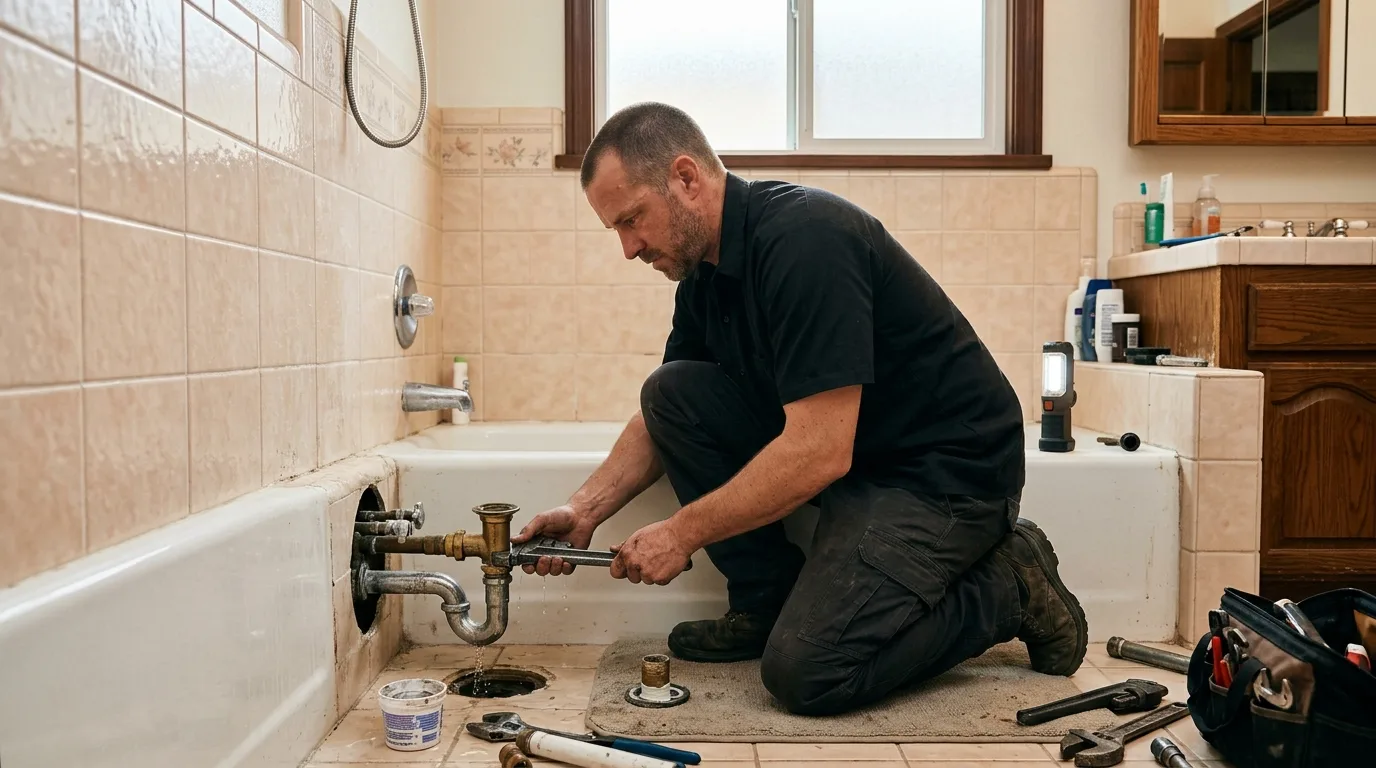
Tub and shower drains
Tub waste and overflow assemblies corrode, and the shoe fitting beneath a tub is a classic hidden leak on a second floor. Replacing one usually needs access from below or from the side, and on a slab home that can mean cutting concrete: which is when the reroute conversations from our slab leak work become relevant.
Shower pans are their own subject. A tiled pan with a failed liner or a compromised drain flange will leak into the structure regardless of how good the plumbing above it is, and no amount of regrouting fixes that. Diagnosing pan failure honestly matters, because the repair is a rebuild rather than a plumbing visit.
Local conditions worth knowing
Hard water scales cartridges, heads and diverters. Fixtures with accessible, widely available parts are worth choosing for that reason alone.
Salt air reaches bathroom hardware in beach-block homes with open windows, so finish quality matters more here.
Second-story additions put tubs and showers above living space. That is where a small leak becomes a ceiling repair, and why suspicion should be investigated rather than watched.
Original 1960s bathrooms across the older tracts often still have galvanized branch lines behind the tile. If the wall is opening anyway, that is the moment to deal with the pipe rather than only the valve. See repiping.
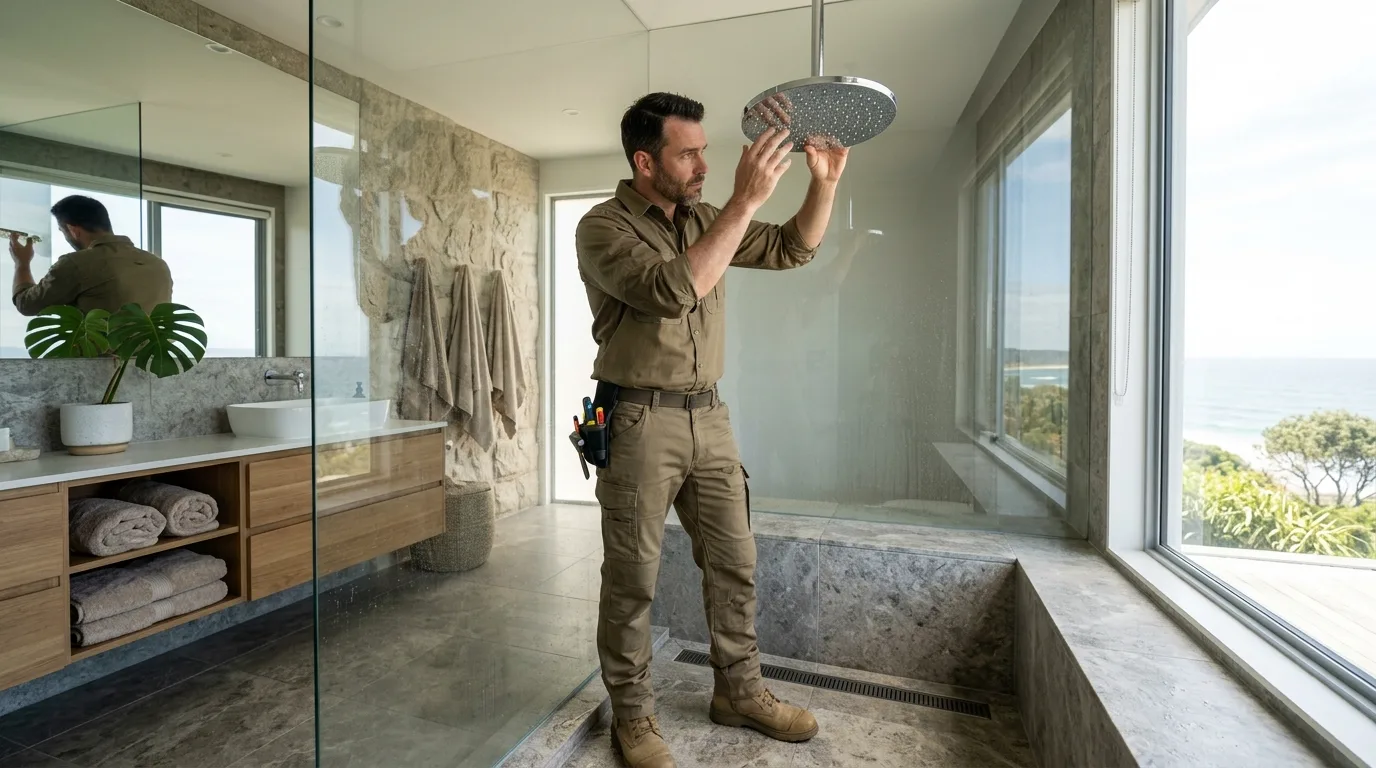
The visit
From drip to done
Identify the valve
Brand and generation determine whether parts exist. That answer decides rebuild versus replacement immediately.
Plan the access
Front, back or access panel: discussed and agreed before any tile or drywall is opened.
Fit and pressure test
New cartridge or valve installed, lines tested, and temperature limit stops set correctly.
Check the whole fixture
Diverter, spout, head, drain and seals looked at while the plumber is there, so nothing gets a second visit.
Send a photo of the handle and trim: it usually identifies the valve.
Related work
Bathroom plumbing nearby
Where we send plumbers
Shower and tub work across local bathrooms
Original 1960s tiled bathrooms in Oak View, Goldenwest and the older tracts; second-story additions across South and Southeast Huntington Beach; and heavy-use guest bathrooms in rentals near Downtown.
Straight answers
Shower and bathtub questions
Usually not. A worn cartridge or a seats-and-springs kit on a serviceable valve is an inexpensive part and a short visit.
It is worth doing promptly. A constant drip erodes the valve body over time, and a rebuild that is cheap today becomes a valve replacement behind tile later.
Because the valve is not compensating for the pressure change. Old two-handle and basic single-handle valves simply pass through whatever the supply does.
Pressure-balancing and thermostatic valves prevent it. Beyond comfort, this is a scald-safety issue in homes with children or older residents.
Not always. Working from behind, through a closet or hallway wall: is often preferable, because drywall repair is far easier than matching decades-old tile.
Where front access is unavoidable, the opening is kept as small as possible, and an access panel can be fitted so future work needs no demolition at all.
Honestly, rarely. Tile from the 1960s and 1970s is generally out of production, and even close matches show. Any plumber telling you otherwise is optimistic.
That reality is why back-wall access and access panels are worth considering, and why plumbing work is best sequenced with a planned bathroom renovation where one is coming.
Almost always hair and soap within a few feet of the drain, which clears easily. A failed pop-up or lift-and-turn assembly can also restrict flow.
If several fixtures are slow at once, the problem is further downstream and belongs under drain cleaning.
Do not open the ceiling yet. The source could be the pan, the drain shoe, a supply line or the valve, and each means a different repair.
Thermal imaging and moisture readings identify it first. Opening drywall on a guess is how one repair becomes three.
Patching a failed pan liner or a compromised drain flange rarely holds, because the water is finding a path through the assembly rather than a single hole.
The honest answer is usually a pan rebuild, which is tile and waterproofing work alongside the plumbing. A plumber should tell you that plainly rather than selling a patch.
Most often a scaled shower head or a clogged screen: both quick fixes. A partially closed valve or a restricted cartridge can do the same.
If pressure is poor everywhere, that is a house-wide issue: see pressure regulator or, on galvanized pipe, repiping.
In a main or family bathroom it is a genuine improvement: stable temperature, separate volume control, and no surprises when the washing machine fills.
It costs more than a pressure-balancing valve and needs the same wall access. If the wall is already opening, it is the moment to decide.
The plumbing side: drain relocation, valve height, supply changes: is straightforward work, and it is a common request for ageing-in-place.
The rest is tile, waterproofing and sometimes framing, so it is a small renovation rather than a plumbing visit. We can tell you what the plumbing portion involves.
Rebuild, replace or upgrade, with the access implications of each.
Dripping, scalding or stained
Behind-the-tile problems get cheaper the sooner you look
Describe the fixture, the age of the bathroom and what it is doing. A photo of the handle and trim usually identifies the valve before we arrive.
Serving every Huntington Beach neighborhood, plus the cities next door.