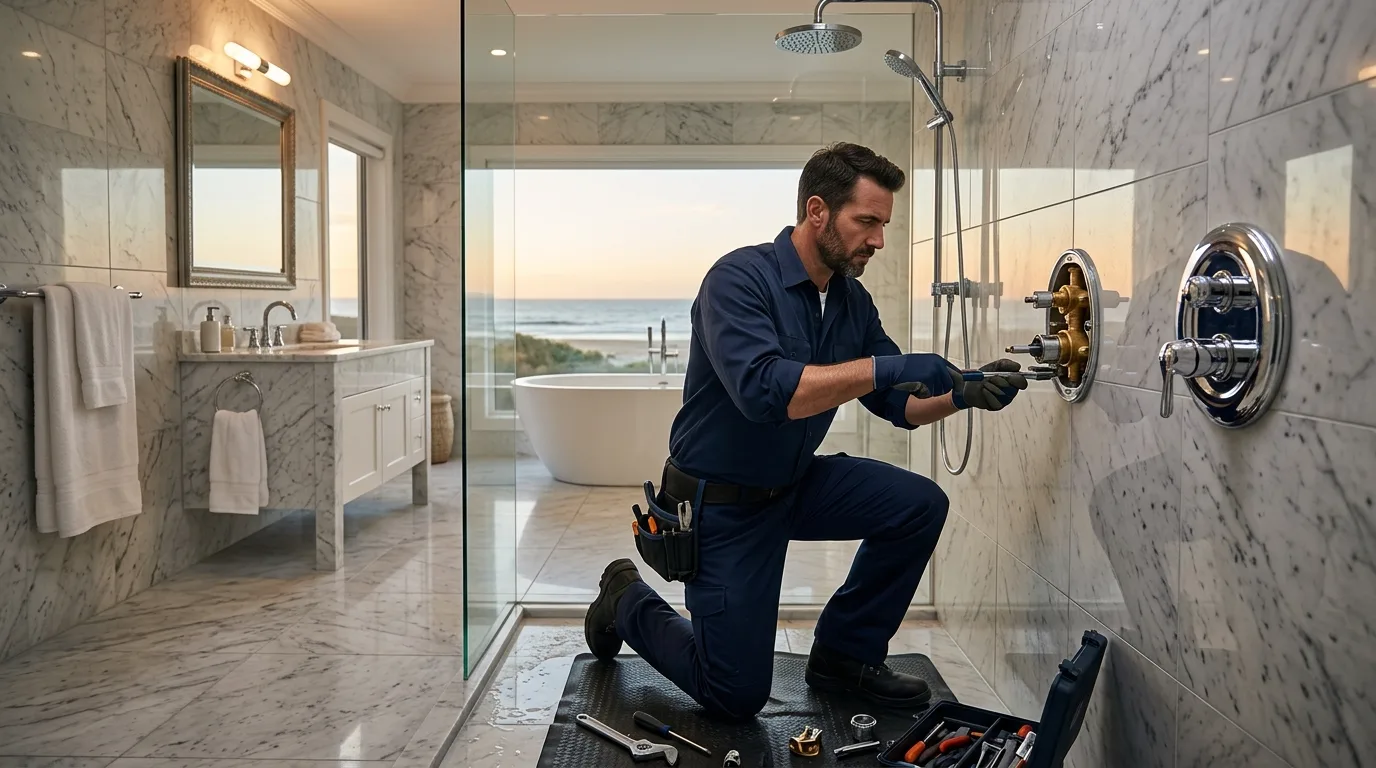
Repair, rebuild or replace
Toilet repair and installation in Huntington Beach: the cheapest plumbing win in the house
A running toilet can waste more water than a leaking pipe, and most of them are fixed with parts costing less than lunch. The ones that are not usually have a flange problem worth finding early.
Toilet running? 657-337-7830
Close the angle stop behind the toilet to stop a runaway fill valve before it turns into a bill.
At a glance
Water Waste Stopped
A silently running toilet can waste hundreds of gallons a day. It is the fastest bill fix on any property.
Rebuild or Replace
Internal parts, a wax ring, a flange repair or a whole new fixture: whichever the fault actually calls for.
Flange Checked
A rocking toilet or a smell at the base means the flange, not the toilet. That gets diagnosed properly.
Parts and Labor Quoted
You know the cost of a rebuild versus a replacement before either one begins.
Diagnosis
What each symptom actually means
Toilets are simple machines with a small number of failure points. Knowing which one you have tells you whether this is a twenty-minute job or a fixture replacement.
- Running constantly or cycling. Almost always the flapper or the fill valve. A worn flapper lets water past into the bowl; a failing fill valve never quite shuts. Both are inexpensive parts.
- Weak or incomplete flush. Could be a low water level in the tank, a flapper closing too early, or mineral scale blocking the rim jets and siphon. In hard-water areas the jets are the usual culprit and they can often be cleared.
- Needs a double flush. Frequently an early low-flow model with poor bowl design, or scale reducing the effective flush volume. A modern high-efficiency fixture solves what no repair can.
- Water on the floor at the base. A failed wax ring, loose closet bolts, or a flange sitting below finished floor level. This one matters: water reaching subfloor rots it quietly.
- Rocking or moving when you sit. Loose bolts or a damaged flange. Tightening a rocking toilet without checking the flange can crack the china.
- Sewer smell nearby. A broken wax seal letting gas past, or a dry trap in a rarely used bathroom.
- Sweating tank in summer. Condensation, not a leak: common in humid coastal weather. Insulated tanks and anti-sweat measures help.
- Bubbling or slow drop when other fixtures run. Not a toilet problem at all. That is a main line or vent issue, covered under drain cleaning.
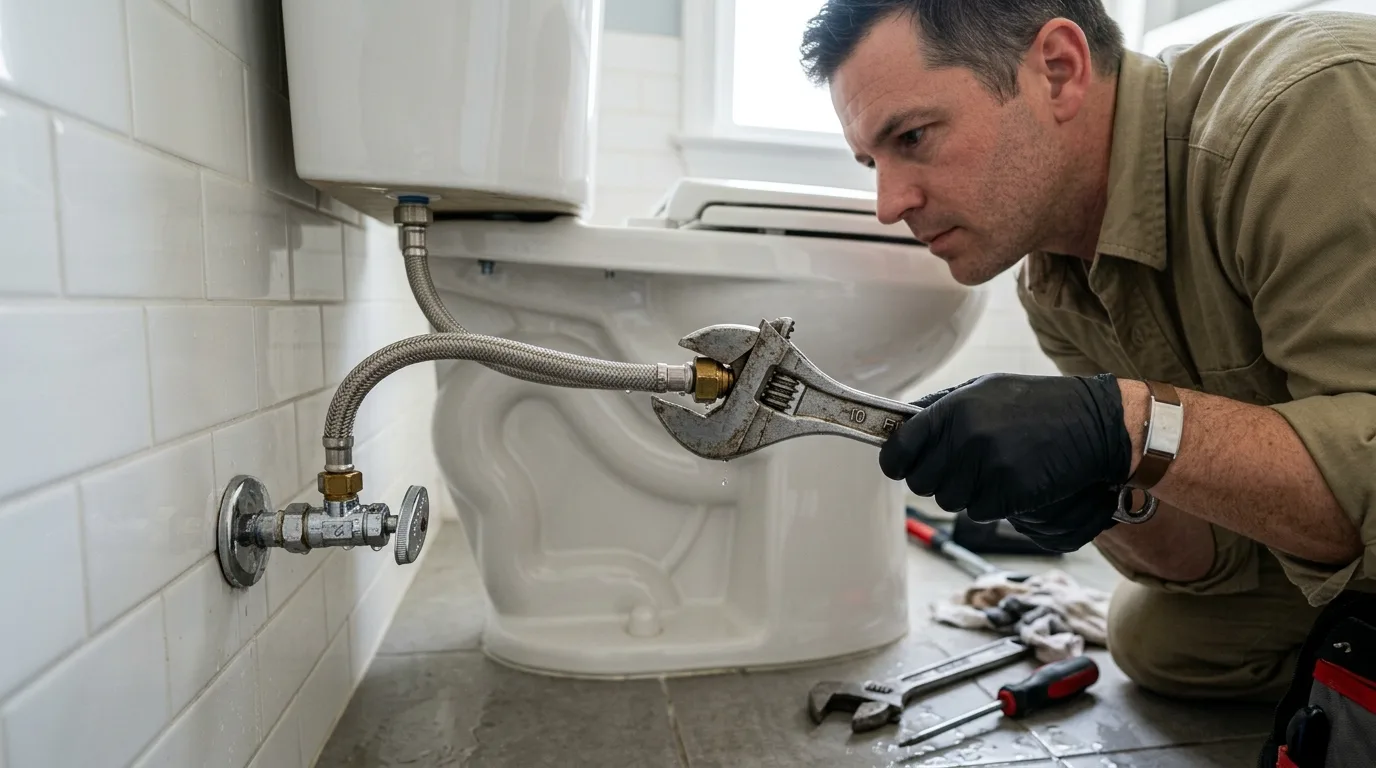
Repair or replace
When a new toilet is the better buy
Repair makes sense
For any internal-parts failure on a fixture you are happy with. Flappers, fill valves, flush valves, handles, supply lines and angle stops are cheap, and a full tank rebuild costs a fraction of a replacement. A wax ring and closet bolts are similarly modest, provided the flange is sound.
Replacement makes sense
When the china is cracked. Nothing repairs that. When you have an early 1990s low-flow model that never flushed properly, because bowl design was the problem and no part fixes it. When the fixture is a color or height you dislike anyway and a rebuild is due. And when the flange has failed badly enough that the repair means lifting the toilet regardless.
What a modern fixture gives you
Current high-efficiency toilets flush better on less water than the first generation of low-flow models. Comfort-height bowls suit older residents and taller households. Skirted trapways are far easier to clean. Dual-flush is useful for some households and pointless for others: worth thinking about honestly rather than buying on principle.
Rentals and short-term rentals
A lot of local plumbing calls come from rental property, and the economics differ. In a short-term rental near Downtown or the pier, a robust single-flush fixture with a reliable, commonly stocked valve set beats a designer unit with proprietary parts nobody carries on a Saturday.
Hard water is the local factor
Scale builds in rim jets, the siphon and the fill valve. It is the main reason flush quality declines over years in this area, and it is why treating the water pays back across every fixture rather than just the toilet.
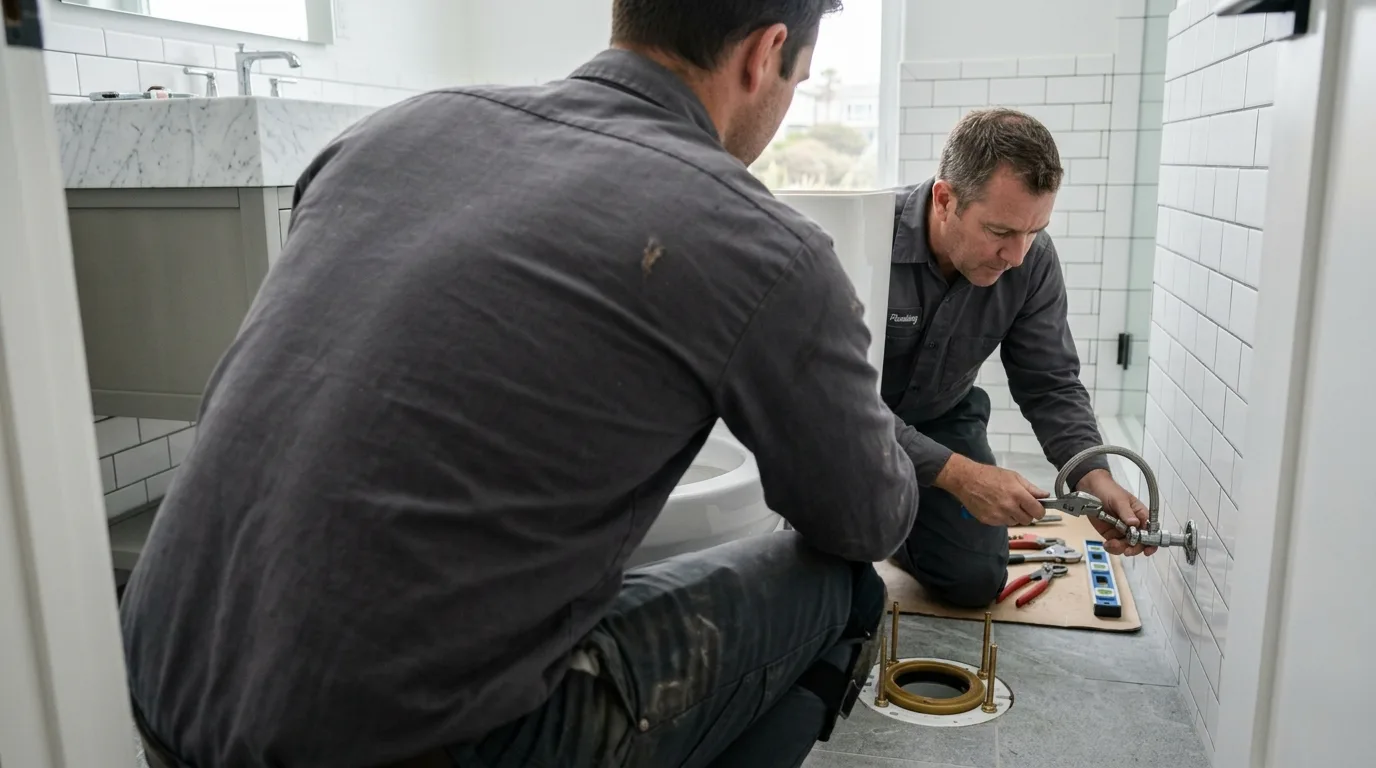
The flange: the part that turns a small job into a real one
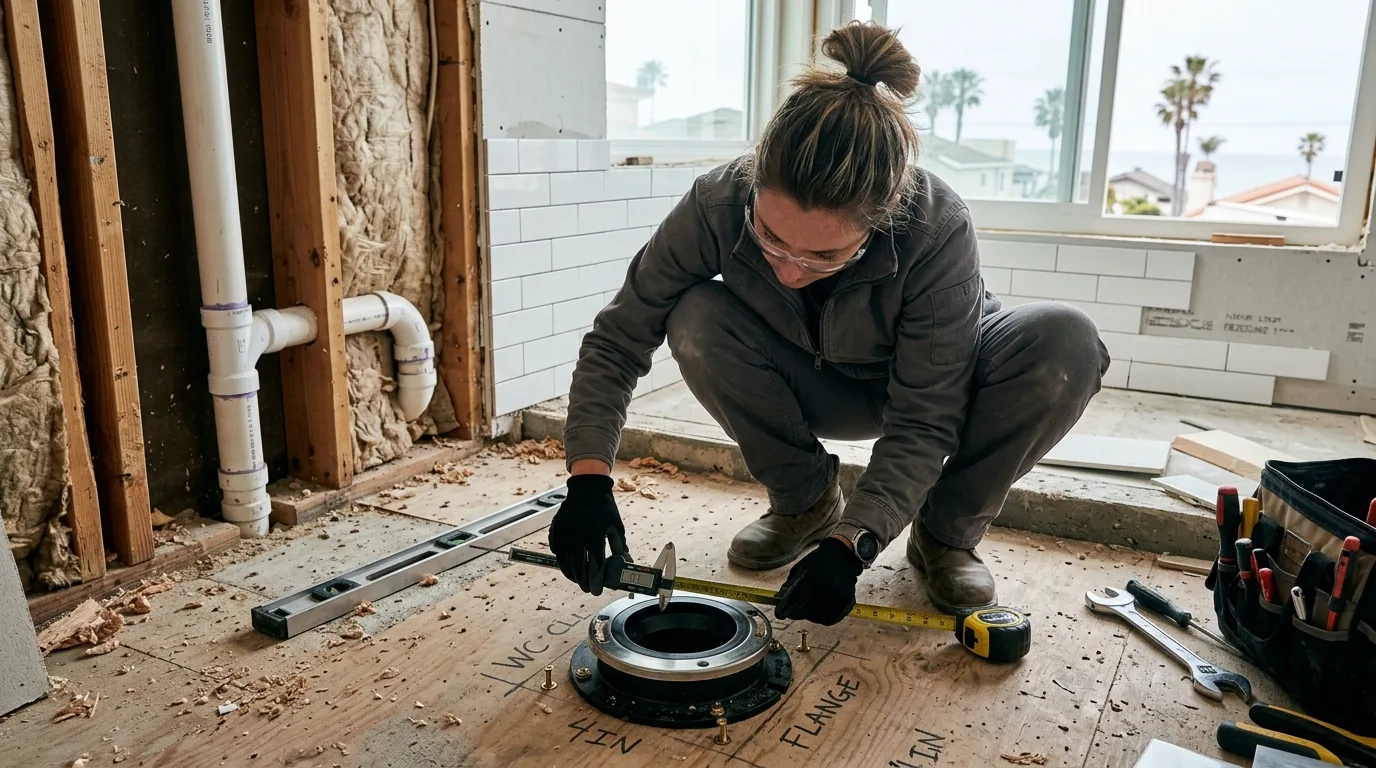
The closet flange anchors the toilet and seals it to the drain. On older local homes it may be cast iron that has corroded, plastic that has cracked, or a flange sitting below a floor that has had tile added over it. Any of those means the wax ring cannot seal properly no matter how many times it is replaced.
Symptoms are a rocking fixture, water appearing at the base, or a smell that returns after each “repair.” The fix ranges from a repair ring to replacing the flange and, in bad cases, opening a small area of floor. A plumber should tell you which before lifting the toilet, and confirm once it is off.
Installation done properly
Old fixture drained and removed, flange inspected and corrected, new wax or waxless seal set, bowl bedded and levelled, closet bolts snugged in stages so the china is not stressed, tank fitted, supply connected with a new line, and the whole thing tested through several flushes. Caulking at the base is a judgement call. It looks neat and stops mop water getting under, but it also hides a leak, so opinions differ and a plumber should explain theirs.
What we do not do
Tile work, subfloor replacement and drywall repair around a long-term leak are other trades. If a toilet has been leaking into the floor for years, expect that conversation, and be glad someone raised it before the floor gave way.
How the visit runs
Diagnose, quote, fit, test
Identify the fault
Tank internals, seal, flange or fixture design. Each has a different cost, so it gets identified rather than assumed.
Repair price versus new fixture
You hear both numbers. On an older fixture with several faults, replacement often wins on value.
Work done cleanly
Floor protected, old parts and packaging removed, and the area left dry and clean.
Tested properly
Multiple flushes, a check for movement, and the base watched for seepage before the plumber calls it done.
Small job, quick slot: usually same or next day.
Related work
Nearby fixture services
Where we send plumbers
Toilet work across homes and rentals
Older fixtures and corroded flanges in Downtown and Oak View, heavy-use bathrooms in short-term rentals near the pier, and multi-bathroom homes in Seacliff and the Harbour, plus the cities below.
Straight answers
Toilet questions
Enough to notice on a bill. A steadily running fill valve can waste hundreds of gallons a day, which is more than most leaking pipes.
That is why it is worth fixing this week rather than this season. The parts are inexpensive and the repair is quick.
Usually one of three things: an early low-flow design that never worked well, scale blocking the rim jets and siphon, or a tank water level set too low.
Scale can often be cleared and the level adjusted. If the fixture is a first-generation low-flow model, a modern high-efficiency toilet genuinely flushes better on less water.
It can be. A failed wax ring or loose bolts is a straightforward repair, but water reaching subfloor over months or years causes rot that is far more expensive than the plumbing.
Do not simply tighten the bolts, over-tightening cracks china, and it does nothing if the flange is the problem. Get it lifted and looked at.
Usually yes, for standard rough-in dimensions, and most local homes are standard. Tell us the approximate age of the house and whether it is a one-piece or two-piece fixture.
If the flange turns out to be corroded or below floor level, the plumber will explain the additional repair before proceeding.
Opinions differ legitimately. Caulking looks tidy and stops mop water and spills getting underneath. It also conceals an early leak, which is the argument against it.
A common compromise is caulking the sides and front while leaving the back open, so any leak shows itself. Ask what your plumber recommends and why.
For some households, yes. For others the water saving is marginal and the extra mechanism is one more thing to go wrong.
If reliability matters more, in a rental, for instance: a good single-flush high-efficiency fixture with widely stocked parts is often the better choice.
No. That is air being displaced through the toilet trap because the main line or vent is restricted, and it is an early warning of a drainage problem.
Replacing the toilet would change nothing. It belongs under drain cleaning, and it is worth acting on before it becomes a backup.
Comfort-height fixtures are a straightforward swap and popular with older residents and taller households.
Wall-hung units are a bigger project. They need in-wall carrier framing and different drainage, so they suit a remodel rather than a replacement. The plumber will tell you what your wall would require.
Then it is replaced. Vitreous china cannot be reliably repaired, and a hairline crack in a tank or bowl will eventually open under normal use.
If it is cracked and leaking now, shut the angle stop behind it and call. That stops the water while the replacement is arranged.
Constantly. For rentals, the plumber needs to know who is authorizing the work: owner, manager or tenant, before pricing is approved.
In condos, note that a leak reaching a neighbour below turns a small repair into an insurance conversation, so these get treated with some urgency.
Often the cheapest visit on this site, and it pays for itself on the bill.
Still running
A toilet fault is small until the floor is involved
Describe what it is doing (running, weak, rocking, wet at the base) and we will bring the right parts on the first visit.
Serving every Huntington Beach neighborhood, plus the cities next door.