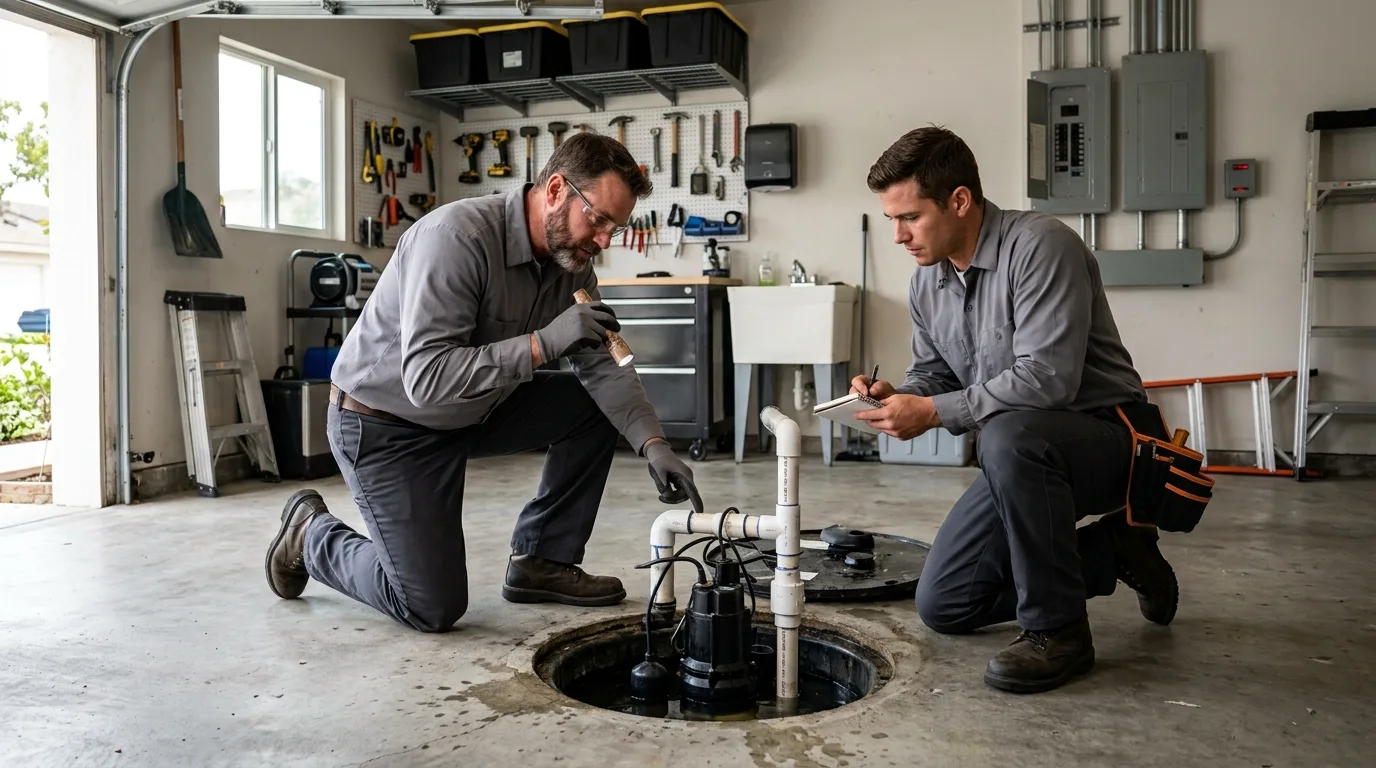
“Can I see the footage?”
You should be shown the defect on video, with the distance from the access point called out. No footage, no quote.
Laterals • Roots • Collapses
The line from your house to the city main is the most expensive plumbing on the property and the least visible. No one should quote you a replacement without showing you footage of what is wrong.
Backing up repeatedly? 657-337-7830
Bring any camera footage a previous plumber gave you. A second read on the same line is often free of charge.
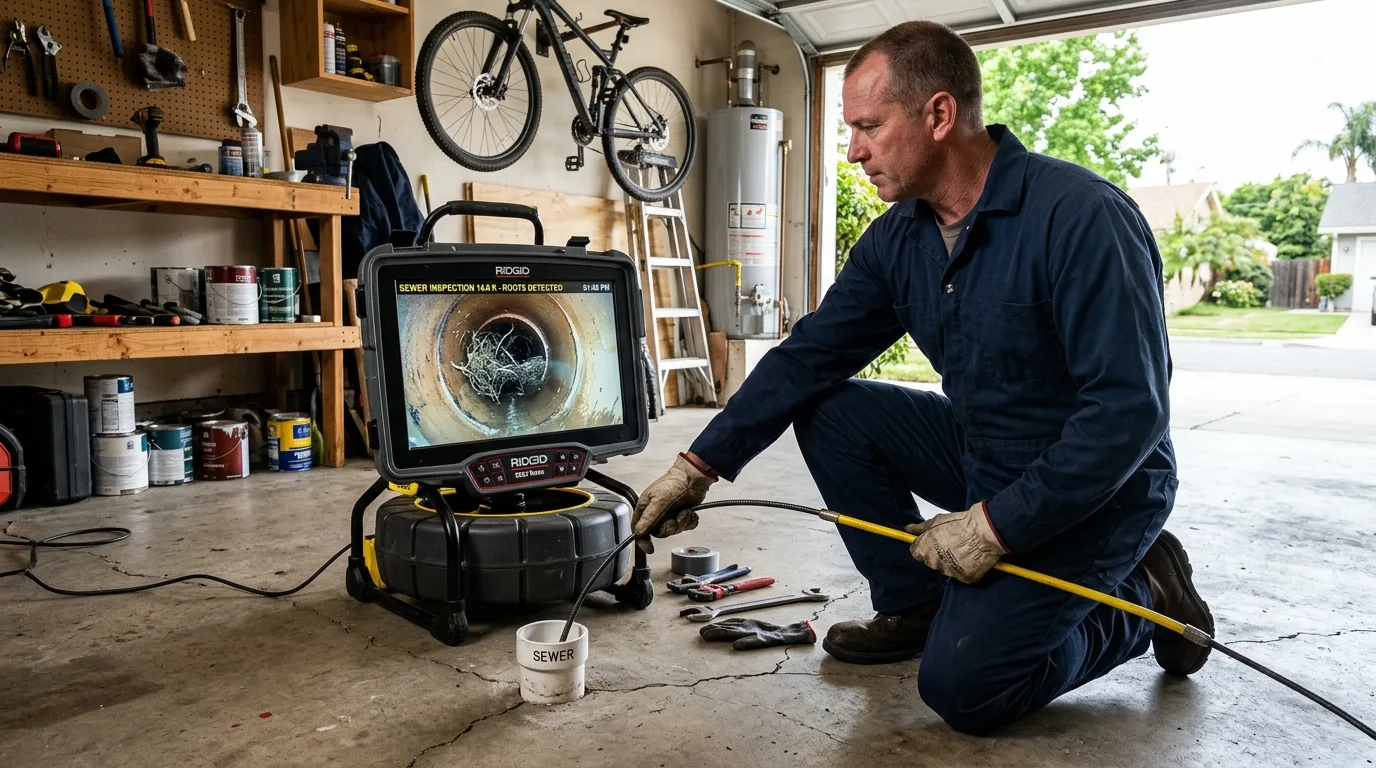
Roots, cracks, offsets and bellies are shown to you on screen before any method is recommended.
Spot repair, trenchless lining or full replacement: chosen by what the pipe needs, not what is easiest to sell.
Shallow groundwater and sandy soil change how a trench behaves. That shapes the plan and the price.
City permitting, inspection and surface restoration are part of the conversation up front, not a surprise.
The diagnosis
Your lateral is the private drain line running from the house, under the yard, to the city sewer in the street or an easement. In Huntington Beach it may be clay, cast iron, ABS or, on some mid-century properties, Orangeburg. A tar-impregnated fiber pipe that fails by deforming. Each material fails in its own way.
Root intrusion. Fine roots enter through joints in clay or cracks in cast iron, then thicken. They both block the line and hold the joint open. This is the most common finding under mature street trees Downtown, in Oak View and along the older Goldenwest blocks.
Cracks and shears. Ground movement, heavy vehicle loading over a shallow line, or corrosion in cast iron produce cracking that lets soil in and water out. Once soil enters, the line starts blocking regularly.
Offset joints. Sections that have shifted out of alignment create a ledge that catches solids. Small offsets can be lined; large ones need the section replaced.
Bellies (sags). A length of pipe that has settled below grade holds standing water permanently. Solids drop out in the dip and build until the line blocks. No cleaning method fixes a belly. The pipe has to be re-graded, which means excavation.
Corrosion and scale in cast iron. Decades of use leave a rough, narrowed bore that catches everything. Jetting restores flow for a while; heavily deteriorated pipe needs replacing.
Collapse. The end state. Clay shatters, Orangeburg flattens, corroded cast iron loses its crown. Nothing passes and nothing can be cleaned. That section is gone and must be replaced.
Grease and sand accumulation. Not a defect in the pipe itself but a maintenance problem that mimics one. This is why the camera matters: it separates a dirty pipe from a broken one, and those two findings have wildly different price tags.
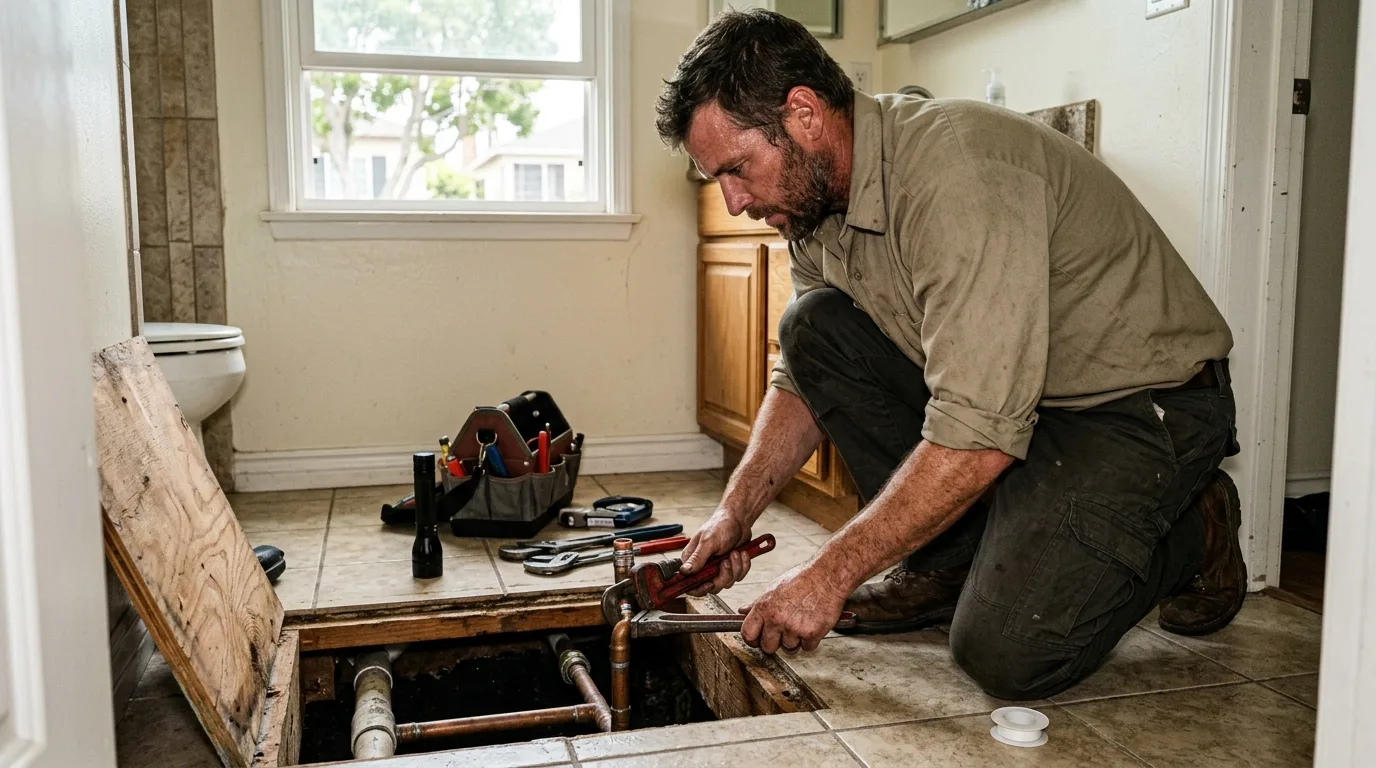
Methods
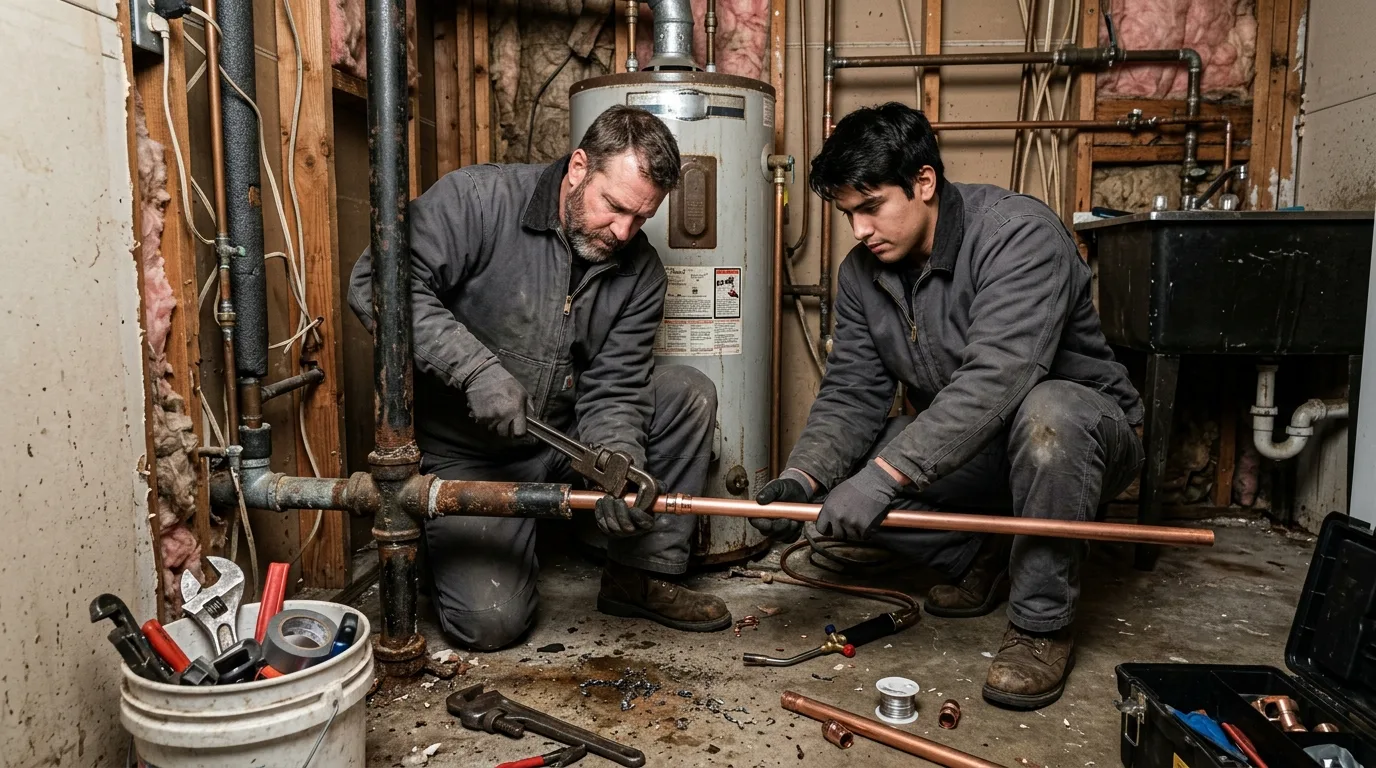
One excavation at one defect. The failed section is cut out and replaced, the line is re-graded locally if needed, and the surface is restored. It is the cheapest real repair and the right answer when the camera shows a single fault in an otherwise sound line: a shear from a tree root, a section crushed by a vehicle, a broken fitting at a connection. The limitation is obvious: it fixes one place. On a line with root intrusion at every joint, you would be back.
A resin-saturated liner is pulled or inverted into the existing pipe and cured in place, forming a new jointless pipe inside the old one. It seals cracks and joints, stops root intrusion outright, and needs only access at each end, so driveways, hardscape and mature landscaping survive. It requires a host pipe that still holds its shape, and it slightly reduces the internal diameter, which is usually irrelevant on a residential lateral. Detail on the trenchless page.
A bursting head is pulled through the old pipe, fracturing it outward while simultaneously pulling new HDPE into the void. It replaces rather than lines, so it works where the host pipe has failed structurally, and it can maintain or increase diameter. It needs pits at both ends and enough room around the pipe for the fragments to displace: less suitable where the line runs tight against other utilities.
Still the correct answer sometimes: a badly bellied line that needs re-grading, an Orangeburg lateral that has deformed along its length, a route with multiple collapses, or a line that has to be re-routed. It is the most disruptive and usually the most expensive, but it gives you a new pipe at the correct fall with no compromise.
Shallow groundwater near the coast. In the Harbour, Sunset Beach, Downtown and the blocks behind Bolsa Chica, a trench can meet groundwater. Excavation then needs dewatering, shoring gets more serious, and the cost and duration climb. This is the single strongest argument for trenchless methods on the coastal side of the city.
Sandy, mobile soil. Sand does not hold a trench wall the way clay does. It also allows a pipe to settle, which is part of why bellies are a frequent finding on older local laterals.
Long front-yard runs. Many local tracts put the house well back from the street, so laterals are long, with multiple joints and mature trees over them.
Mature landscaping and hardscape. Decades-old ficus, driveway pavers, decorative concrete and pool decks sit directly over the line on a lot of properties. Replacing a lateral by open trench through a finished front yard is a landscaping project as much as a plumbing one.
Sewer lateral work in Huntington Beach requires permitting, and work in the public right of way: the parkway, the sidewalk, the street: involves additional city requirements and inspection. A legitimate contractor handles the permit rather than working quietly on a weekend. Ask for the permit number.
Responsibility usually splits at the property line or the city main connection, depending on the situation. If the defect turns out to be in the public main, that is the city’s to fix, and camera footage with a marked depth and location is what proves it.
From backup to new line
A blocked line is cabled or jetted first: not as the repair, but so the camera can travel and show the pipe rather than the blockage.
The defect is recorded on video, and its depth and position are marked on the ground with a locator so quotes describe the same problem.
Spot repair, lining, bursting or replacement, with the disruption, the restoration and the price for each laid out side by side.
The permit is pulled, the work is done and inspected, and a final camera pass confirms grade and flow before the surface is restored.
Diagnosis is a small fraction of any repair, and it stops you buying the wrong one.
Before you sign anything
Sewer replacement is one of the largest plumbing invoices a homeowner ever sees, and it is the easiest to oversell. These questions separate a diagnosis from a sales pitch.
You should be shown the defect on video, with the distance from the access point called out. No footage, no quote.
A locator gives depth and position. Those two numbers drive the cost of any excavation, so a quote without them is a guess.
Ask what rules out the cheaper option. A good answer references the pipe condition; a weak one references what the truck is set up for.
Concrete, pavers, sod, irrigation lines and fencing. Get the restoration scope in writing before the digging starts.
Lateral work is permitted and inspected. Ask for the permit number and who schedules the inspection.
Workmanship and material warranties differ by method. Lining and bursting carry manufacturer terms worth reading.
Already holding a replacement quote? Have the footage read again before you commit.
Related work
Where we send plumbers
Root-damaged clay under the mature trees of Downtown, Oak View and Goldenwest; long tract-house laterals along Adams, Garfield and Brookhurst; and high-groundwater work in the Harbour, Bolsa Chica and Sunset Beach, plus the cities listed below.
Straight answers
The camera decides it. A single defect in an otherwise sound line is a spot repair. Root intrusion at most joints, multiple cracks, or a deformed Orangeburg line points to lining or replacement.
A belly is the case people get wrong most often: the pipe is intact but out of grade, so no cleaning or lining helps and the section has to be dug and re-laid. Ask specifically whether standing water was visible in the footage.
Frequently, yes. Trenchless lining needs access at each end rather than along the run, and pipe bursting works from two pits, so hardscape in between is usually left alone.
It is not universal. A collapsed section, a severe belly, or a line running tight against other utilities can force an open trench. The camera and the locate tell you which situation you are in before anyone quotes.
A spot repair is often one day plus restoration. A residential lining job is commonly one to two days including preparation and curing. Pipe bursting is similar.
Full open-trench replacement of a long front-yard lateral can run several days, and longer where groundwater requires dewatering or the work extends into the public right of way and needs city inspection scheduling.
With trenchless methods, generally not: two access pits and some equipment traffic. With open trench, the trench line and a working area beside it are disturbed and have to be restored.
Get the restoration scope in writing: who replaces concrete, pavers, sod, irrigation and fencing, and to what standard. That clause is where sewer jobs generate the most disappointment.
The lateral serving your property is normally the property owner’s responsibility, and the public main belongs to the city. Where the split falls exactly depends on the situation and the location of the connection.
If footage shows the defect is in the public main or at the city connection, that is worth reporting to the City of Huntington Beach with the depth and distance marked. Documented evidence is what makes that conversation productive.
Standard homeowners policies usually exclude the failure of a buried pipe, though some carriers sell a service-line endorsement that covers it. Home warranty plans vary enormously and often cap the payout well below the real cost.
Read your specific policy or plan, and ask the plumber for a written diagnosis with footage. We cannot promise what a carrier or warranty administrator will approve.
Not necessarily. Lining or replacing the pipe with a sealed, jointless line removes the pathway roots exploit, and the tree can usually stay.
Where a large trunk or root ball sits directly on the line and has physically displaced it, the arborist conversation becomes unavoidable. A plumber should tell you that plainly rather than after the excavation is open.
On a five-figure job, yes: always. Bring the footage. A second reading of the same video by a different pro costs little and occasionally changes the recommendation from replacement to lining or a spot repair.
If the first contractor will not give you the footage, that is information in itself.
Yes, but ownership gets complicated. In attached housing, parts of the drainage may be shared stacks or common-area lines belonging to the association.
The plumber can establish where your responsibility ends using the camera and the property documents. Any approval your association requires for excavation or exterior work is between you and the HOA.
Too dependent on specifics for an honest phone number: length, depth, material, method, groundwater, access and restoration all move it. A spot repair and a full trenchless replacement can differ by an order of magnitude.
What you can expect is a written quote after a camera diagnosis and locate, with the method justified against the footage. Anyone giving you a firm price before seeing inside the pipe is guessing.
Bring a previous plumber’s video. A second read costs you nothing but a phone call.
Repeated backups
Tell us how often the line backs up, what has been done before, and whether anyone has put a camera down it. That decides what happens next.
Serving every Huntington Beach neighborhood, plus the cities next door.