Video diagnosis • Marked and measured
Sewer camera inspection in Huntington Beach. Look before you spend
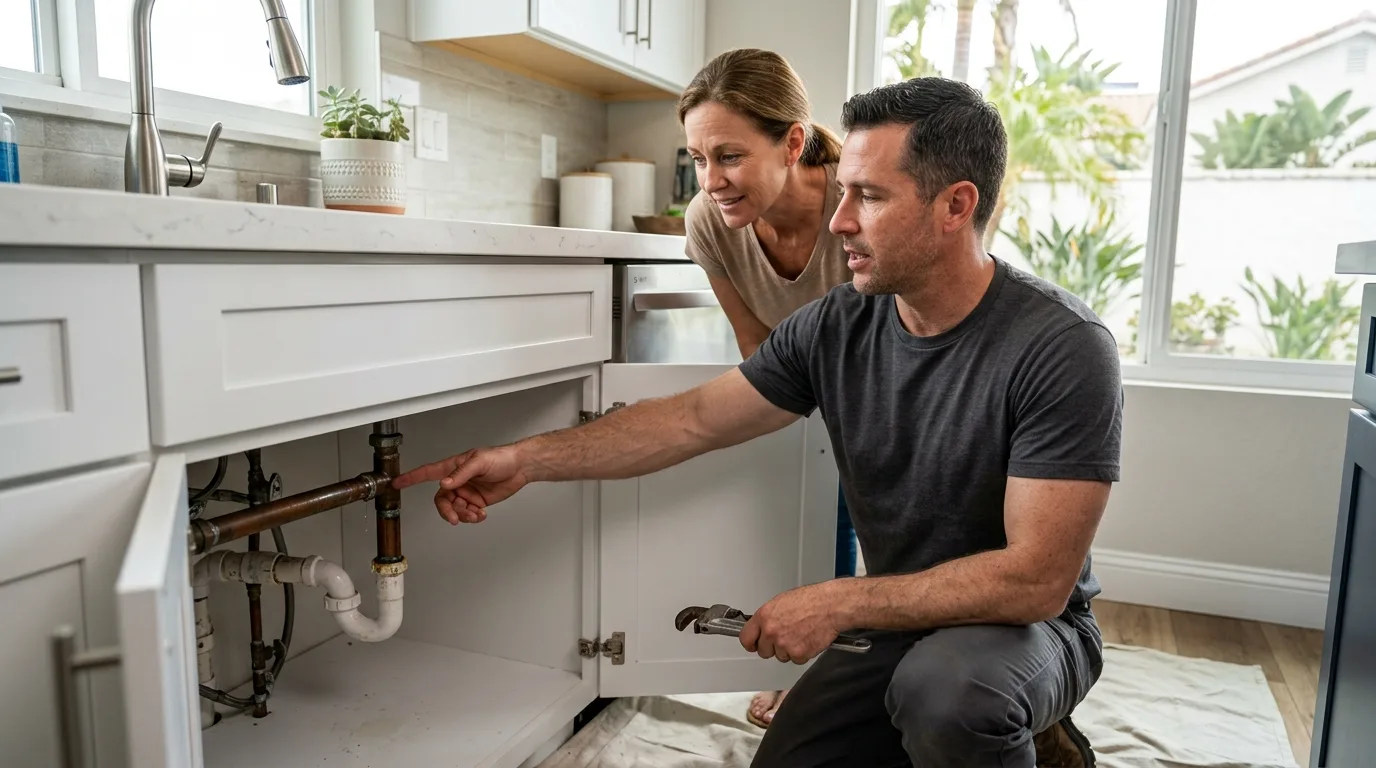
A camera turns a five-figure guess into a decision. Twenty minutes of footage tells you whether your line needs cleaning, a spot repair or replacement, and where.
Want to see inside? 657-337-7830
Buying a house here? Get the lateral scoped before closing. It is the cheapest contingency on the list.
At a glance
Footage You Keep
Video and stills you can hand to another contractor, an insurer, or a buyer’s agent.
Depth and Position
A locator marks the defect on the ground, which is what makes an excavation quote honest.
Material Identified
Clay, cast iron, ABS or Orangeburg. The material decides which repairs are even possible.
One Fixed Fee
Inspection is priced as its own service, quoted before dispatch, and the repair decision stays separate.
Findings
What shows up on the screen
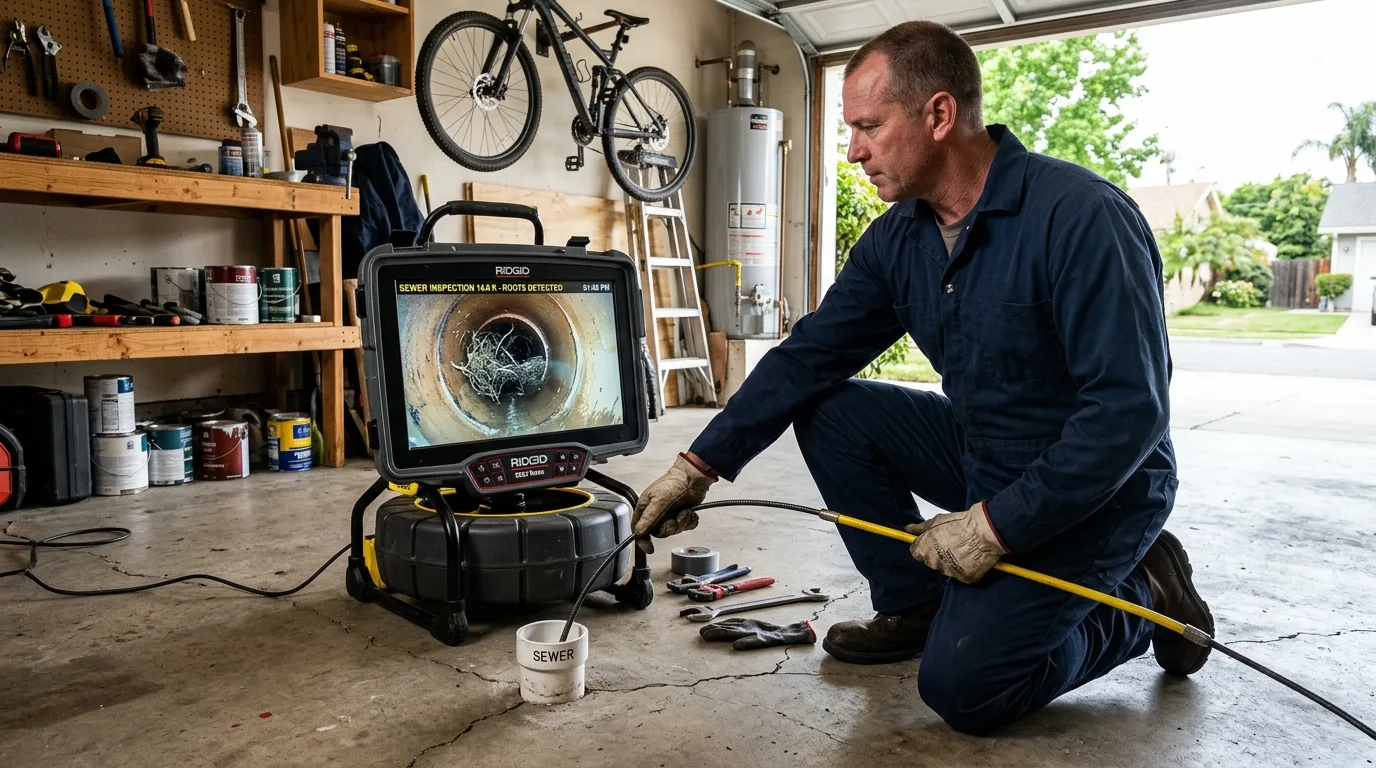
A self-levelling camera head on a push rod travels the line while a counter tracks distance. Everything below is identifiable on video, and each one carries a different price tag: which is exactly why the footage matters more than anyone’s opinion.
- Root intrusion. Fine hair at a joint is early. A dense mass filling the bore is late. Roots also tell you the joint is open, which is why cutting them is temporary.
- Cracks and fractures. Hairline circumferential cracks, longitudinal splits, or missing crown in cast iron. Soil visible through a break means the line is taking in dirt.
- Offset joints. One section stepped out of line with the next. Small offsets catch paper; large ones catch everything.
- Bellies. Standing water that does not drain as the camera passes. The pipe is intact but out of grade, and only excavation and re-laying fixes it.
- Scale and grease. A narrowed, rough bore. This is a cleaning finding, not a repair finding: the distinction that saves people the most money.
- Deformed Orangeburg. Oval or collapsed fiber pipe found under some mid-century properties. It cannot be saved.
- Foreign objects and bad repairs. Dropped tools, roots growing through an old patch, a coupling installed dry, a section of the wrong diameter.
- The city connection. Where your lateral meets the public main, and whether the problem is on your side of it.
A good technician narrates as they go: distance from the access point, what is on screen, and whether it explains the symptom you called about. If the footage shows nothing wrong, that is a legitimate result and worth the fee.
When to book one
Five situations where a scope pays for itself
Before buying a house
A standard home inspection does not include the sewer lateral, and the lateral is the most expensive thing on the property that nobody looks at. In neighborhoods with 1950s–1970s clay and cast iron: much of Downtown, Oak View, Goldenwest and the older inland tracts. A scope before closing is the single highest-value inspection add-on available.
After a second backup
One clog is an event. Two clogs in the same line is a pattern, and cabling it a third time without looking is paying to learn nothing.
Before agreeing to a replacement
If someone has quoted you a full sewer replacement, the footage is your leverage. It tells you whether lining is possible, whether one section is the problem, and whether a belly is involved.
Before jetting an old line
High-pressure water on fragile clay or corroded cast iron can open an existing failure. A quick look first is what makes jetting a safe choice rather than a gamble.
After landscaping or construction
New trees over a known line, a driveway poured with heavy equipment traffic, an ADU or garage conversion adding drainage. A baseline scope now is cheap insurance later.
What the appointment needs from you
Access to a cleanout is the main requirement. Many Huntington Beach homes have one at the side of the house or in a planter; on older properties it is sometimes buried under decades of landscaping, and finding it is part of the job. Where no cleanout exists, the camera can often go in through a pulled toilet or a roof vent, though the view is more limited.
The line also needs to be flowing. If it is fully blocked, the camera cannot travel past the obstruction, so the line gets cabled first: not as the repair, but to open a path for the diagnosis.
Locating: the part people forget to ask for
A camera tells you what is wrong and how far along the line it is. A locator, which reads the transmitter in the camera head from the surface, tells you where that point is in your yard and how deep. Without the locate, an excavation quote is guesswork and the trench gets wider to compensate.
Ask for the depth and position to be marked with paint or flags before the technician leaves. If you get a second quote later, both contractors are then pricing the same hole.
Reading the footage yourself
You do not need to be an expert to spot the big three. Standing water that never clears is a belly. Visible soil or roots means the pipe is open to the ground. A ledge where two sections meet is an offset. If a contractor’s recommendation does not match what you can see, ask them to point at the frame that justifies it.
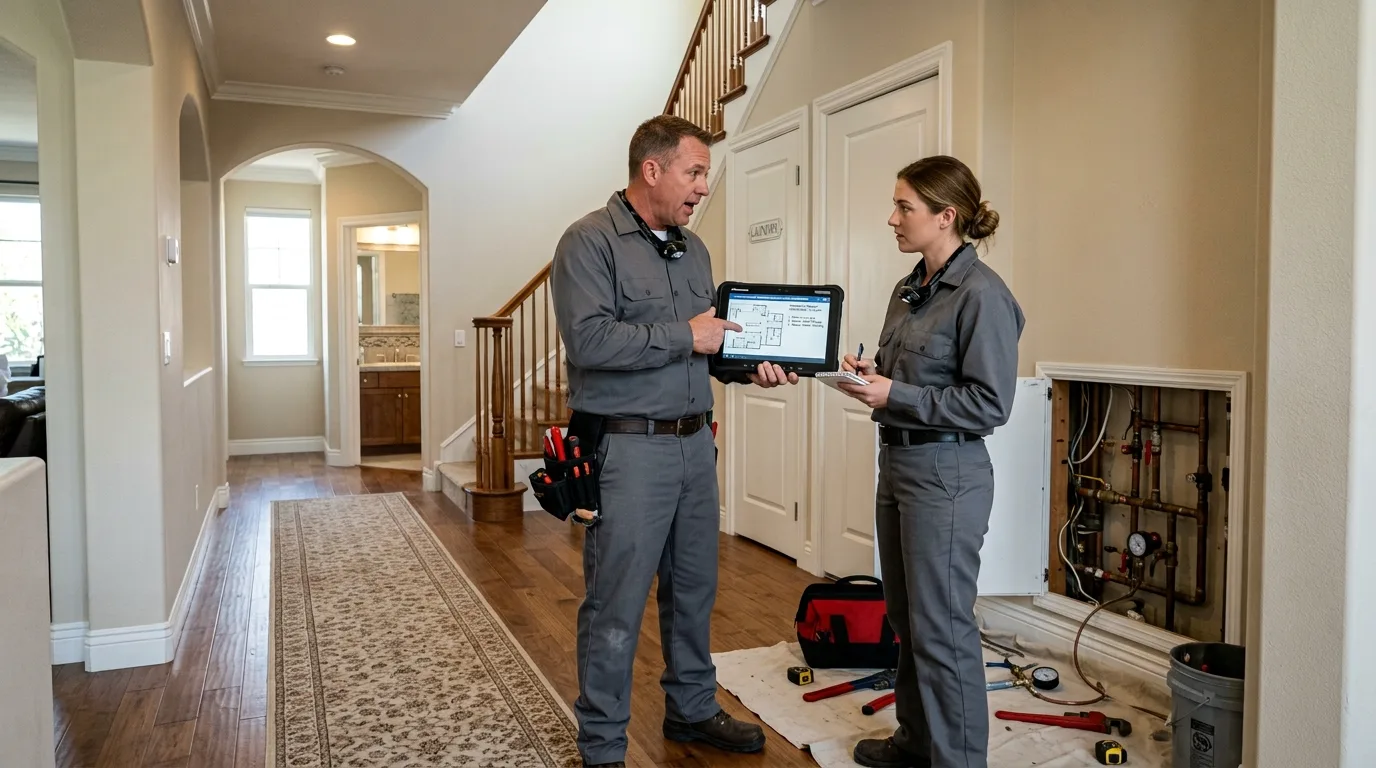
The appointment
Twenty minutes that decide a five-figure question
Access and setup
Cleanout located and opened, area protected, reel and monitor set up where you can see the screen.
The run
The head travels to the city connection where possible, with distances called out and anything notable recorded on the way.
Locate and mark
Depth and position of each defect are found from the surface and marked, so quotes describe the same spot.
Findings and options
You get the footage, a plain-language summary, and the range of repairs that suit what was actually found.
Pre-purchase scopes can usually be fitted into an inspection window.
Related work
What the footage usually leads to
Where we send plumbers
Inspections across the city’s older housing stock
Pre-purchase and diagnostic scopes are run daily in the pre-1980 neighborhoods where clay and cast iron are still in service (Downtown, Oak View, Goldenwest, South and Southeast Huntington Beach) and across the surrounding cities below.
Straight answers
Camera inspection questions
It is priced as a standalone service and quoted before dispatch. Relative to any sewer repair, and certainly relative to buying the wrong one. It is a small number.
Ask whether the fee is credited toward a repair if you proceed, and whether the footage is included. Both are reasonable things to expect.
You should, and it is worth insisting on. The footage is what lets you get comparable second quotes, support an insurance claim, or show a buyer the line is sound.
Ask for the video file plus stills of any defect with the distance noted, rather than just a verbal summary.
Yes, though it is not ideal. Pulling a toilet gives access but a tighter path, and the view of the lower line is more restricted than from a proper cleanout.
If your home has no accessible cleanout, installing one is a modest job that makes every future inspection and cleaning cheaper and less invasive.
No. The camera cannot see past a solid stoppage, so a blocked line is cleared first and then inspected.
That is the right order anyway: clearing restores service, and the camera then shows you why it blocked in the first place.
In the older neighborhoods, strongly yes. A lateral replacement can be one of the largest unexpected costs a new owner faces, and it is invisible during a normal home inspection.
On a newer Seacliff or Harbour property with ABS or PVC, the risk is lower but a scope still confirms grade, connections and any damage from landscaping work.
Typically the full length of a residential lateral to the city connection, provided the line is flowing and there are no severe offsets or crushed sections blocking the head.
Where the camera stops early, that is itself a finding, and the locator marks exactly where it stopped.
No. Drain cameras work in non-pressurized pipe. A pressurized supply leak is found with acoustic, thermal and tracer-gas methods, described on our leak detection page.
The two services are often confused on the phone. Describe the symptom and the dispatcher will send the right equipment.
No. The head is small, self-levelling and pushed by hand on a flexible rod. It is the least invasive tool in the plumbing kit.
Very fragile pipe can be disturbed by anything, including a camera, and a technician will tell you when a line looks too far gone to push further.
Yes. Restaurant kitchen lines, interceptor outlets and multi-tenant building drains are all regularly scoped, usually outside service hours.
Mention the property type when you call so the right reel size and access equipment come along.
On a home over about fifty years old, a baseline inspection is genuinely useful: it tells you the pipe material, the grade and where the cleanout is, before an emergency forces the question.
Not everyone needs it. If your line has never backed up and the house is newer construction, the honest answer is that you can wait.
The repair decision stays yours, separate from the camera work.
Before the shovel
Never buy a sewer repair you have not seen on video
Tell us the symptom, the age of the house and whether there is a cleanout. We will send a plumber with a camera and a locator.
Serving every Huntington Beach neighborhood, plus the cities next door.