Access
An exposed garage run is a short job. The same failure behind tile, inside a two-story wall, or under a slab means access work before plumbing work.
Split lines • Repaired today
A failed supply line does not need to become a remodel. Get the water isolated, the bad section cut out, and the rest of the system checked before it happens again next month.
Burst line now? 657-337-7830
Close the main first if you can reach it. Then call, and leave the wet drywall alone until the leak is proven.
The first move is isolating the failure at the closest valve so most of the house can stay in service.
A failed section gets replaced with the correct material and fittings: not wrapped and hoped for.
Pressure is checked after the repair, because a burst on old pipe is often a warning about the rest of it.
You see the failure, hear the price, and approve it before drywall or concrete is opened.
What just happened
A burst pipe is rarely random. By the time water is spraying, the pipe has usually been failing quietly for months or years, and the way it failed points straight at the cause. That matters, because the repair for a one-off mechanical failure is completely different from the repair for a system that is at the end of its life.
Copper pinholes. Small, round perforations that spray a fine jet are the classic Southern California failure. Water chemistry, high static pressure and pitting corrosion thin the pipe wall from the inside until it gives. One pinhole in a run means the rest of that run has the same wall thickness and the same water going through it.
PEX and fitting failures. PEX itself is tough, but crimp rings, expansion fittings and brass insert fittings all depend on installation quality. A ring that was set slightly off, or a fitting stressed by a poorly supported run, can let go years later: usually at full pressure, usually inside a wall.
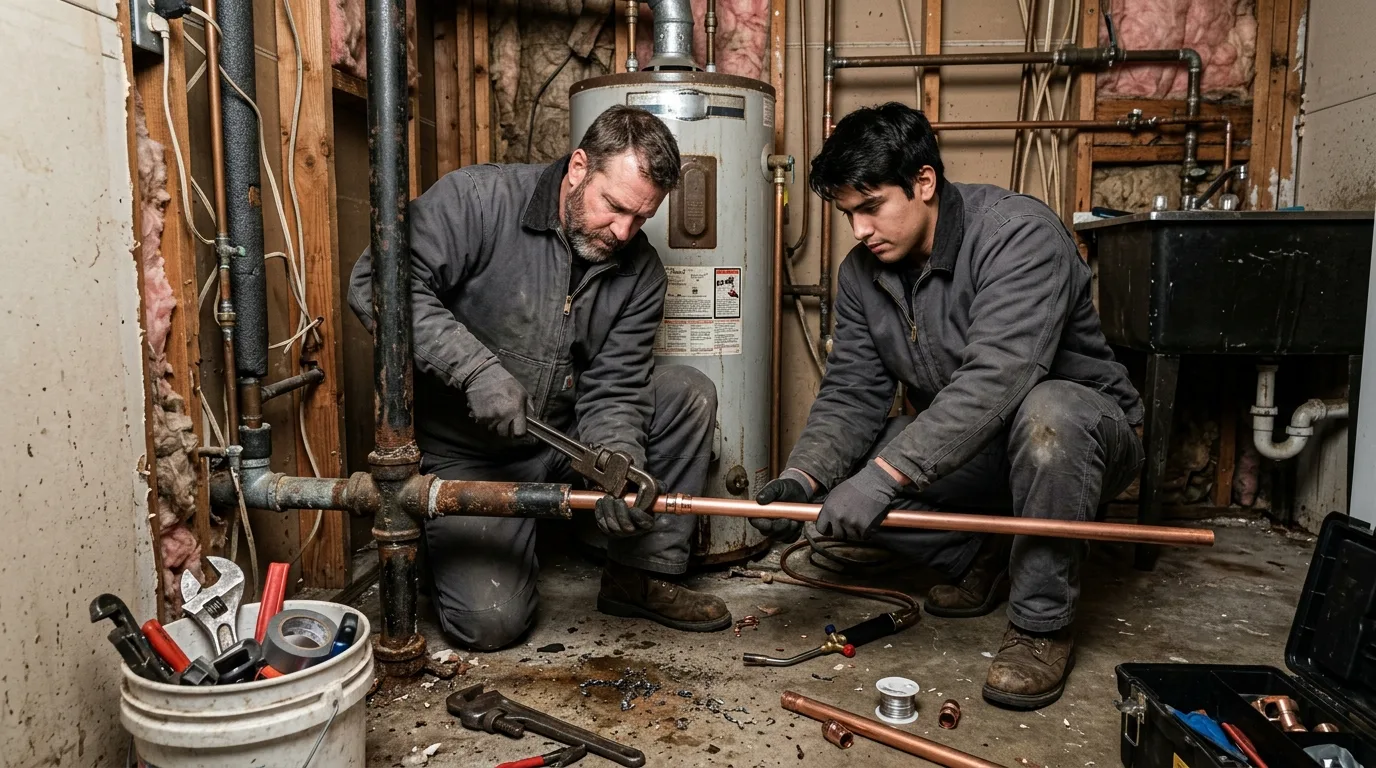
Galvanized transitions. In pre-1970s homes across Downtown, Oak View and pockets of Goldenwest, old steel pipe meets copper at a dielectric union that was supposed to keep the metals apart. When it fails, the joint corrodes from inside and eventually parts. If your house still runs galvanized, the burst is a symptom, not the problem.
Pressure and thermal stress. Static pressure above roughly 80 psi hammers every fitting and appliance in the house. Water hammer from fast-closing valves, an undersized or failed expansion tank on a closed system, and long unsupported hot-water runs that expand and rub all shorten pipe life.
Mechanical damage. A nail or screw through a stud, a shovel through a lawn line, a fastener driven into a slab during a flooring job. These fail suddenly with no history at all, and they are usually the cheapest repairs on this list.
Local conditions
Pipes inside walls are sheltered. The vulnerable parts are the ones breathing coastal air: hose bibs, exterior copper runs feeding an outdoor shower or a hose reel, pressure regulators at the front of the house, and supply lines in garages and exterior closets that face the water. In Harbour, Sunset Beach and the blocks nearest the sand, those components age visibly faster than their inland equivalents: green crust at joints, rust weeping down stucco, a regulator body that looks decades older than it is.
The imported supply serving this part of Orange County runs hard. Scale builds inside pipe and fixtures, and the same chemistry that furs up a water heater contributes to pitting in copper. It is why a home here can see pinholes earlier than a book estimate of copper life would suggest.
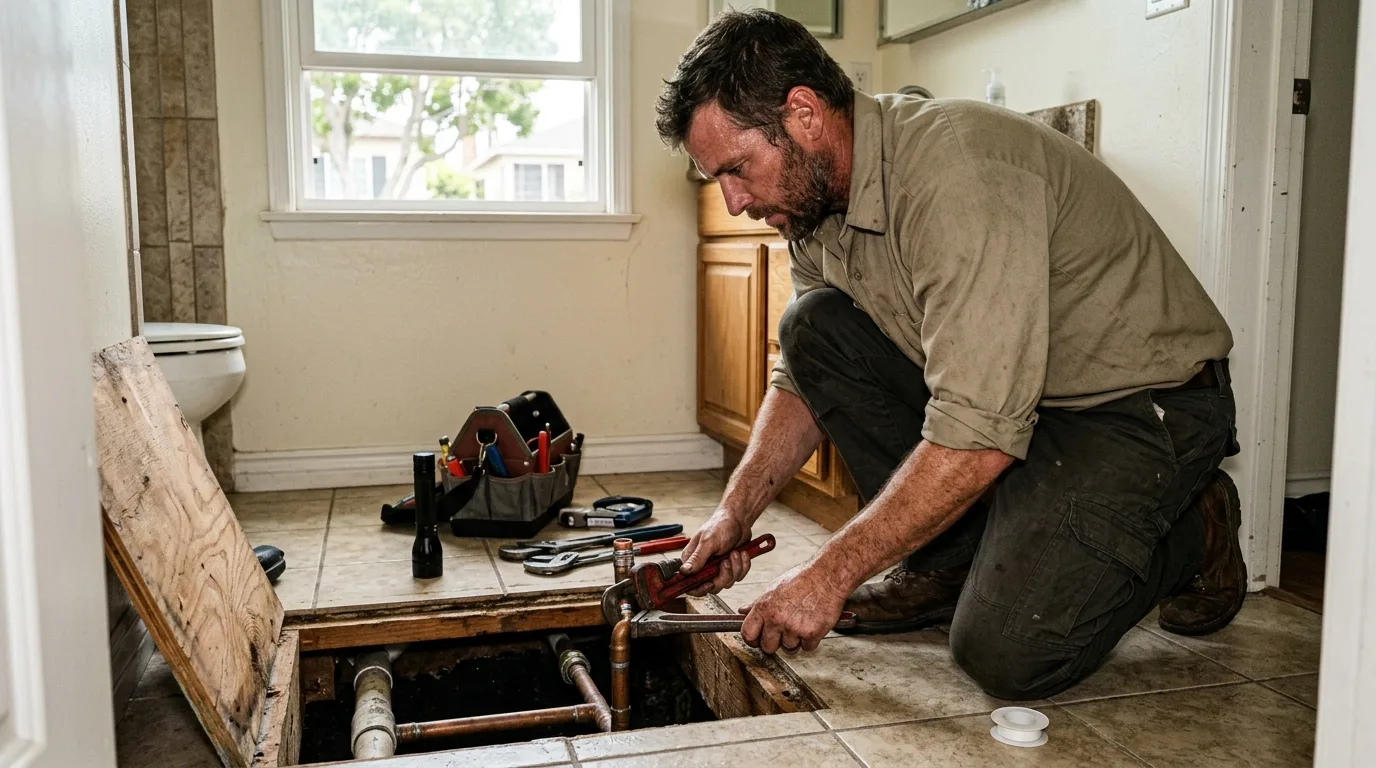
Most of the city’s postwar housing sits on a slab, with supply lines running under or through the concrete. A burst under a slab does not announce itself with a dripping ceiling. It shows up as a warm floor, a jump in the bill or water appearing at the edge of a room. Those repairs deserve their own approach, covered on our slab leak repair page.
A lot of local homes have been added onto. The joints between original and newer plumbing: different materials, different eras, different installers: are where a disproportionate number of bursts happen. A plumber who has worked these houses looks at the transition points first.
Section replacement. Cut out the failed length, sweat or press in new copper, or transition to PEX where code and layout allow. Fast, contained, and the right answer for mechanical damage or an isolated failure on otherwise sound pipe.
Repair coupling on a pinhole. Legitimate as a stopgap when access is bad or the house needs water back tonight, but it is a bridge to a real repair, not the destination. Anyone selling a clamp as a permanent fix on corroding copper is buying themselves a return visit.
Reroute the run. When the failure is under a slab or buried in tile, rerouting the line overhead through walls and attic space often costs less than opening concrete, and it leaves the new pipe accessible for the next fifty years.
Repipe the house. When pinholes have appeared in multiple places, when the home still runs galvanized, or when pressure and hot-water quality have dropped across several fixtures, spot repairs stop being economical. That conversation lives on the whole-home repiping page.
Copper is rigid, proven and handles heat without question, but it is more expensive, takes longer to install, and is the material that pits in aggressive water. PEX is cheaper, faster, tolerates minor freeze events and slab movement, and has no pitting failure mode, but it needs correct fittings, UV protection and proper support. Most local repipes now go PEX for the concealed distribution with copper stubs at fixtures. The plumber will tell you which makes sense for your specific house rather than defaulting to one.
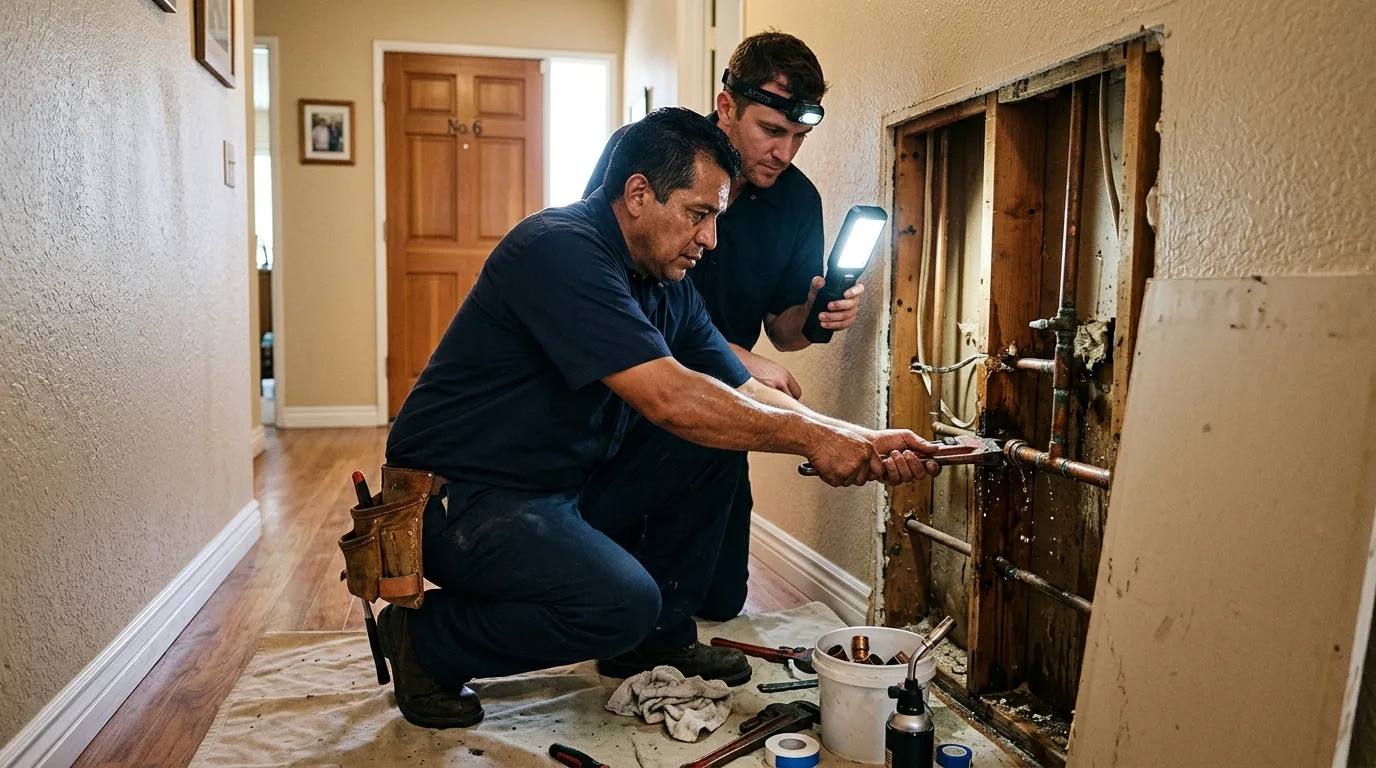
What the visit looks like
Water is shut at the nearest valve rather than the whole house wherever the layout allows, so you keep service in the rooms that are not affected.
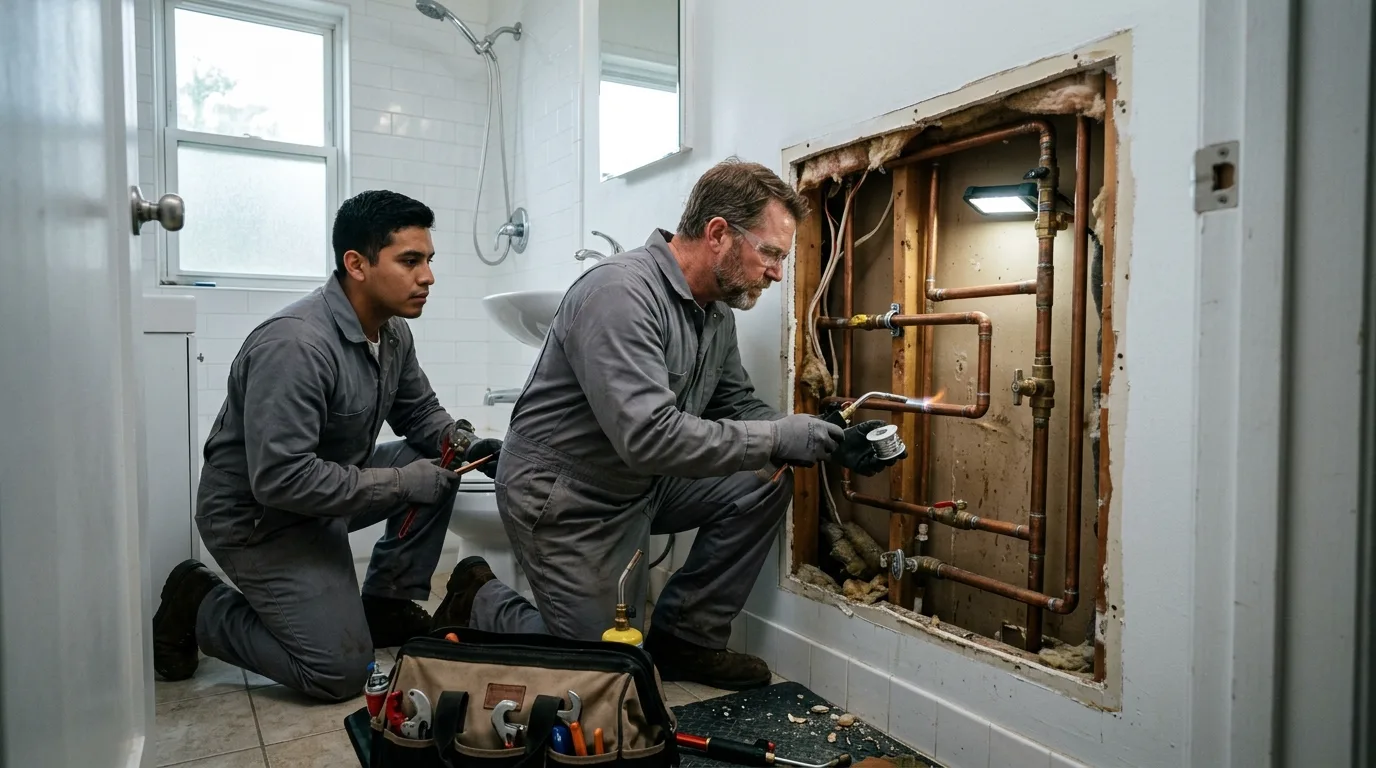
The plumber opens the minimum access needed to see the actual failure. Guessing at a location is what turns a small repair into a large hole.
The failed section comes out, new material goes in, and the system is brought back up under pressure and watched before anything gets closed.
You get a read on the condition of the surrounding pipe, the static pressure, and whether this looks isolated or like the first of several.
Same-day slots most weekdays, plus overnight dispatch for active leaks.
Cost drivers
Nobody can quote a burst pipe honestly over the phone without knowing where it is. These are the factors that actually decide the number you will hear on site.
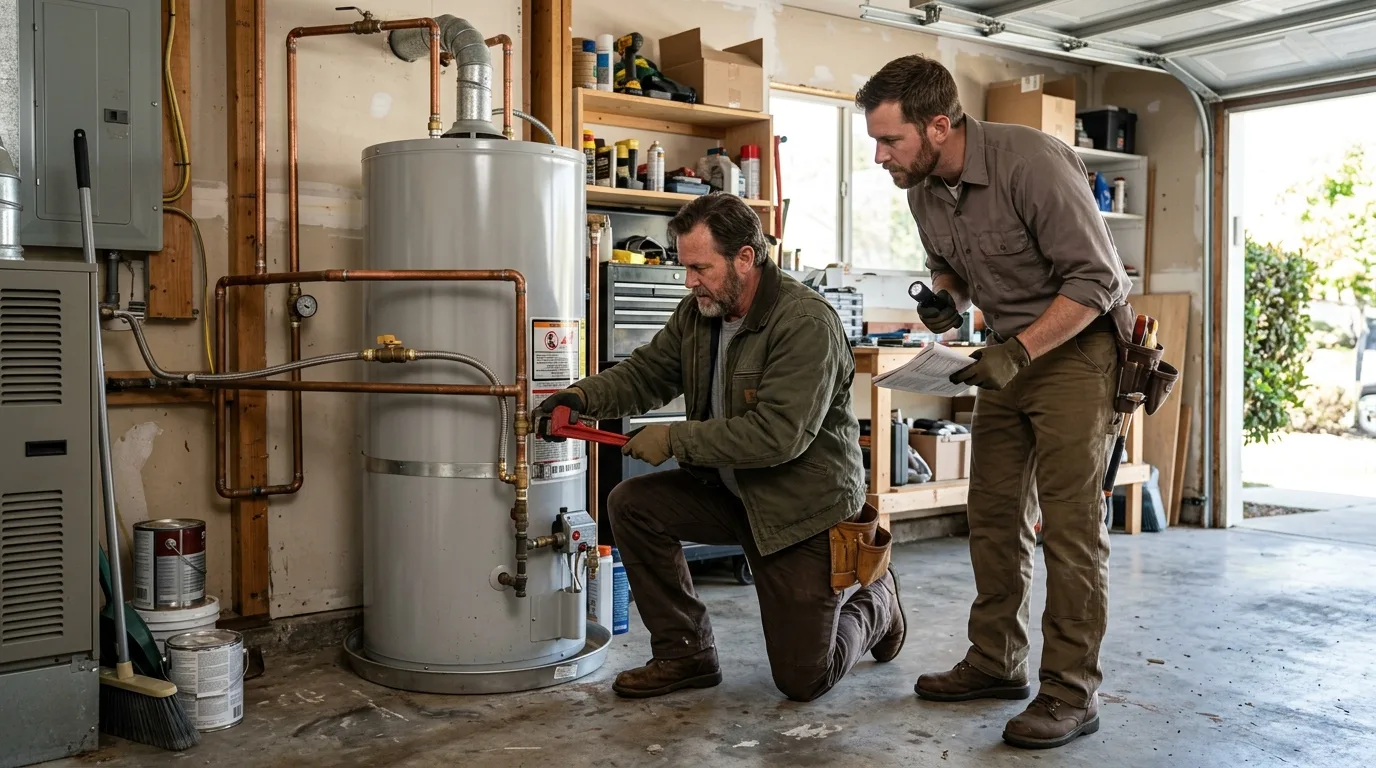
An exposed garage run is a short job. The same failure behind tile, inside a two-story wall, or under a slab means access work before plumbing work.
Half-inch copper in the open is routine. Larger main runs, galvanized that crumbles when disturbed, or a mixed-material joint all add labor and parts.
A clean cut-and-couple is one price. A run that has multiple weak spots along the same length is a partial repipe of that branch, priced accordingly.
Night, weekend and holiday response is often priced differently from a scheduled visit. If the water is safely off, ask about a daytime slot.
Plumbing repair does not include drywall, texture, paint, tile or drying equipment. On a serious loss, budget for a restoration crew alongside the plumber.
A missing expansion tank, a failed regulator or 100 psi static pressure will be flagged. Fixing the cause is usually cheaper than replacing pipe twice.
Diagnosis first, number second, work third, in that order, every time.
Related work
Where we send plumbers
From the canal-front homes in the Harbour and the older cottages Downtown to the tract houses along Adams, Garfield and Brookhurst, plus Fountain Valley, Westminster, Costa Mesa, Seal Beach, Sunset Beach and Midway City.
Straight answers
Use the house main if you can reach it: usually near a front hose bib, a side-yard riser, in the garage, or at the meter box. Turn it clockwise until it stops moving.
If the valve is seized or missing a handle, the curb stop inside the meter box will do the same job with a meter key. Do not force a corroded gate valve; breaking the stem means the water cannot be shut at all until a plumber arrives.
In most cases, yes. A failure on accessible pipe is normally cut out and replaced in one visit, with water restored before the plumber leaves.
The exceptions are failures under slabs, inside finished tile, or in lines that need parts nobody carries on a truck. In those cases the plumber isolates the branch, restores water to the rest of the house, and schedules the permanent repair.
Pinholes come from pitting corrosion, which is driven by water chemistry, dissolved oxygen, high velocity through undersized pipe, and static pressure that runs too high. Hard water and aggressive water both contribute.
The practical takeaway is that a pinhole is a wear indicator. The rest of that run has the same age, the same water and the same wall thickness, so the plumber should be checking pressure and looking at the wider system rather than just patching the hole.
PEX is permitted under California code and is the standard choice for repipes across Orange County now. It installs faster with far fewer joints inside walls, tolerates slab movement, and has no pitting failure mode.
Copper is still preferred for exposed runs, stub-outs and anywhere UV exposure or mechanical damage is likely. A good repair mixes them intelligently rather than treating one as universally superior.
The plumber opens the access needed to make the repair and leaves it neat, but patching, texturing and painting is not plumbing work. Some homeowners handle it themselves; others use a handyman or, after a serious loss, a restoration contractor.
Ask the plumber to keep the opening as small and as square as practical, and to photograph the failed pipe before it goes in the truck. Insurance adjusters ask for that photo.
Policies commonly cover sudden accidental water damage while excluding the failed pipe itself and any damage attributed to long-term seepage or deferred maintenance. That distinction is why documentation matters.
Photograph everything before cleanup, keep the invoice with a clear cause-of-loss description, and keep the failed section of pipe if the plumber can leave it. We cannot promise how your carrier will rule, but good evidence is what gets claims approved.
Three signals push toward a repipe: multiple leaks in a short period, galvanized supply piping still in service, and pressure or hot-water quality that has degraded across several fixtures at once.
If any two of those apply, spot repairs tend to move the failure a few feet down the same tired pipe. A plumber should show you the evidence: the inside of a cut section is very persuasive: rather than simply asserting it.
It can be. Municipal pressure in parts of coastal Orange County runs high, and anything above roughly 80 psi static is hard on fittings, supply hoses, water heaters and toilet fill valves.
Testing takes a plumber two minutes with a gauge on a hose bib. If it reads high, a pressure regulator at the main is a small job that protects everything downstream of it.
Yes, and it is common work here given how much of the local stock is rented. The plumber needs to know who authorizes the repair: owner, property manager or tenant, before the price is approved.
If the property is a short-term rental with guests arriving, say so on the phone. It changes how the job is scheduled and whether a temporary restoration of water makes sense.
Diagnostic and trip charges vary with time of day and how much access work is needed to see the failure. Whatever applies to your call is stated on the phone, before anyone is dispatched.
You will not get a surprise line item. The price for the repair itself is given on site once the plumber can see what they are actually dealing with.
A straight answer about which one your house needs, without a sales pitch.
Water off, still leaking?
Describe where the water is coming from and what the pipe looks like. We will route a plumber who repairs this every week in Huntington Beach homes.
Serving every Huntington Beach neighborhood, plus the cities next door.