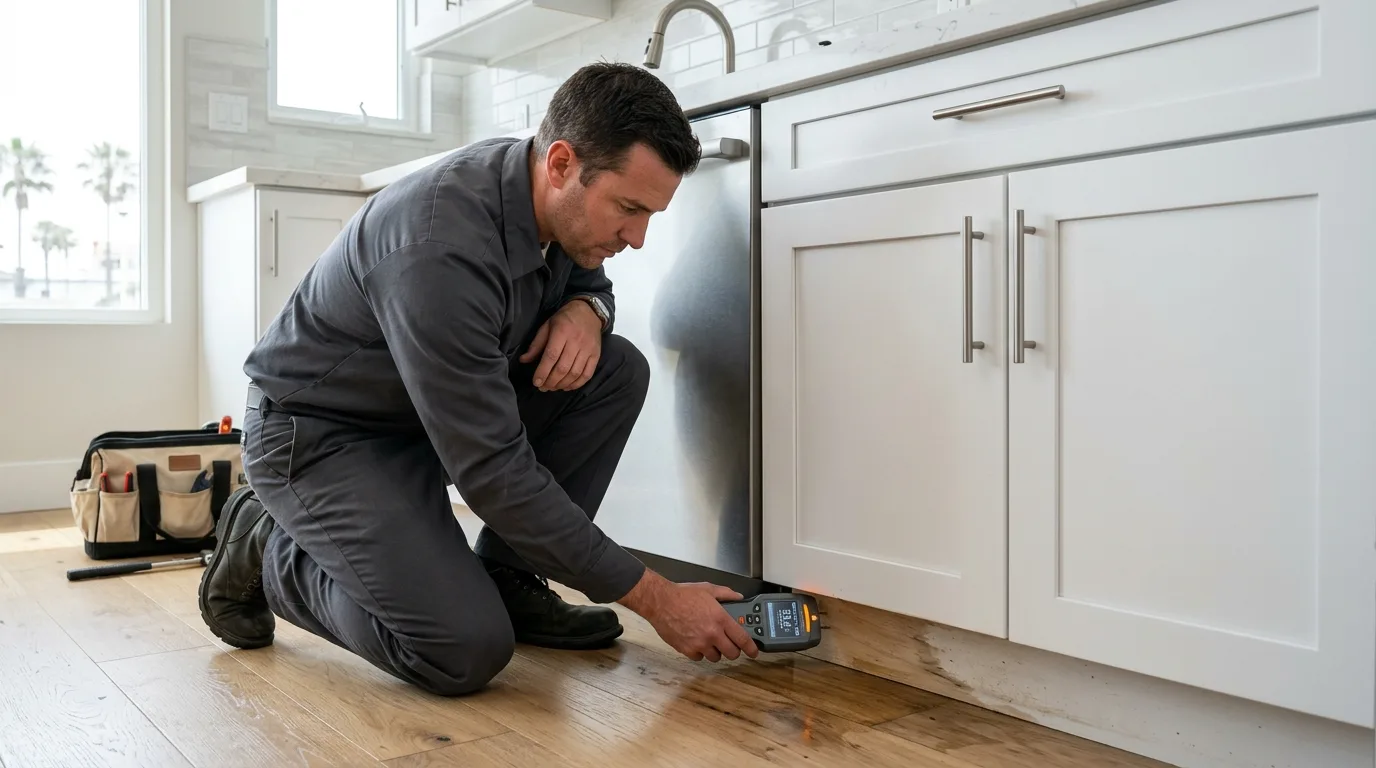
Regulator replacement
Banging pipes, weeping relief valves and fixtures failing earlier than they should.
Garfield Avenue, Goldenwest to Newland
The Garfield corridor is not one housing type. Original tracts, 1980s infill and newer hillside development sit within blocks of each other, and the plumbing beneath them behaves accordingly.
Garfield call: 657-337-7830
Knowing roughly when your house was built genuinely speeds up the diagnosis.
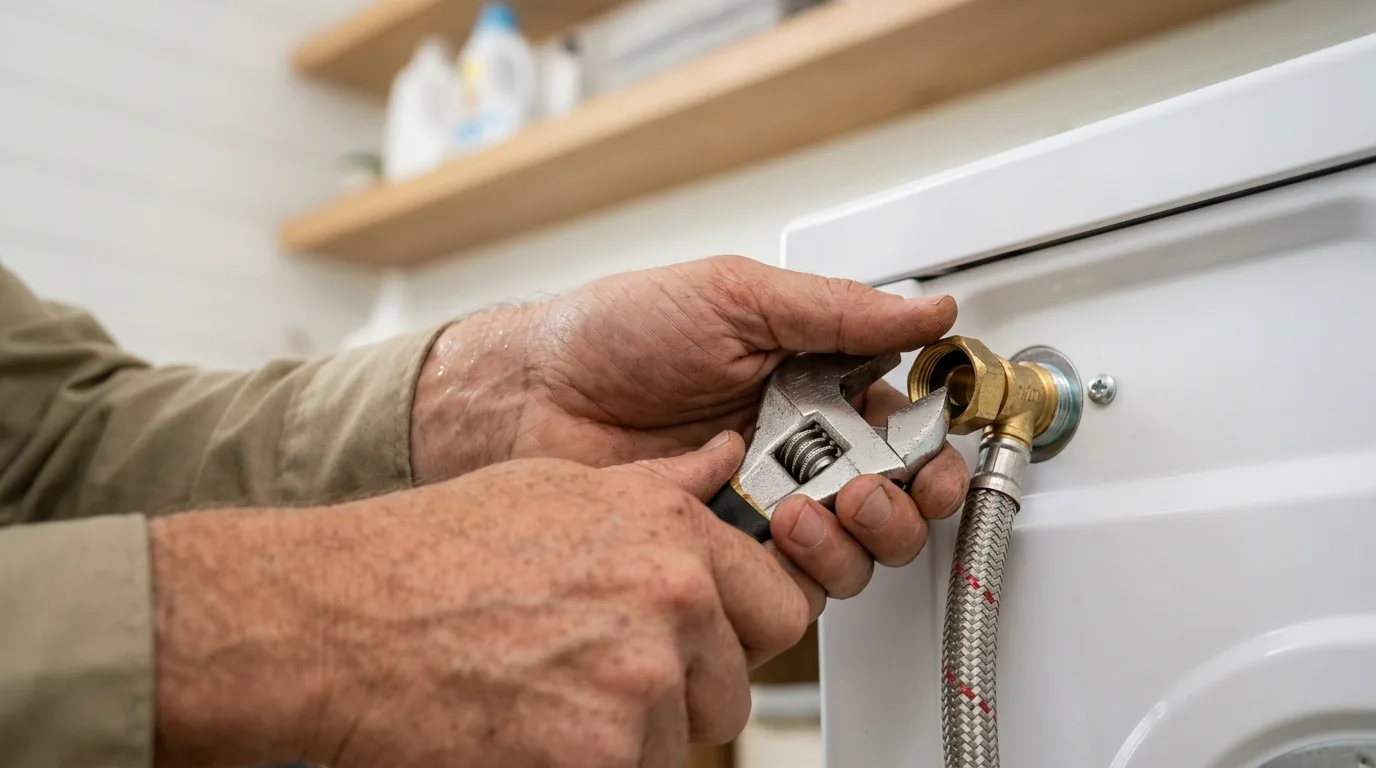
Elevation change across the corridor makes PRV failure a genuinely common call.
Additions, ranges, fire pits and pool heaters, permitted and pressure tested.
Galvanized, copper, CPVC and PEX in the same house. Transitions are where trouble starts.
A real arrival window, and a call if it changes. Not a nine-to-five guess.
On the ground
Garfield Avenue runs across the middle of the city from Goldenwest east to Newland, past Central Park and the older bluff-side land. What sits along it was built over roughly forty years, which means a plumber cannot assume anything about a house from its address alone.
Elevation changes the pressure story. The ground rises inland from the coastal plain, and static pressure in the main varies with it. Where a house sits low in the system, incoming pressure can be high enough to need a regulator doing real work; where it sits high, a failing regulator produces the opposite complaint. Either way, the first thing worth doing is reading the pressure at a hose bib rather than guessing from symptoms.
Regulators fail quietly. A PRV that has drifted high beats up every fixture in the house: banging pipes, dripping toilet fills, a T&P valve on the water heater that weeps, and supply lines that fail earlier than they should. It is an inexpensive part that protects an expensive system, and it is often overdue.
Mixed-era plumbing in one building. Additions and remodels along this corridor are common, and they leave houses with two or three generations of pipe joined together. Galvanized to copper without a dielectric fitting corrodes at the union. CPVC joined to copper in a hot line moves differently with temperature. Those transition points are where a disproportionate number of failures show up, and they are the first places worth looking.
Gas work on remodels. Outdoor kitchens, fire features, pool heaters and range upgrades all add load to a gas system sized decades ago for less. Adding an appliance without checking whether the meter and the pipe can carry it is how you end up with a range that will not hold flame when the furnace kicks on. Gas line work here means load calculation, permit and pressure test: not a tee off the nearest line.
Sewer laterals under older streets. Toward the western end, the original clay laterals are still in service and still collecting roots. Toward the newer end, ABS is generally intact but bellies from settlement do occur. A camera distinguishes the two in about twenty minutes.
The tracts north and south of Garfield Avenue from Goldenwest Street east to Newland Street, including the streets around Central Park, the Seapoint and Edwards approaches, and the blocks running down toward Yorktown.
A surprising share of complaints on this corridor trace back to pressure rather than to the fixture being complained about. Banging pipes, running toilets, a weeping relief valve, short appliance life and premature pinholes all have high pressure as a plausible cause.
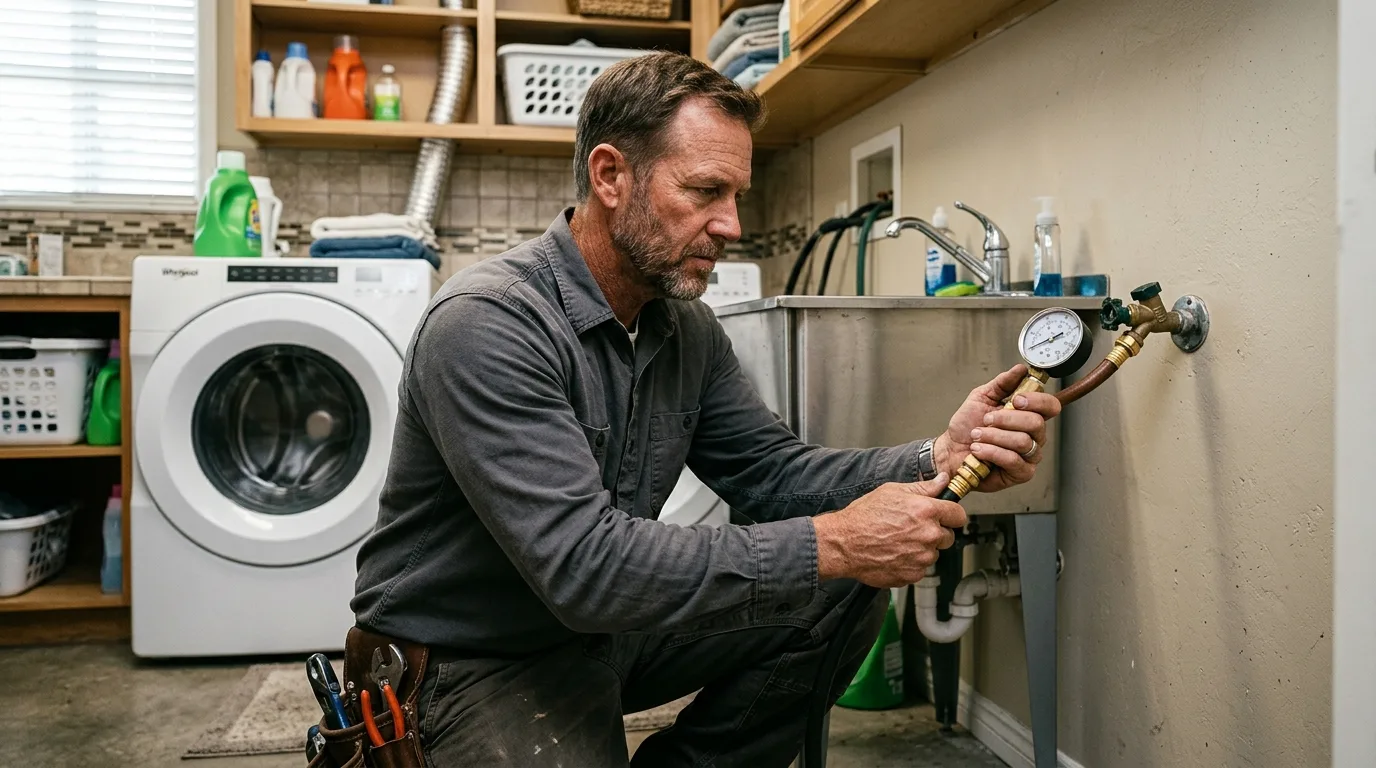
The test costs nothing and takes two minutes: a gauge on a hose bib, read at rest and then with a fixture running. Anything much above eighty psi static is outside what the plumbing code contemplates for a residence, and it explains a lot of otherwise puzzling symptoms.
Gas line work is one of the areas where a permit is not bureaucratic overhead. It brings an inspection, and an inspection catches the sizing and venting mistakes that are genuinely dangerous rather than merely inconvenient.
If a contractor proposes running a new gas line without pulling one, that tells you something useful about how the rest of the job will go. Ask what the pipe was sized for, what test pressure it held, and for how long.
Calling from the corridor
Build era, any additions, and what pipe material you know about. It narrows things quickly.
Static and flowing, before any conclusion is drawn about fixtures or noise.
Where one pipe material meets another is checked, because that is where failures cluster.
What the work is, what it costs, and whether it needs a permit: stated before it starts.
Smell gas? Leave the building first, then call from outside.
Most requested here
Banging pipes, weeping relief valves and fixtures failing earlier than they should.
Ranges, fire features and pool heaters, load-calculated, permitted and tested.
Galvanized remnants in houses that were only half-updated during a past remodel.
Pre-purchase and repeat-backup surveys that establish what the pipe is actually doing.
Popular on remodels here, and dependent on gas capacity and venting being right.
Remodel fixtures set properly, with shutoffs and supply lines replaced rather than reused.
Two minutes with a gauge explains a lot of symptoms.
Where we send plumbers
Garfield crosses the middle of the city, with Goldenwest and Seacliff to the west and the Adams and Brookhurst neighborhoods east.
Straight answers
Usually high static pressure, sometimes combined with an absent or waterlogged arrestor. The bang is the momentum of moving water stopping abruptly, and higher pressure means more momentum.
Check the pressure before buying arrestors. If it reads high, fixing the regulator addresses the noise and everything else the pressure is quietly damaging.
Comfortable and safe is generally in the fifty to seventy-five psi range. Code caps residential static pressure at eighty psi, which is where a regulator becomes required rather than optional.
Below about forty psi, showers and simultaneous fixture use start to feel poor. Both ends of that range are worth correcting.
Ten to fifteen years is typical, less where the water is aggressive. They rarely fail cleanly. They drift, so the change is gradual and easy to miss.
If yours is original to a house built in the eighties, it is well past its expected life regardless of whether it appears to be working.
Usually yes, but it starts with a load calculation rather than a tee. The existing meter and pipe were sized for the appliances the house had, and adding a grill, a fire feature or a pool heater changes the demand.
The work needs a permit, a pressure test and an inspection. Anyone offering to skip those is offering you a liability, not a saving.
It is workable if the transitions were done correctly: dielectric fittings where dissimilar metals meet, proper support where materials change, and no galvanized left in a hot line.
Where it goes wrong is at those junctions, so that is where an inspection should start. The remaining old sections are also the ones most likely to fail next.
It can be, particularly on a remodel where you are gaining space and the gas and venting work is happening anyway. The honest caveats are gas capacity, dedicated venting, and hard-water scaling that makes annual descaling non-optional here.
If the only motivation is endless hot water for a two-person household, a well-sized tank is often the better value. Ask for both prices, including the venting.
Sometimes, but more often it is doing its job. A T&P valve discharges when pressure or temperature exceeds its setting, and on a closed system with high incoming pressure that happens routinely as water heats and expands.
Replacing the valve without addressing pressure and thermal expansion means the new one will drip too. The fix is usually a regulator, an expansion tank, or both.
On anything with an original lateral, yes. A general home inspection does not include the sewer, and a lateral replacement is one of the larger unbudgeted costs a buyer can inherit.
The inspection is inexpensive relative to what it can find, and the footage is negotiating material either way.
For work that requires one: gas lines, water heater replacements, repipes, sewer work: the contractor pulls it, and you should expect that to be stated in the quote rather than added later.
Permitted work also matters at resale, where unpermitted plumbing surfaces during escrow at the least convenient moment.
Build era and pipe material change the answer. Tell us what you know.
Garfield corridor
Pressure, pipe material and transitions get checked before a repair is proposed. That is how you stop paying for the same problem twice.
Serving every Huntington Beach neighborhood, plus the cities next door.