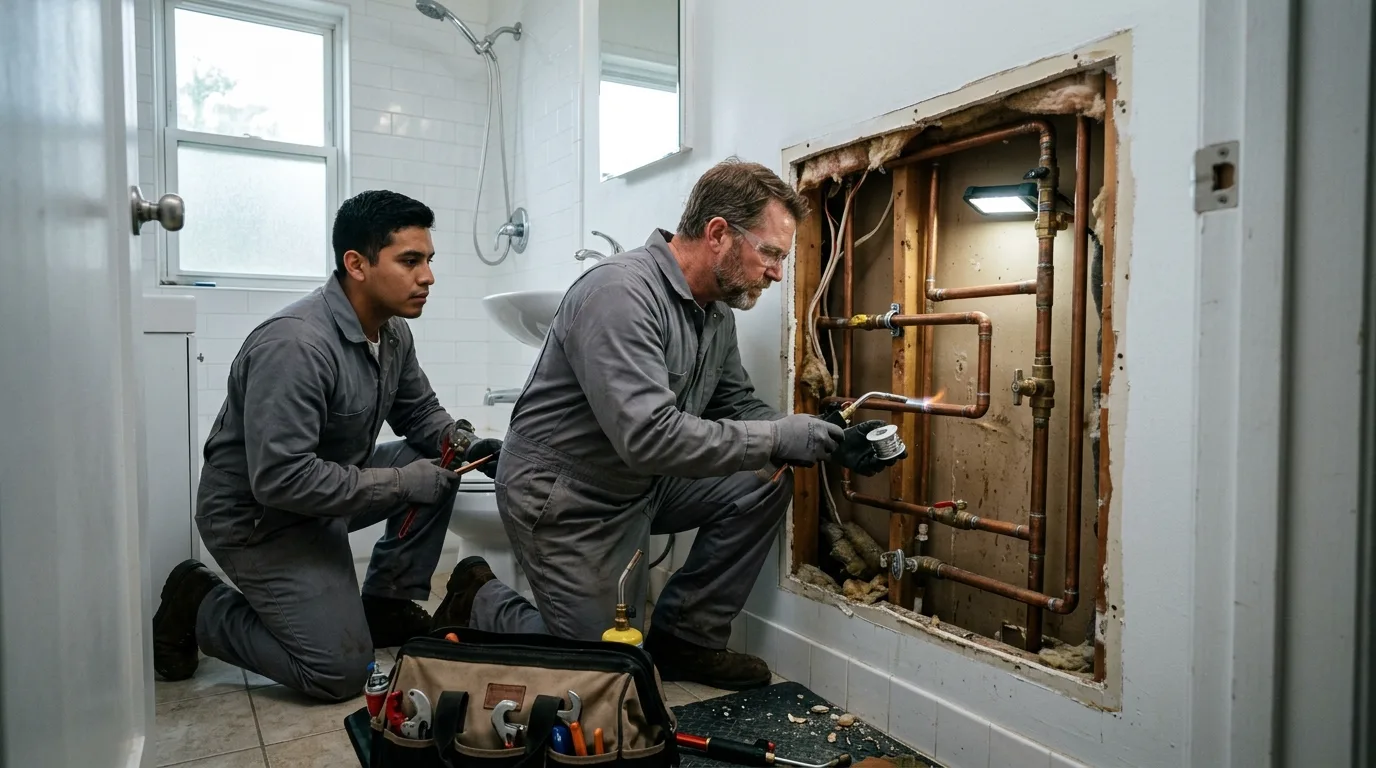
Trenchless sewer work
Lining and bursting that avoid a groundwater-filled trench across a finished waterfront yard.
Canals, islands, waterfront lots
Waterfront property is the hardest environment for plumbing in the city. Shallow groundwater changes how repairs are done, and salt air shortens the life of everything exposed to it.
Harbour address? 657-337-7830
On the islands and cul-de-sacs, tell the dispatcher the bridge or street you come in on: it genuinely affects arrival time.
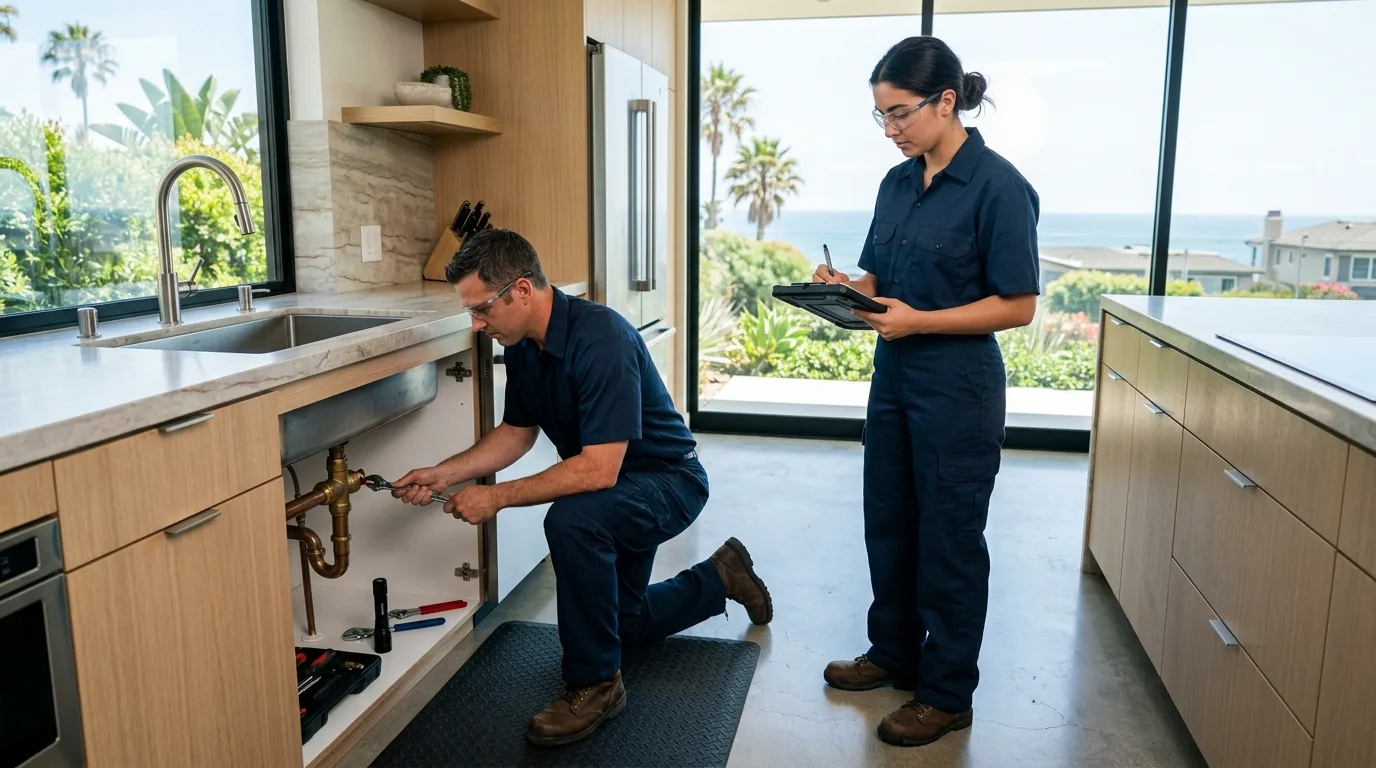
A trench here can fill as fast as it is dug. That pushes sewer and service line work toward trenchless methods.
Exterior copper, hose bibs, gas risers and outdoor showers need marine-grade specification, not builder-grade.
Dock washdowns, outdoor showers and boat rinse lines feed sand and grit into drains that were not designed for it.
Larger homes mean multiple water heaters, recirculation loops and long pipe runs: diagnosed accordingly.
On the ground
Huntington Harbour: the canal neighborhoods off Warner and Pacific Coast Highway, including the island streets and the cul-de-sacs backing onto water: is a genuinely different plumbing environment from the rest of the city. Three conditions drive almost every job here.
Shallow groundwater. Dig far enough down anywhere near the canals and you find water. That single fact reshapes the two most expensive repairs a property can need. An open trench for a sewer lateral or a water service line may require dewatering and more serious shoring, which adds cost and days. It is why lining and pipe bursting are so often the sensible recommendation on this side of the city, and why slab leaks here lean toward overhead rerouting rather than opening concrete.
Salt air, constantly. Everything exposed corrodes on an accelerated schedule. Hose bibs and outdoor shower valves. Exterior copper feeding dock washdowns. Gas risers at the meter. Water heater flues and draft hoods in garages that breathe marine air. Pressure regulators at the main. On a Harbour property, exterior components should be specified for the environment: solid brass, marine-grade, properly coated: because builder-grade plated fittings age visibly within a couple of years.
Sand and grit. Boat rinse lines, dock washdowns and outdoor showers move a steady load of sand into drainage that assumed household use. It settles wherever the line loses velocity and contributes directly to the recurring clogs described on our drain cleaning page. Water-based cleaning moves settled sand; a cable just bores through it.
The waterfront and interior streets off Warner Avenue and Pacific Coast Highway, the island neighborhoods reached by bridge, the cul-de-sacs backing the main channel, and the condo and townhome communities along the water. Coverage runs north to the Sunset Beach line and east across Bolsa Chica Street.
Harbour homes tend to be bigger than the city average, and that changes the plumbing. Multiple bathrooms and long pipe runs mean recirculation systems that need to be understood before anyone diagnoses a hot water complaint. Some properties run two water heaters, or a tankless unit on an exterior wall where salt exposure matters. Landscape irrigation, pool and spa equipment and dock utilities all tie into the same supply, which is why a suspected leak here starts with proper isolation testing rather than a guess.
Plumbing on the property is ours. Seawall structure, dock construction and anything that belongs to the waterway or an association is not. Where a leak or a line crosses that boundary, the plumber will tell you plainly where their work stops and who handles the rest, and camera footage or a locate is usually what settles the question.
A number of Harbour homes sit empty for stretches. An unattended supply line failure in an empty house is the expensive kind of plumbing problem, which is why shutoffs that actually close, sound supply hoses and a periodic look at the water heater matter more here than in an occupied home.
Calling from the Harbour
Island, bridge or mainland street, plus gated or association access, decides routing and realistic timing.
Recirculation, multiple heaters, pool and dock utilities are established before diagnosis, not discovered mid-visit.
For any buried repair, the water table shapes the method, and you hear the trenchless option alongside the trench.
Anything exterior gets specified for the environment so the repair does not need repeating in three years.
Same-day slots most weekdays; 24/7 for active leaks in the Harbour.
Most requested here
Lining and bursting that avoid a groundwater-filled trench across a finished waterfront yard.
Isolating house supply from irrigation, pool fill and dock lines before anyone opens anything.
The most common safety finding on salt-exposed Harbour properties.
Overhead rerouting rather than opening concrete where groundwater makes excavation unpredictable.
Including flue and connector corrosion that garages near the water produce reliably.
Outdoor showers, rinse lines and washdowns feeding grit into household drainage.
Ask specifically about groundwater before agreeing to any excavation here.
Where we send plumbers
Harbour work runs north into Sunset Beach, east across Bolsa Chica Street toward Westminster and Midway City, and south along the coast through Bolsa Chica and Goldenwest.
Straight answers
Because near the canals a trench can fill with water as fast as it is excavated. That requires dewatering and more substantial shoring, which adds cost, time and risk to an open-cut repair.
It is the strongest practical argument for trenchless methods here. Ask any contractor quoting an open trench in the Harbour how they intend to handle groundwater. The answer tells you a lot.
Solid brass or marine-grade hardware for hose bibs, outdoor showers and exposed valves, properly coated pipe for exterior runs, and stainless where it makes sense.
It costs more up front and it is straightforwardly cheaper over a decade. Builder-grade plated fittings are not designed for permanent salt exposure.
Not necessarily. Large Harbour homes often have long pipe runs and a recirculation system, and a failed recirculation pump or a bad check valve produces exactly that complaint with a perfectly healthy water heater.
The plumber should establish whether recirculation exists and whether it is working before condemning anything. It is a common misdiagnosis on big houses.
Yes, and that is precisely why isolation testing comes first. The house supply, irrigation, pool autofill and any dock line get separated and tested independently.
A meaningful share of suspected slab leaks on waterfront properties turn out to be a pool fill valve or an irrigation zone. Proving that costs far less than opening a floor.
Yes, and yes. Bridge access, narrow streets, gated communities and association parking rules all affect how quickly a van reaches a driveway.
Tell the dispatcher which street and how you come in. It produces a realistic window instead of an optimistic one.
Sand. Rinse lines and outdoor showers deliver grit steadily into drainage designed for household waste, and it settles wherever the line slows down.
Cabling bores through it; water-based cleaning moves it out of the system. A better drain arrangement at the shower itself also helps considerably.
It is worth preparing for. An unattended supply failure in an empty house causes far more damage than the same failure with someone home.
Have the main shutoff checked so it actually closes, replace ageing washing machine and dishwasher supply hoses, and have the water heater looked at. Some owners simply shut the water off at the main when away for extended periods.
It can be, and the space saving is popular. Salt exposure is the trade-off: cabinets and vent terminals weather faster here than inland.
Ask about the manufacturer’s coastal guidance and whether an enclosure makes sense. Also budget for annual descaling, which is not optional in this water.
Plumbing serving your property is generally yours. Seawall structure, dock construction and anything belonging to the waterway or an association is not.
Where a problem sits near that boundary, camera footage and a locate usually establish it clearly. The plumber will tell you where their scope ends rather than guessing.
The right question to ask before anyone digs near the water.
Huntington Harbour
Give us the street, the access route and what is happening. We will route someone who understands what groundwater and salt do to this work.
Serving every Huntington Beach neighborhood, plus the cities next door.