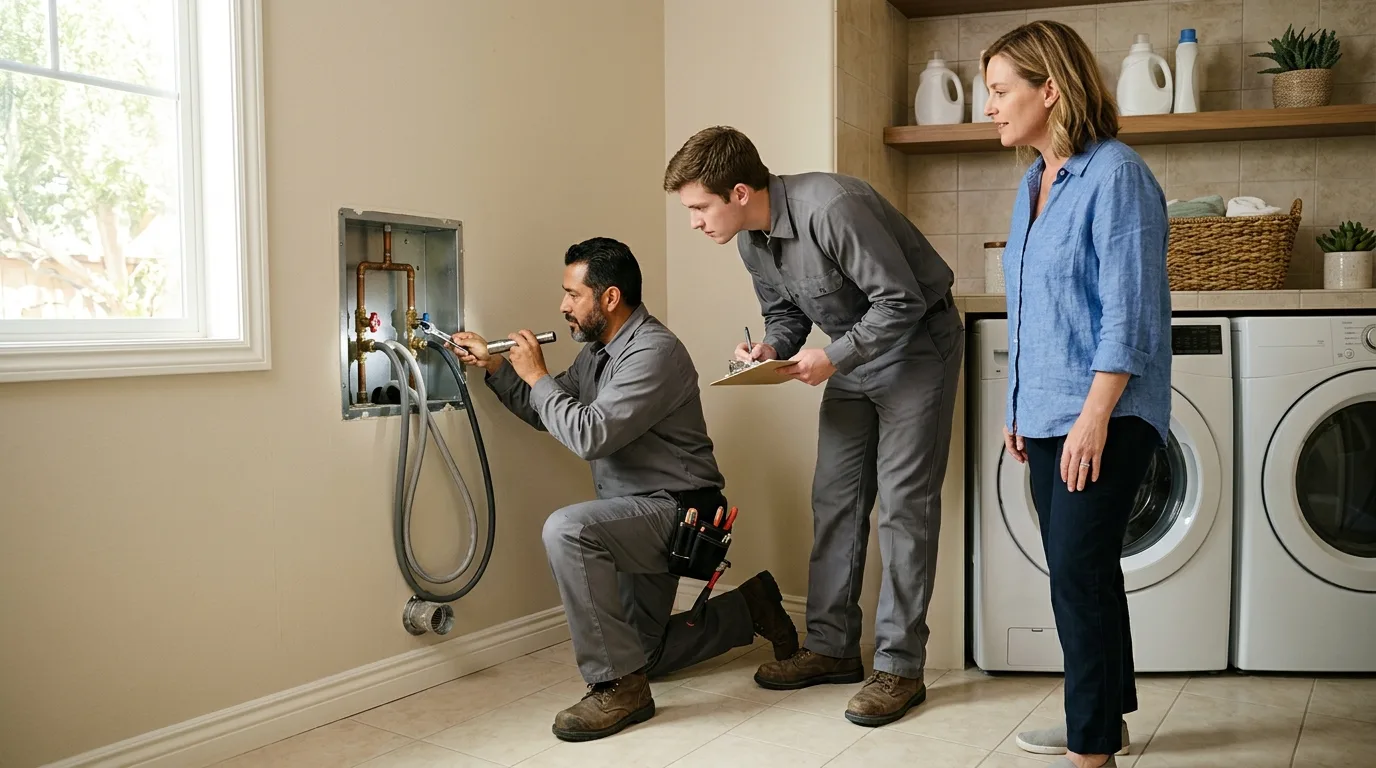
Upstairs leak response
Supply failures putting water through a floor assembly into the unit below.
Condo and townhome communities off Beach Boulevard
In attached housing a leak is rarely just yours. Getting the boundary right between unit and association, before anyone opens a wall: saves money and a great deal of argument.
Community call: 657-337-7830
Water coming through a ceiling? Shut the upstairs unit’s supply first, then call.
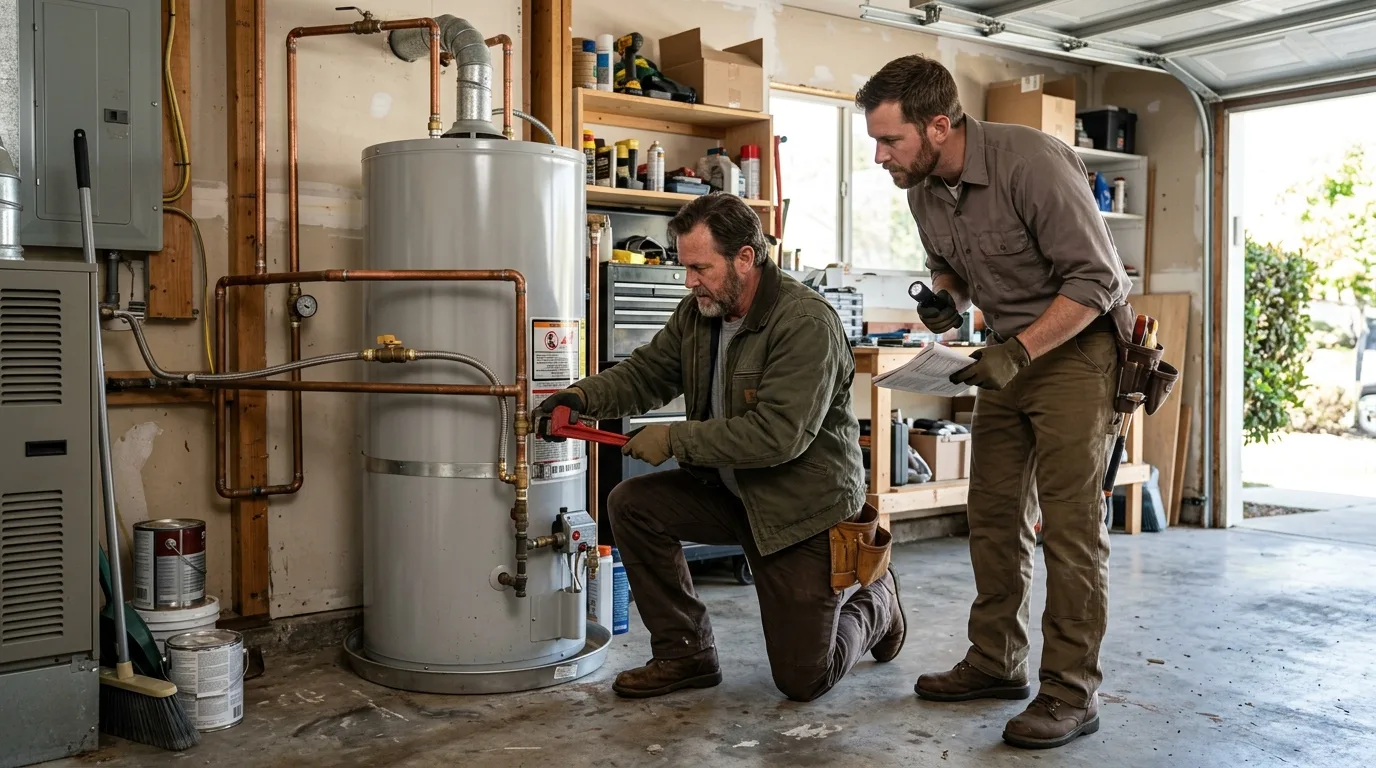
Where responsibility sits determines who pays. It gets established, not assumed.
An upstairs failure becomes a downstairs ceiling within minutes. Speed matters.
Interior installations with no pan, no drain and a floor underneath somebody else’s ceiling.
Photos and written findings, because boards and insurers both ask for them.
On the ground
Beachwalk and Pacific Sands are planned communities of condominiums and attached townhomes built in the 1970s and 80s off Beach Boulevard, with common landscaping, shared drives and, plumbing-wise, a good deal of shared infrastructure. That changes what a service call involves.
The boundary question comes first. In most associations the owner is responsible for plumbing serving only their unit, and the association for lines serving more than one. That sounds tidy until a leak sits inside a party wall or a vertical stack. Establishing which side of the line the failure falls on, before demolition, not after: determines who authorizes and who pays.
Vertical stacks and horizontal branches. A stack serving several units is almost always common. The branch from a fixture to that stack is almost always the unit’s. The gurgle you hear when a neighbour drains a bath is the stack telling you something about venting, and that is worth mentioning to the association rather than treating as a personal quirk.
Upstairs leaks, downstairs damage. The single most expensive event in this housing type is a supply failure in an upper unit. A burst braided connector, a failed angle stop or a split supply line puts water into a floor assembly and out through a ceiling below. Knowing where your unit’s shutoff is, before you need it, is genuinely the cheapest insurance available.
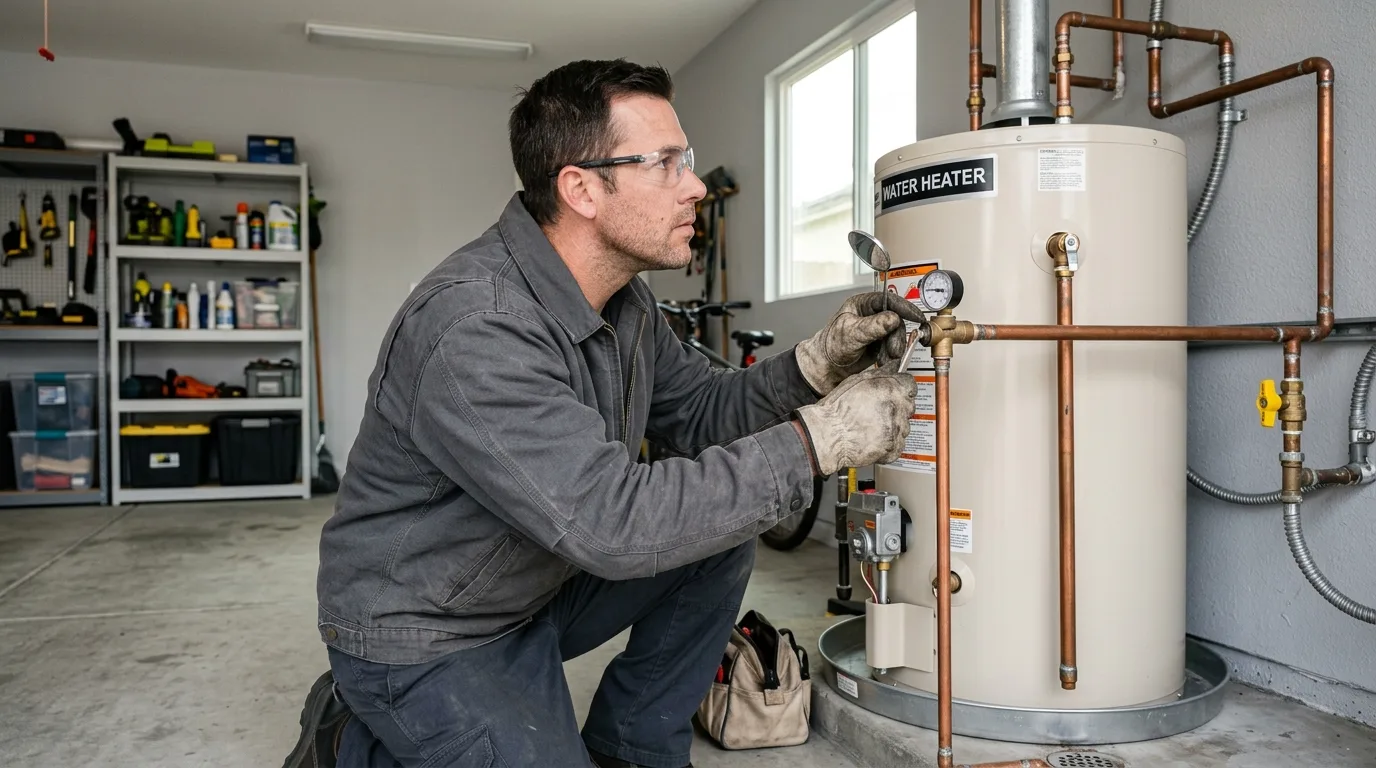
Water heaters in interior closets. Common in these units, and frequently installed without a pan piped to a safe termination. A tank failure in a closet over a living space is a claim rather than an inconvenience. Pan, drain, strapping, expansion control and T&P routing all get checked on any heater visit here.
Original angle stops and connectors. Forty-year-old chrome stops seize, and braided connectors have a service life that most people never think about. On a planned bathroom or kitchen fixture change, replacing them is a small addition to the job that removes a disproportionate share of the risk.
The Beachwalk and Pacific Sands communities and the surrounding condominium and townhome developments off Beach Boulevard between Atlanta and Hamilton, along with nearby attached housing across Downtown and South Huntington Beach.
Association work runs differently from a single-family call. There is usually an approved-vendor process, an authorization limit, and a requirement for written scope and photographs. None of that is unreasonable, and a plumber who works in attached housing regularly should expect it rather than resent it.
What helps most on the phone is knowing three things: whether you are the owner or a tenant, whether the association manages plumbing repairs, and who can approve spending. With those settled, a visit is straightforward.
Where an upstairs leak has damaged a downstairs unit, the plumbing repair and the damage claim are separate matters. The plumbing side should be documented carefully: source, cause, date, photographs: because that record is what both insurers will work from.
Our job is the pipe and the evidence. Apportioning the damage is between the owners, their carriers and the association, and any plumber who volunteers an opinion on that is straying outside their competence.
Calling from the community
Who is calling and who authorizes the spend, confirmed before dispatch.
Unit shutoff first, building isolation if needed, containment before diagnosis.
Where the failure is, and whether it sits in unit plumbing or common infrastructure.
Documentation supplied as standard, because the board or the carrier will want it.
Active leaks affecting a second unit go to the front of the queue.
Most requested here
Supply failures putting water through a floor assembly into the unit below.
Damp drywall and stained ceilings traced to a source before anything is opened.
Pans, drains, strapping and expansion control done properly in tight interior spaces.
Slow fixtures and gurgling traps, with the shared-stack question addressed honestly.
Angle stops and connectors replaced alongside the fixture, not left for later.
Running fills, failed seals and rocking pans over a neighbour’s ceiling.
Written scope and photographs on every attached-housing job.
Where we send plumbers
These communities sit between Downtown and the southeast tracts, with Adams and Brookhurst a short drive inland.
Straight answers
Contact the upstairs occupant and get their water shut off, at their unit valve if reachable, at the building isolation if not. That single step limits the damage more than anything else.
Then call, and photograph everything as it is. Do not wait for the two owners to agree on responsibility before stopping the water.
In attached housing it varies: inside a utility closet, in an exterior wall cabinet, or grouped with neighboring units in a common enclosure. Some units have no individual valve at all.
Find yours on a calm afternoon, confirm it actually turns, and tell everyone in the household where it is. That is a ten-minute task with a very large payoff.
The governing documents decide it, and they vary between communities. The common pattern is that lines serving one unit are the owner’s and lines serving several are the association’s.
What a plumber can supply is a clear factual finding of where the failure sits and what serves what. That is usually what the determination turns on.
It usually points to a shared stack that is partially restricted or not venting freely. Air is being pulled through your trap because it cannot get in where it should.
Because the stack is generally common infrastructure, this is one to raise with the association rather than solve inside your own unit. Left alone, it can pull traps dry and let sewer odor in.
In an interior closet above or adjacent to living space, absolutely, and the pan needs to be piped to a location where a discharge is visible and harmless, not simply sat under the tank.
Many original installations in these units have neither. It is an inexpensive correction relative to a ceiling replacement in the unit below.
For work wholly inside your unit, generally yes, subject to whatever your documents require regarding contractor insurance and notice.
For anything touching common plumbing, a party wall or the exterior, the association needs to be involved. We will tell you honestly which side of that line a proposed repair falls on.
In an original unit, quite possibly as old as the building. Braided stainless connectors are not permanent parts, and the plastic-nut variety in particular fail without warning.
Replacing them, along with seized angle stops, is a modest job that removes one of the most common causes of sudden interior flooding in attached housing.
Yes. In an assembly between two units, a slow leak can run for a long time inside a floor or wall cavity before anything appears, and the smell often arrives before the stain.
Moisture metering and thermal imaging find damp material without demolition, which is the right first step rather than opening drywall speculatively.
Yes: written findings, cause where it can be determined, photographs and the date. That is standard on attached-housing work and it should not need to be requested.
What we will not do is characterise the loss in the language of a policy. That is your adjuster’s job, and our record is what they will read.
Tell us owner or tenant, and whether a second unit is affected.
Beachwalk & Pacific Sands
Stop the water, find the source, document the finding. We work to that order every time.
Serving every Huntington Beach neighborhood, plus the cities next door.