Repiping galvanized homes
Fading pressure and rust-tinted hot water in the oldest housing on the corridor.
Central corridor • Goldenwest Street and Ellis
The Goldenwest corridor runs through three eras of construction in a few miles. A plumber here needs to identify what they are looking at before deciding what to do about it.
Goldenwest area: 657-337-7830
The build year matters more than the address here. If you know roughly when the house went up, say so on the phone.
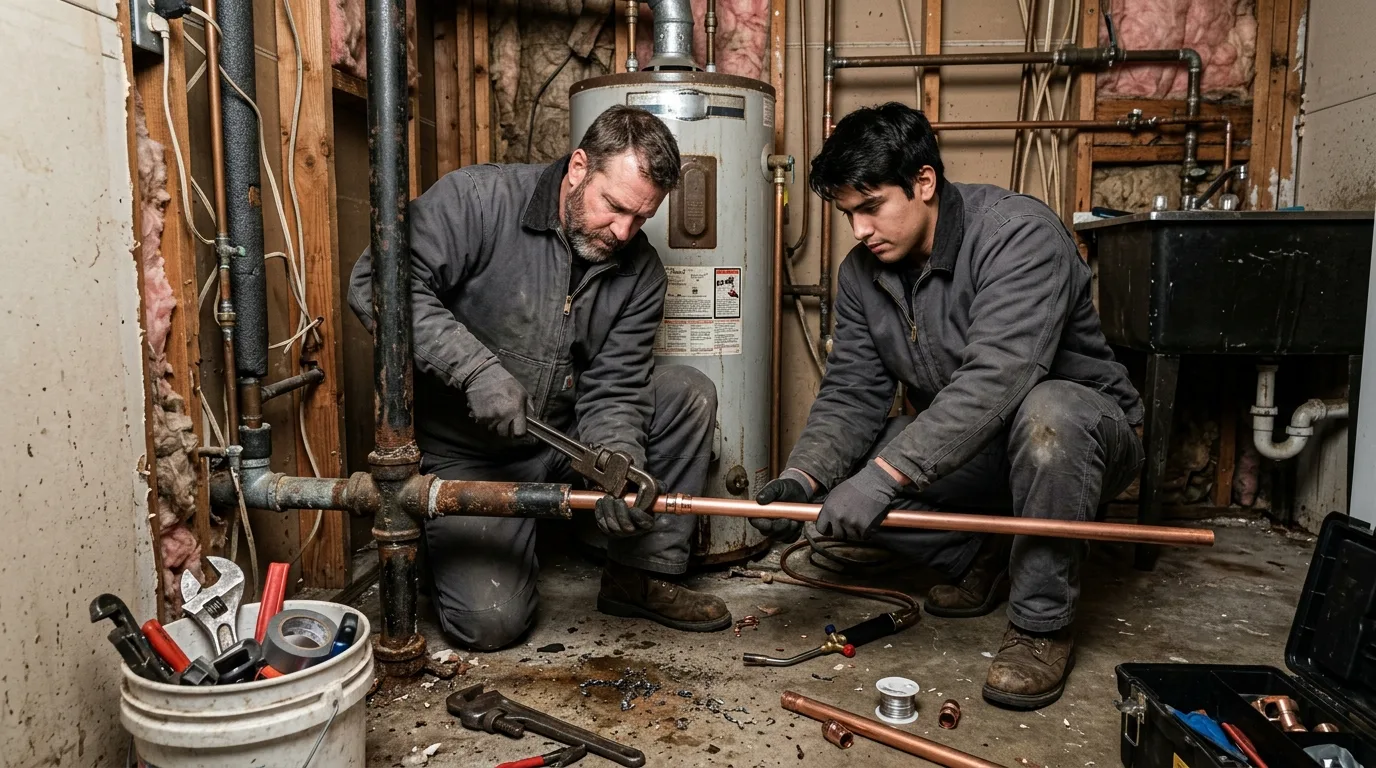
Galvanized, mid-century copper and modern PEX are all in service here, and each fails differently.
Older sections still run cast iron, which scales internally and snags everything passing through.
Student and long-term rentals near the college produce high fixture turnover and drain abuse.
On a street with three construction dates, guessing the pipe material is how the wrong repair gets sold.
On the ground
The corridor either side of Goldenwest Street, running through the Ellis, Garfield and Talbert cross streets and up toward Warner, contains some of the widest construction variety in Huntington Beach. Two houses on the same block can have completely different plumbing systems.
Galvanized-era homes. The oldest housing here still runs galvanized steel supply lines that have been scaling internally for decades. The symptoms are consistent: pressure that has faded gradually, rust-tinted hot water after periods of no use, and pressure that drops when a second fixture runs. Spot repairs on galvanized move the failure a few feet; repiping ends it.
Mid-century copper. The larger share of the corridor is postwar tract housing with copper supply, much of it running under or through the slab. That produces the two classic calls: pinhole leaks in the walls and slab leaks under the floor. Warm spots on tile and unexplained bill jumps are the tells.
Newer infill and remodels. Scattered newer construction and heavily remodelled older homes with PEX distribution. These fail at fittings and transitions rather than along the pipe, and the failure is usually installation-related rather than age-related.
Cast iron drainage. Older sections still have original cast iron waste lines. Internal scale narrows the bore and catches everything, which produces the repeat kitchen and main line clogs that respond to jetting far better than to another cable.
Rental density. Proximity to Golden West College means a significant rental population, with the fixture turnover and drain abuse that comes with it. Wipes, cooking grease and heavy fixture use feature prominently in the call log.
Both sides of Goldenwest Street from Warner down toward Yorktown, the Ellis and Garfield cross streets, the Talbert and Slater corridors, the neighborhoods around Golden West College, and the pockets running east toward Gothard and Beach Boulevard.
On a corridor like this, the first question is always what the pipe is made of. A plumber should establish that, and be willing to cut a short section and show you the inside on an older house, before recommending anything expensive. The inside of a galvanized pipe is the most persuasive argument for repiping that exists, and the absence of that evidence is a reason to ask more questions.
The second question is pressure. A static pressure test takes two minutes and explains a great deal, particularly on homes where fixtures fail repeatedly.
For rental property, the practical priorities are different from an owner-occupied home: durability, parts availability and fast turnaround matter more than finish selection. The plumber also needs to know who authorizes the work: owner, property manager or tenant, before pricing is approved, because that is the step that otherwise stalls a job on arrival.
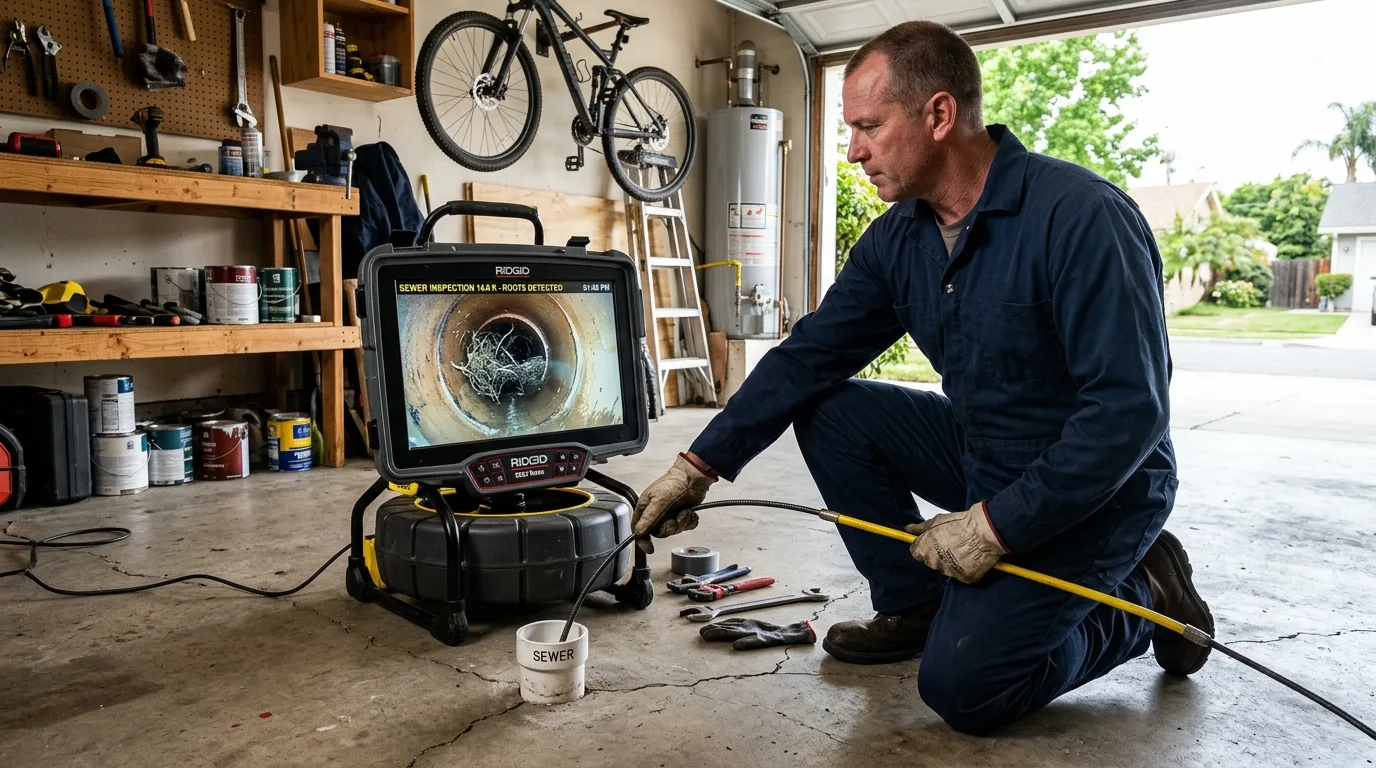
If a line here has been cabled more than once, the honest next step is a camera run rather than a third cable. It distinguishes a dirty pipe from a broken one, and those two findings have very different price tags.
Calling from the corridor
Build year and pipe material identified first, because on this corridor they vary house by house.
Static pressure, flow at multiple fixtures, and where relevant a short section cut so you can see the pipe.
Spot repair on sound pipe, repiping on galvanized, jetting on scaled cast iron: not one default answer.
On rentals, who approves the spend is settled before work starts rather than discovered at the door.
Tell us the approximate build year and we will arrive better prepared.
Most requested here
Fading pressure and rust-tinted hot water in the oldest housing on the corridor.
Warm floors and bill spikes in the postwar copper-under-concrete tracts.
Scaled older drain lines that close up again within months of being cabled.
Kitchen grease and wipes in high-turnover tenanted property.
The right response to a line that has already been cabled twice.
Garage-installed tanks with a decade of sediment and no flushing history.
On this corridor, identifying the material is most of the diagnosis.
Where we send plumbers
The corridor connects to Oak View to the east, Seacliff and Downtown to the south, and Bolsa Chica and the Harbour to the northwest.
Straight answers
The symptoms are consistent: pressure that has faded gradually over years, rust-tinted hot water after the house has sat unused, and a noticeable drop when a second fixture runs.
A plumber can confirm it visually at an exposed section, and on an older house they should be willing to cut a short piece out and show you the inside. That single look decides most repipe conversations honestly.
Possibly both. On this corridor, houses on the same street were built in different years with different materials, so your neighbour’s diagnosis genuinely may not apply to you.
What matters is evidence. If the pipe is sound copper with one mechanical failure, a repair is correct. If it is galvanized or has leaked repeatedly, it is not.
Almost always grease coating the pipe wall, and on older cast iron, internal scale on top of it. Cabling bores a channel through the deposit rather than removing it, so it closes again on schedule.
Jetting strips the wall back and flushes it out. On a line cabled more than once, a camera first is worth the money.
Regularly: rental density is high in this part of the city. The key detail is authorization: who approves the spend, and up to what limit.
Settling that on the phone prevents the most common delay, which is a plumber on site waiting for someone to authorize a price.
It is the most reliable single indicator of a hot-water line leaking under the concrete, and in the postwar tracts along this corridor it is a common finding.
It still needs proving. Isolation testing and acoustic locating confirm it and, crucially, mark where it is, so only the right part of the floor gets opened. See slab leak repair.
Quite possibly. Above roughly 80 psi static, corrosion problems compound and fixtures fail early.
Testing is quick and cheap. On an older house it is worth doing before spending money on anything else, because it changes how long the next repair lasts.
More urgent than it feels. Gurgling fixtures and slow drops are early warnings, and the end state is sewage backing up into the lowest fixture in the house.
Acting while it is still slow means a scheduled appointment rather than an after-hours emergency.
Yes, and it is strongly worth doing. Build years here span decades, so the lateral could be clay, cast iron or ABS, and a standard home inspection does not look at it.
A camera inspection before closing is the highest-value inspection add-on for an older property.
Yes, including the surrounding rental neighborhoods. Those properties generate a steady volume of drain and fixture work.
If it is a tenanted property, mention it when you call so the authorization question is handled up front.
Some houses here need a repair, not a repipe. We will say which.
Central corridor
Tell us the cross streets and roughly when the house was built. That is enough for a plumber to arrive with the right expectations.
Serving every Huntington Beach neighborhood, plus the cities next door.