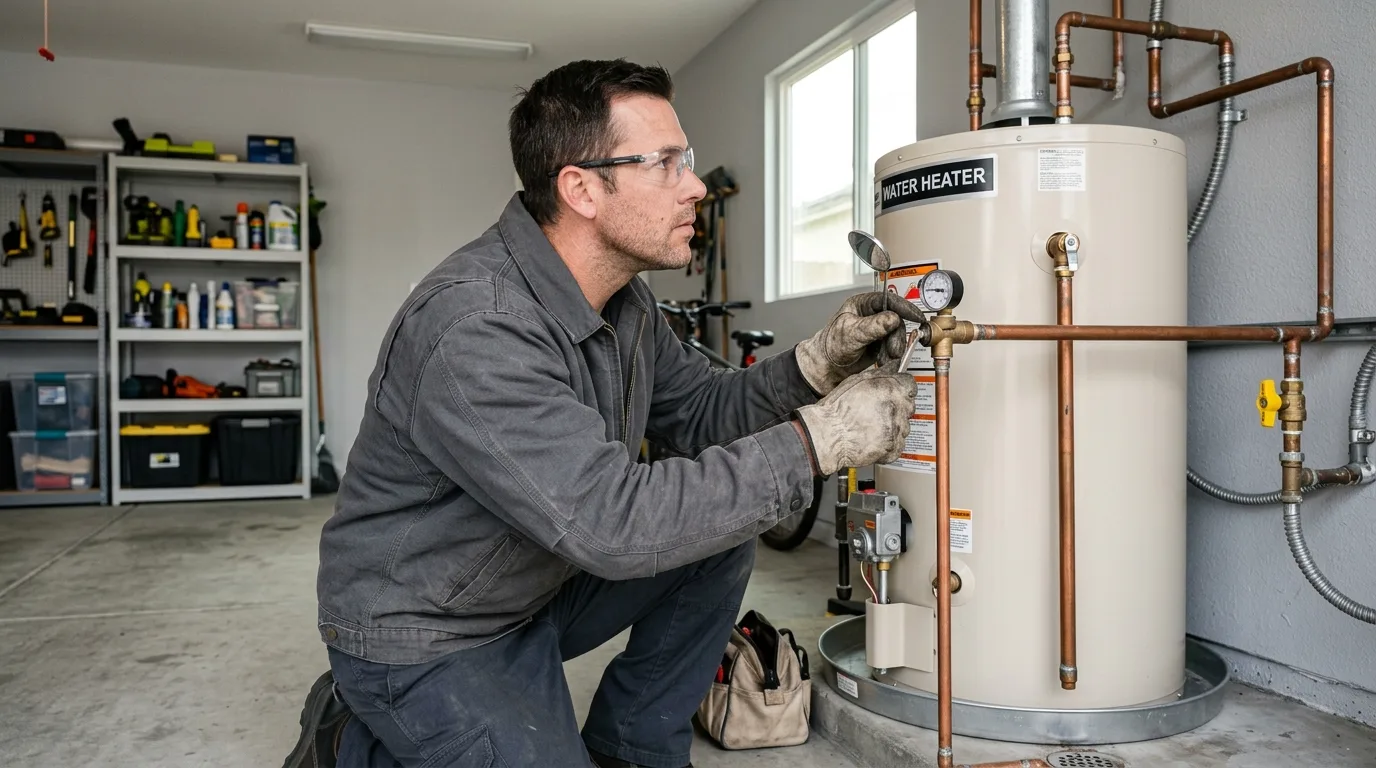
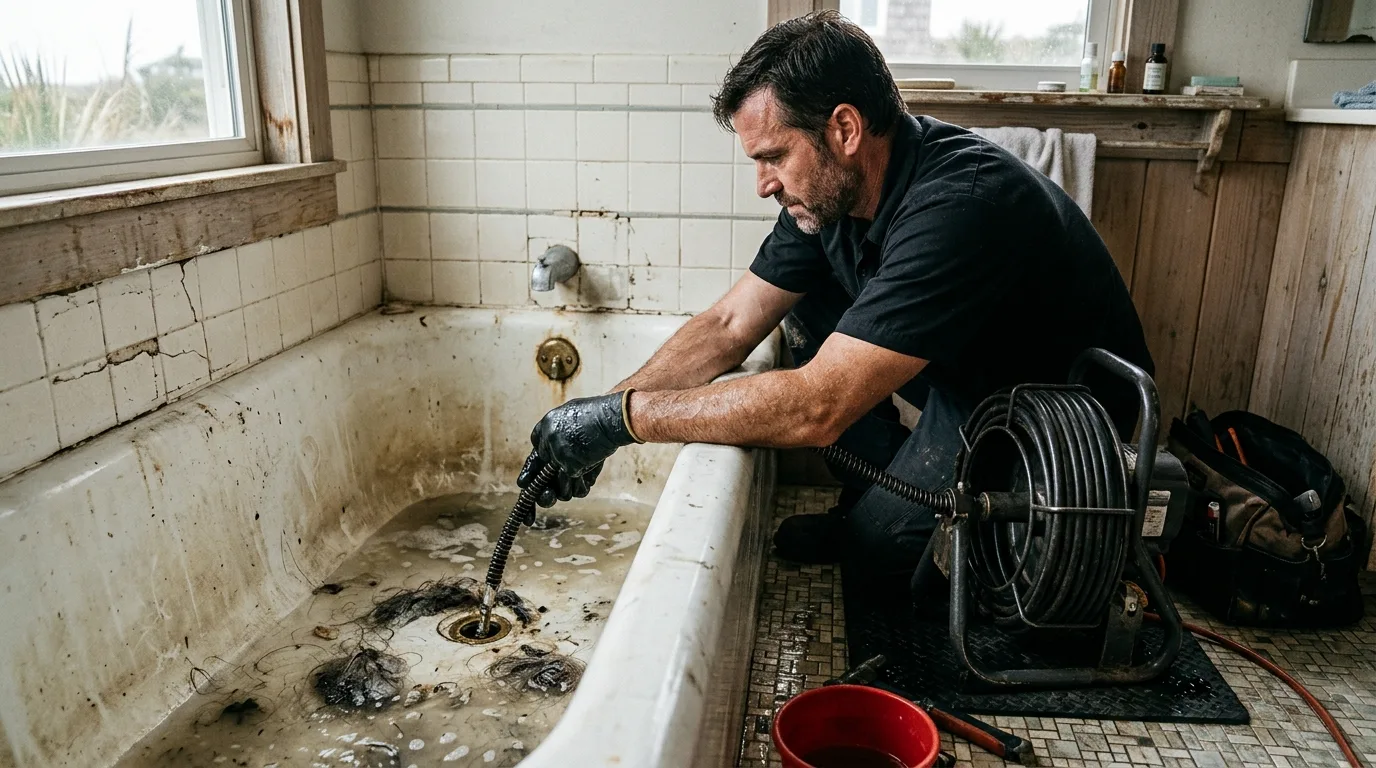
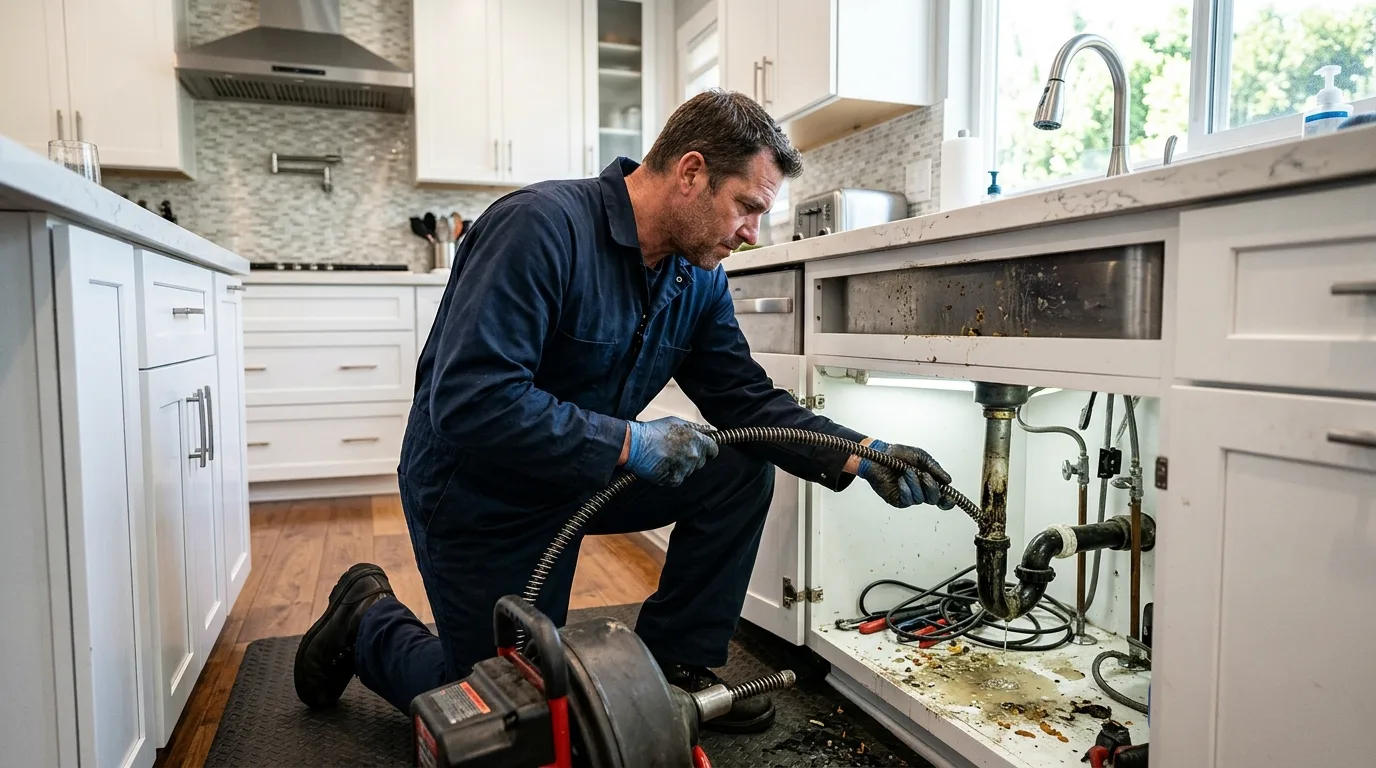
Cable / snake
Best for hair, paper and cutting root mass. Cheapest, fastest, and enough for most one-off branch clogs. Does not clean the pipe wall.
Full-bore cleaning • Not just a channel
A cable bores a hole through a blockage. A jetter strips the pipe back to its own wall and flushes the debris out of the system. For grease, scale and sand, that difference is the whole job.
Line closing up again? 657-337-7830
Jetting needs a structurally sound pipe. A camera run first is what makes it safe. Ask for both together.
Grease, soap, scale and sand come off the pipe wall and leave the system instead of settling downstream.
The line is assessed before pressure goes in, and you can see the result when it comes out.
Cast iron, clay, ABS and PVC each tolerate different treatment. The nozzle and pressure are chosen accordingly.
You get the camera evidence and the price together, so the decision is informed.
The mechanism
A jetter is a high-pressure pump feeding a hose with a specialised nozzle on the end. Most of the water fires backwards through angled jets, which does two things at once: it drives the hose up the line under its own thrust, and it scours the pipe wall on the way back out. Forward-facing jets on some heads punch through a solid obstruction so the nozzle can get past it.
Because the cleaning happens on the return pass across the full circumference, the result is a pipe restored close to its original bore: not a channel through the middle of a grease deposit. The debris is carried downstream to the main with the flow rather than left in place to reform.
Where it clearly wins:
Where it is the wrong tool: a line with a collapsed section, a badly offset joint, or cast iron that has corroded to the point of fragility. Pressure applied to a pipe that has already failed structurally can turn a repair into a replacement. This is not a reason to avoid jetting. It is the reason to look first.
Suitability
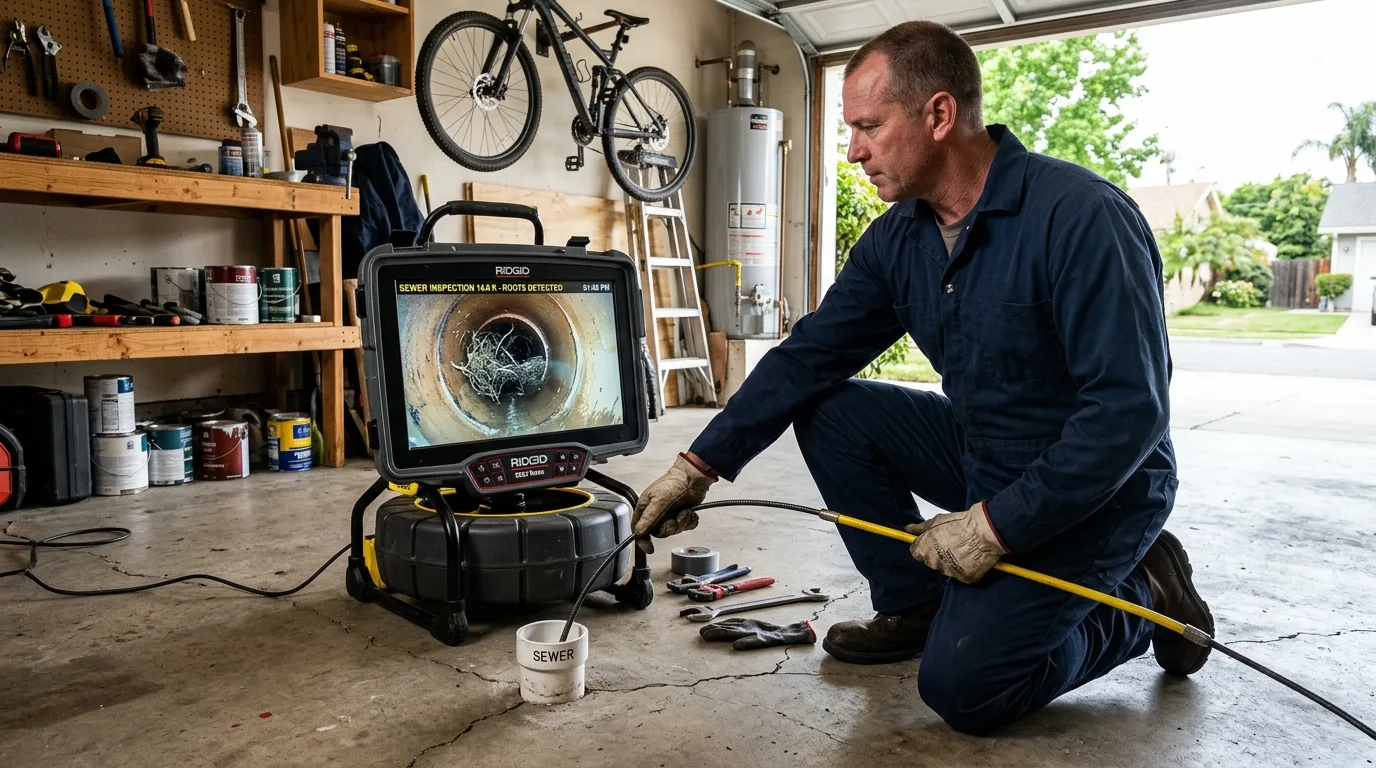
A responsible jetting job begins with a camera inspection. The technician is looking for pipe material, wall condition, joint alignment, standing water in a belly, and whether the blockage is a deposit or a defect. Five minutes of looking prevents the expensive mistake.
ABS and PVC handle jetting comfortably. Sound cast iron takes it well and benefits enormously. Clay tile: common under older Huntington Beach properties: is fine if the joints are intact but unforgiving where they are not. Orangeburg or badly deteriorated pipe should not be jetted at all; it should be replaced.
The jetter needs a cleanout to work through and a water source on site. Homes without an accessible cleanout may need one installed, which is a straightforward job that pays for itself the first time a line backs up.
A house on a two-year cycle is one conversation. A Downtown restaurant with a grease interceptor and a busy kitchen is another: those lines respond to a scheduled maintenance interval, and that is far cheaper than an emergency call during service. Details on our commercial plumbing page.
Jetting is more expensive per visit than snaking, because the equipment costs more and the job takes longer. The comparison that matters is total cost over a few years: three cable visits on a grease line usually exceed one jetting service, and the jetted line stays open longer. Where the camera shows a structural defect, neither is the answer: repair is.
The crew sets up at the cleanout, protects the surrounding area, and runs the camera. If the line is suitable, the nozzle is selected for the pipe diameter and the deposit type, and the hose is fed upstream in stages. Each pass pulls material back toward the access point, where it is collected or flushed to the main.
Expect noise from the pump and some water around the work area. A residential main line typically takes one to two hours including the camera work. Commercial kitchen lines run longer, and are usually scheduled outside service hours.
At the end, the camera goes back down so you can see the pipe wall. That footage is worth keeping. It is the baseline against which the next inspection is judged, and it is useful evidence if you sell the property.
Nothing greasy down a kitchen sink, ever: wipe pans with a paper towel first. Strainers in every shower and tub. No wipes, no cotton products, no cat litter in a toilet. Rinse sand off outside before it reaches an indoor drain. On a home with a history of root intrusion, an annual or biennial camera check catches re-entry while it is still a cleaning job rather than a repair.
For rental owners and short-term rental operators, a scheduled service between seasons costs less than an emergency visit with guests in the house. Plenty of local owners now book it the same way they book carpet cleaning.
How a jetting job runs
Pipe material, wall condition and any structural defect are established before pressure is considered. If the line should not be jetted, you are told that.
Diameter, deposit type and pipe material decide the head and the setting. There is no single configuration that suits every line.
The hose works upstream and cleans on the way back, moving debris to the access point rather than deeper into the system.
A final camera run shows the restored pipe wall. You see what you paid for and get a baseline for future inspections.
Assessment and cleaning in one visit wherever the line allows.
Jetting versus the alternatives
Best for hair, paper and cutting root mass. Cheapest, fastest, and enough for most one-off branch clogs. Does not clean the pipe wall.
Best for grease, scale, sand and repeat blockages. Restores the full bore. Needs a sound pipe and a cleanout to work through.
Not a cleaning method. It is how you tell a dirty pipe from a broken one, and it should precede any sewer replacement quote.
For lines with root intrusion at joints or minor cracking. A cured liner seals the inside without trenching the yard.
One failed section, one excavation. Sensible when the rest of the line is in good condition on camera.
For collapsed, badly bellied or Orangeburg lines. No cleaning method saves a pipe that has lost its shape.
The camera decides: not a guess over the phone.
Related work
Where we send plumbers
Residential mains in the inland tracts, sand-loaded lines in the beach blocks and Sunset Beach, and commercial kitchens in Downtown Huntington Beach, plus the neighboring cities below.
Straight answers
On sound pipe, no. Pressure and nozzle are matched to the material and diameter, and modern jetters are used at settings appropriate to residential drainage rather than at maximum.
On pipe that has already deteriorated: corroded cast iron, cracked clay, Orangeburg: jetting can open up an existing failure. That is precisely why a camera inspection comes first, and why a plumber who refuses to jet your line may be doing you a favor.
A cable makes an opening through the blockage; a jetter removes the blockage and cleans the pipe wall behind it. If your line has been cabled twice and closed up again, the deposit was never removed.
You can see the difference on camera. Ask for the before-and-after footage. It is the clearest evidence of what a jetting service actually bought you.
A typical home with no structural problem does not need it on a schedule at all: only when the line shows it. A house with a history of grease or sand often settles into a two- to three-year rhythm.
Commercial kitchens are different: quarterly to twice-yearly is normal depending on volume, and it is far cheaper than a Saturday-night backup during service.
No, and no cleaning method does. Jetting cleans the root hair and the joint surface, which delays re-entry, but roots return to a joint that is still letting water out.
Permanently stopping root intrusion means sealing the pipe: lining it or replacing it. Those options are on our trenchless and sewer repair pages.
Almost always, yes. A cleanout gives the hose a straight path and keeps the work outside your finished space.
If your property has no accessible cleanout: common in older Huntington Beach homes, and sometimes it is simply buried under landscaping. The plumber can install one. It is a one-time cost that makes every future service cheaper and cleaner.
A jetting service uses a meaningful but not extraordinary amount of water, typically a few hundred gallons over the appointment, and it goes down the sewer rather than being wasted on the ground.
Set against the water a chronically blocked or leaking line wastes, and against the alternative of repeated visits, it is a reasonable trade. If you are on a strict conservation program, mention it and the plumber can plan the passes accordingly.
Often yes. A forward-jetting head can punch through a solid obstruction and then clean on the way back. It is a genuinely effective way to deal with a hard grease plug.
If the line is blocked because it has collapsed or a section has dropped out of alignment, jetting will not restore it. The camera tells you which situation you are in before money is spent.
The work happens at the cleanout, so the mess stays outside on most residential jobs. Expect pump noise, hoses across the yard and some water at the access point.
Where the only access is indoors, the plumber will lay protection and manage the area. Clear a path to the cleanout and move anything precious from around it before the crew arrives.
Consumer drain-cleaning attachments exist and can help with a short, accessible branch line. They do not have the flow rate to clean a main line, and they give you no way to see what you are working on.
The real risk is applying pressure to a pipe that is already failing, and finding out afterwards. On a main line it is worth having the camera and the properly sized equipment.
Interceptor pumping and line jetting are related but separate services, and a commercial kitchen usually needs both on a schedule.
Tell us the property type, kitchen volume and preferred service window when you call, and the job gets assigned to a pro who works commercial lines rather than a residential-only truck.
Scheduled service beats emergency response on every measure.
Same line, third time
Tell us what the line does, how often it does it and what the last plumber used. We will send someone who can camera it and jet it in the same visit.
Serving every Huntington Beach neighborhood, plus the cities next door.