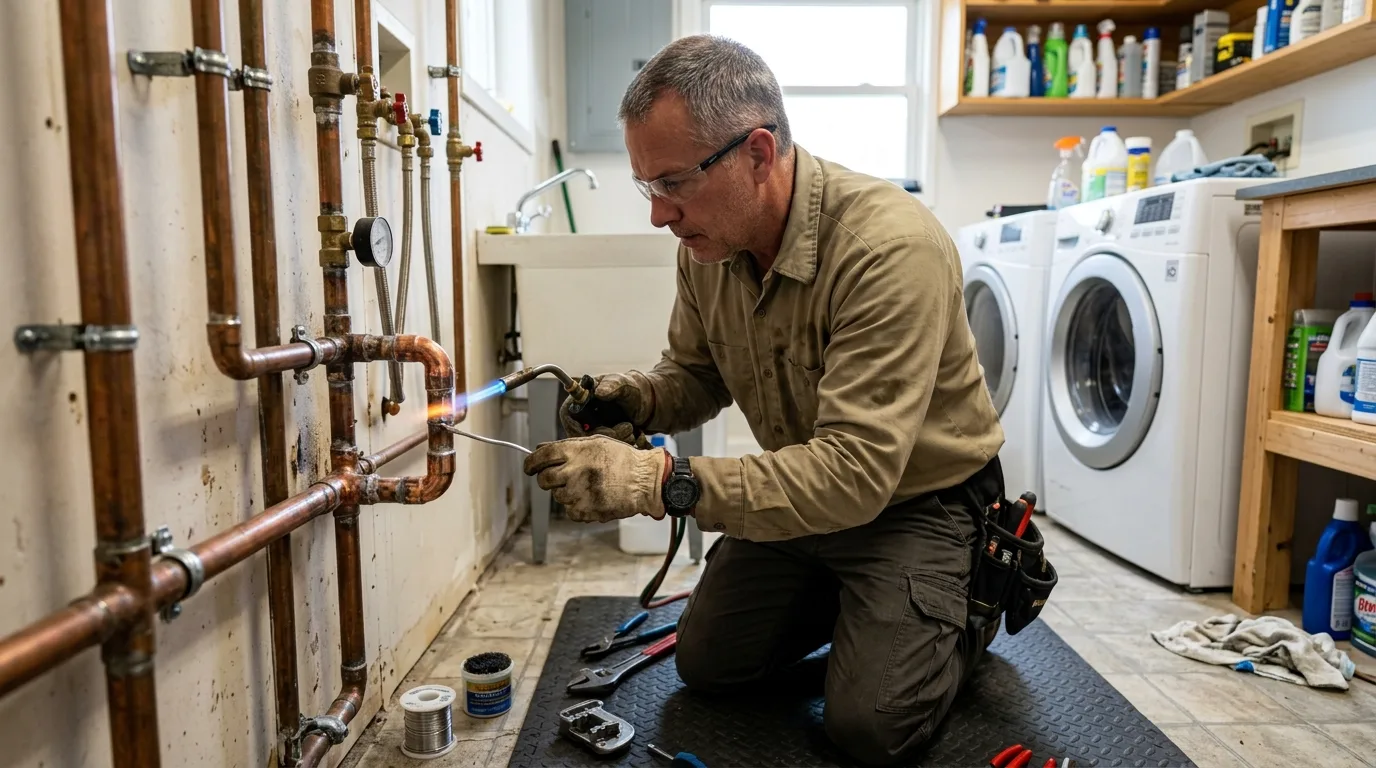
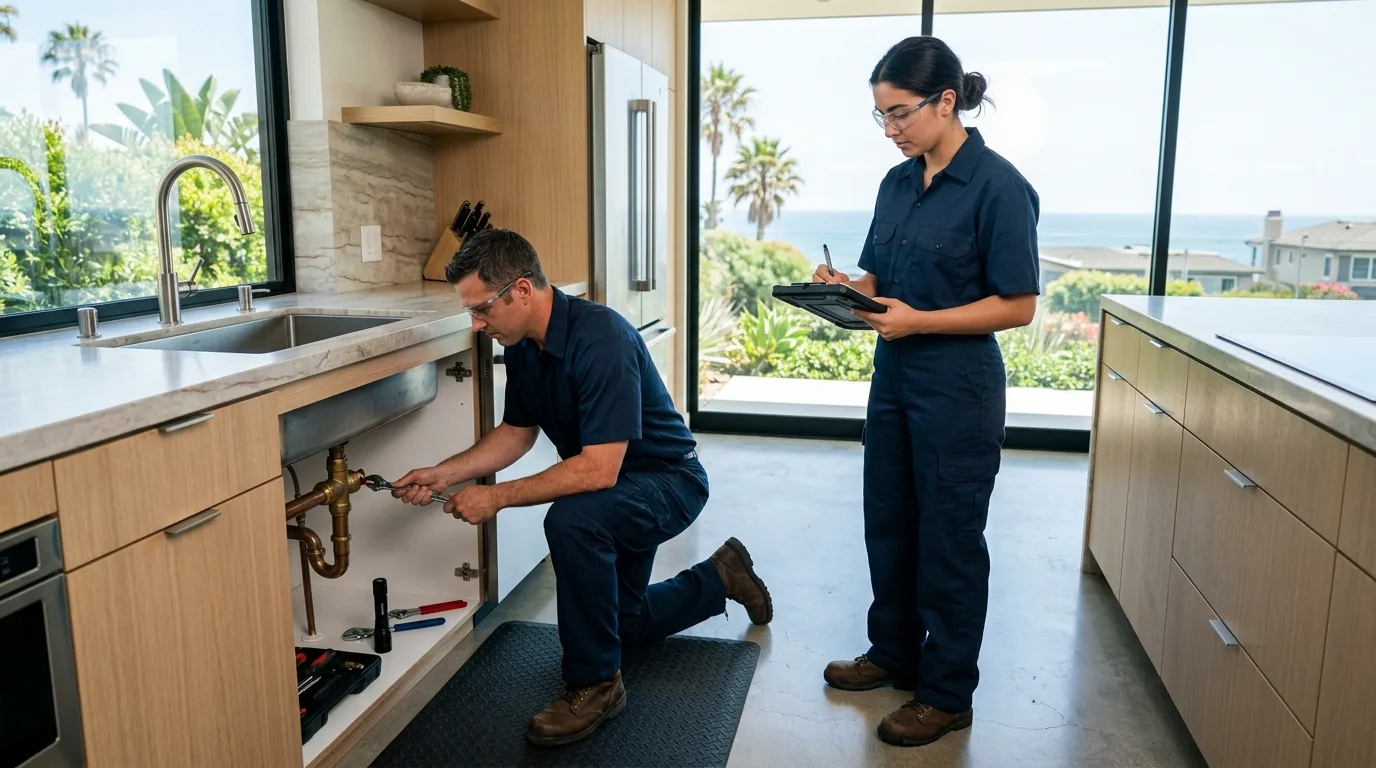
Emergency rates
After-hours emergency response is priced differently from scheduled maintenance. Prevention buys the cheaper rate by definition.
Restaurants • Retail • Rentals
A blocked kitchen line at 7 p.m. costs a restaurant a night of covers. Commercial work is about preventing that, and about responding fast when prevention runs out.
Business affected? 657-337-7830
Tell us the business type and your service hours when you call. Both change how the job is assigned.
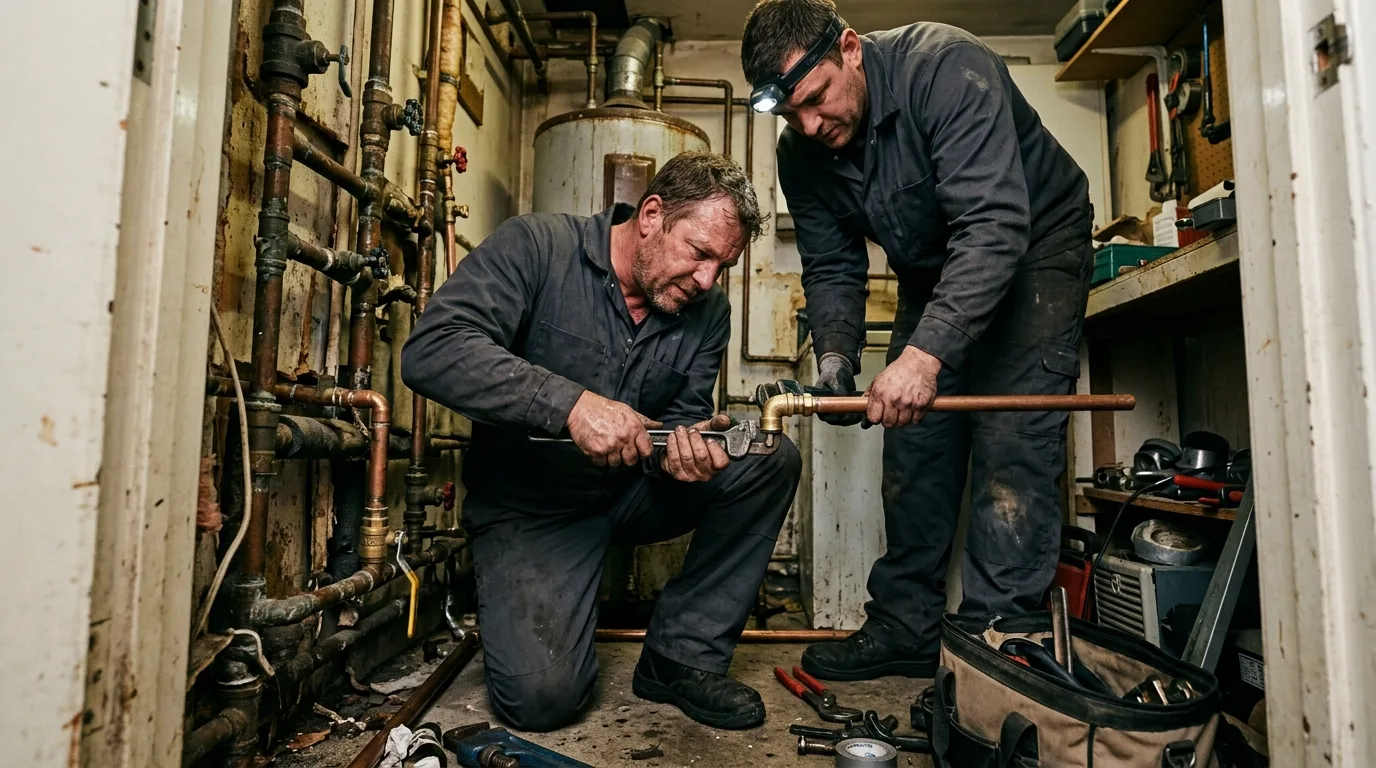
Scheduled jetting for kitchen lines and interceptor outlets rather than emergency cabling mid-service.
Work timed around covers, appointments and tenants instead of interrupting them.
Commercial toilets, flush valves, faucets, mop sinks and floor drains that see constant use.
Backflow devices, interceptor requirements and inspection paperwork handled as part of the work.
Property types
Restaurants, cafes and bars. Downtown and the Main Street blocks have a high density of food service, and grease is the defining problem. Kitchen lines, grease interceptors, dish stations, mop sinks, floor drains, ice machine drains and prep sinks all take heavy loading. The right approach is a maintenance interval: scheduled jetting that keeps lines open: rather than reactive cabling during a Friday service.
Salons, spas and barbers. Hair and product residue in shampoo bowls and floor drains, plus constant hot water demand at multiple stations. Hard water is unusually visible in these businesses because it affects both equipment and client experience.
Offices and retail. Restroom fixtures with heavy public use, flush valves rather than tank toilets, water fountains, break-room plumbing, and the water heater that serves it all. Downtime here is measured in staff disruption and complaints rather than lost covers.
Rental and multi-unit property. A significant share of the local housing stock is rented, including short-term rentals near the beach. Owners and managers need predictable response, clear authorization, and honest reporting they can pass to a tenant or an owner.
Hotels, motels and vacation properties. Guest-facing plumbing where a fault becomes a review. High simultaneous demand, heavy fixture use by people unfamiliar with the property, and turnover days that concentrate problems.
Light industrial and marine-adjacent businesses. Wash-down areas, sand and grit loading, salt exposure on exterior piping, and equipment that does not appear in a residential plumber’s week.
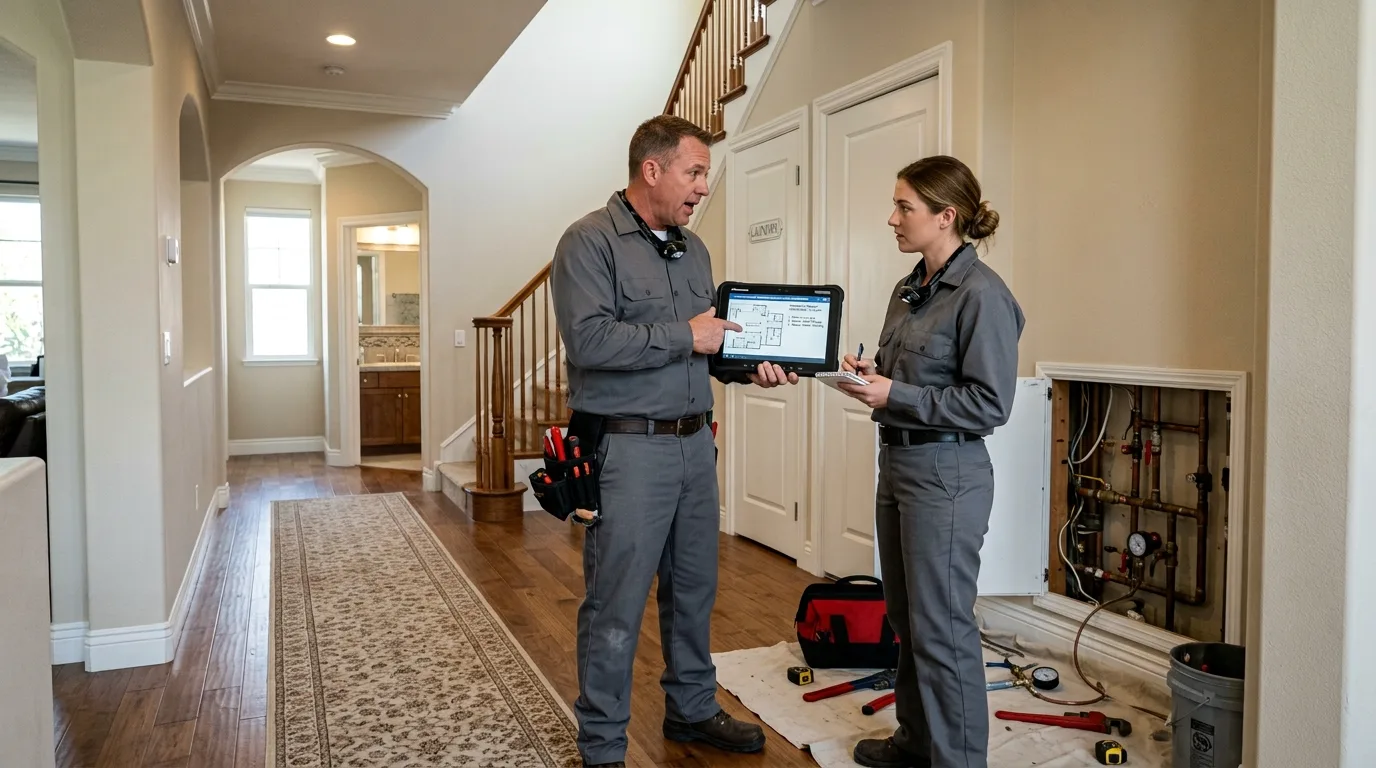
How commercial differs
On a house, a two-hour repair is an inconvenience. On a restaurant at 6 p.m. it is a closed kitchen. That changes everything about how work is scheduled: early mornings, late nights, closed days, and a strong bias toward preventive maintenance over emergency response.
Commercial fixtures see use that would take a residential fixture a decade to accumulate. Flush valves, faucet cartridges, drain lines and water heaters all wear on a compressed timeline, and specification has to reflect that. Consumer-grade parts in a commercial restroom are a false economy.
A commercial kitchen produces grease continuously, and the interceptor plus the line downstream of it needs a schedule. Interceptor pumping and line jetting are related but separate services, and both belong on a calendar. Reactive-only maintenance on a busy kitchen line is a decision to have a backup eventually, usually at the worst possible time.
Backflow prevention devices, interceptor sizing and records, and health-department expectations all generate paperwork. Reports that can be handed to an inspector, a landlord or a corporate office are part of the deliverable, not an afterthought.
On a house the owner is standing there. On commercial property the caller may be a manager, the payer may be a landlord, and the approval limit may be someone else’s. Establishing who authorizes what before work starts prevents the most common commercial billing dispute.
Drain and sewer maintenance including scheduled jetting and camera inspection. Grease line service. Commercial water heating, including multi-unit and high-recovery equipment. High-use fixture repair and replacement. Mop sinks, floor drains and trench drains. Gas piping for kitchen equipment, covered further under gas line services. Leak detection in tenant spaces where the source is not obvious. Backflow device work. Tenant improvement rough-in coordination.
Salt air on exterior piping, rooftop equipment and gas risers affects commercial properties more than homes simply because there is more exposed infrastructure. Sand loading is a genuine issue for beach-adjacent businesses with wash-down areas and outdoor showers. And hard water is felt acutely anywhere hot water is a product: salons, spas, laundries and kitchens all benefit disproportionately from treatment.
When you call, have three things ready: the business type, your trading or operating hours, and who authorizes the spend. That is enough to assign the right pro to the right window, and to avoid the most common source of commercial frustration: a plumber arriving at exactly the wrong time.
How commercial work runs
Business type, trading hours, fixture count and history. A kitchen and an office need different plans, not the same plan at different sizes.
Where lines or equipment justify it, scheduled service replaces emergency response, at a fraction of the disruption.
Early, late or closed-day scheduling wherever the job allows, with the area protected and restored before you open.
Findings, footage where relevant, and documentation you can hand to a landlord, inspector or head office.
Tell us your hours and we will work around them.
Prevention economics
After-hours emergency response is priced differently from scheduled maintenance. Prevention buys the cheaper rate by definition.
A closed kitchen or a shut restroom costs more per hour than any plumbing invoice. That is the number that justifies a schedule.
Descaled water heaters, clean lines and correctly specified fixtures last materially longer under commercial loading.
Interceptor records and backflow testing on schedule keeps inspections uneventful, which is exactly how you want them.
For hotels, rentals and restaurants, a plumbing failure becomes a public review. Prevention is cheaper than reputation repair.
A scheduled interval is a line item. An emergency is a surprise. Property managers strongly prefer the former.
Most kitchens settle into a rhythm within the first year of scheduled service.
Related work
Where we send plumbers
Restaurant density Downtown and along Main Street, retail and office along Beach Boulevard and the Adams and Brookhurst corridors, hospitality near the pier, and rental property throughout every neighborhood listed here.
Straight answers
Yes, and for most commercial jobs it is the default recommendation. Early mornings, late evenings and closed days are all normal scheduling for jetting and maintenance.
Tell us your hours when you call. It is the single most useful piece of information for assigning the job correctly.
It depends on volume and menu, but quarterly to twice yearly is a common rhythm for a busy kitchen. Heavy fryer use pushes it toward the shorter interval.
The economics are straightforward: scheduled jetting costs a fraction of an emergency backup during service, and it is bookable at a convenient hour.
Interceptor pumping and line jetting are related but distinct services, and a busy kitchen typically needs both on a schedule.
Mention which you need (or that you are not sure) and the job gets assigned with the right equipment and the right documentation.
That depends on your lease, and it is worth establishing before there is an emergency. Structural and building-system plumbing is often the landlord’s; tenant fixtures and equipment are often yours.
We need to know who approves the spend before work starts. Sorting that out in advance prevents the most common commercial billing dispute.
Backflow device work and the associated documentation are part of commercial plumbing, and many properties are required to keep current records.
Tell us what device you have and when it was last tested. If we are not the right party for a specific testing requirement, we will say so rather than guess.
Yes, including higher-recovery and multi-unit equipment. Commercial hot water demand and the consequences of losing it are both far greater than residential.
Hard water makes descaling and maintenance more important here, particularly for salons, spas and kitchens where hot water is essentially part of the product.
Commercial emergencies are triaged like any other (by severity and location) and a business that cannot operate is treated as urgent.
You will get a realistic window on the phone. If you also have a maintenance relationship, mention it, since a known property is faster to diagnose.
Yes. Rough-in coordination, fixture sets and connections for a TI build-out are standard work, and they benefit enormously from being planned rather than retrofitted.
Involve a plumber during the drawing stage rather than after framing. It is materially cheaper.
Yes: apartment buildings, condos and rental portfolios. Shared stacks, common-area lines and unit-level responsibility need to be untangled, and a camera often settles it.
Clear reporting matters here, because managers need something to send to owners and tenants.
Generally yes, because the work is scheduled differently, the equipment is often larger, and documentation requirements are greater.
You will get the pricing structure explained before work begins, including any after-hours arrangement and what a maintenance interval would cost against reactive calls.
Kitchen lines and restrooms serviced before you open.
Business plumbing
Tell us the property type, your operating hours and who signs off. We will put the right pro in the right window and keep the work off your busiest night.
Serving every Huntington Beach neighborhood, plus the cities next door.