Hard water • Treated properly
Water softener and filtration in Huntington Beach: sized to what comes out of your tap
Scale on the glass shower door is the visible part. The expensive part is what the same water is doing inside your heater, your pipes and every fixture cartridge in the house.
Scale everywhere? 657-337-7830
Ask for a hardness test before buying anything. Sizing a system by guesswork is how people end up with the wrong one.
At a glance
Scale Reduced
Less scale in the heater, the tankless exchanger, the fixtures and the dishwasher.
Filtration Separate
Softening and filtering are different jobs. Taste, chlorine and sediment need carbon or RO, not salt.
Correctly Sized
Grain capacity matched to hardness and occupancy so the system regenerates sensibly.
Installed to Code
Bypass, drain connection with air gap, and a loop that does not compromise the rest of the plumbing.
First principles
Softening and filtering are not the same thing
People arrive at this subject with one complaint and buy the wrong device. It helps to separate the problems.
Hardness is dissolved calcium and magnesium. It causes scale in water heaters and tankless exchangers, spots on glass and chrome, stiff laundry, soap that will not lather, and shortened fixture life. The device that removes it is an ion-exchange softener, which uses salt to regenerate resin. Nothing else actually removes hardness.
Taste, odor and chlorine are a different issue. Municipal water is disinfected, and many people dislike the result. That is a job for carbon filtrationwhole-house or point-of-use: not for a softener.
Sediment and particulates need a sediment pre-filter, which also protects a softener from fouling. On older galvanized supply lines, sediment can be considerable.
Dissolved solids for drinking is where reverse osmosis comes in, normally under a kitchen sink. It produces very clean drinking water, wastes some water in the process, and is not a whole-house solution for most homes.
Salt-free conditioners deserve an honest note: template-assisted crystallization and similar technologies do not remove hardness, they alter how it deposits. Many users see less scale build-up; you will not get the slippery soft-water feel or the laundry benefit. They suit households that want scale control without salt, a drain connection or regeneration.
Local water
Why this comes up so often in Huntington Beach
Water serving this part of Orange County comes from a blend of imported supply and local groundwater, and it is hard by any reasonable standard. That single fact sits behind a striking proportion of the plumbing calls on this site.
It is why water heaters here accumulate sediment and start rumbling. It is why tankless units need annual descaling rather than optional maintenance. It is why toilet rim jets clog and flush quality declines, why faucet cartridges fail early, and why shower doors need constant attention.
Treating it is not a luxury purchase in this city. It is a maintenance decision with a measurable return across the water heater, the fixtures, the dishwasher and the washing machine. Whether the return justifies the cost depends on your household, your appliances and how long you are staying, and a plumber should be willing to walk through that honestly rather than assuming the answer is yes.
Where systems get installed
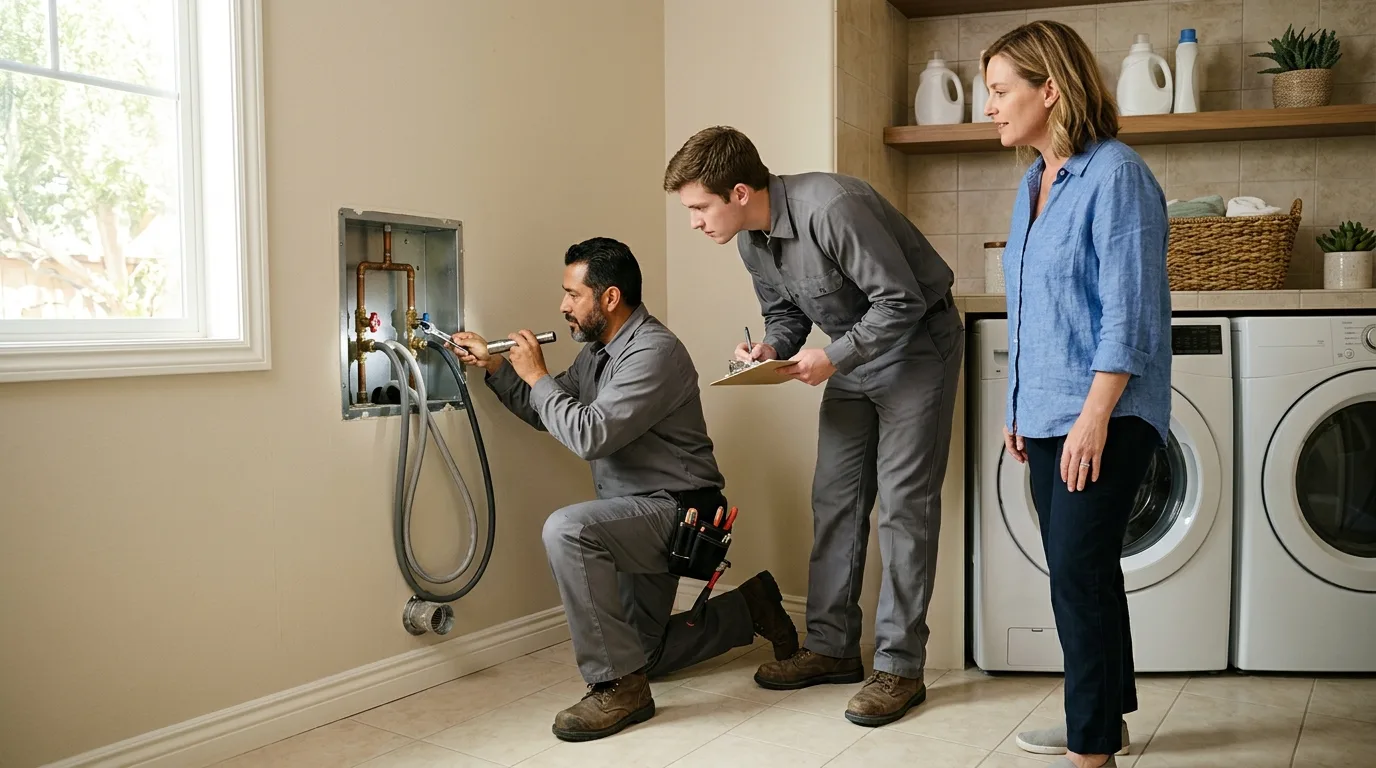
Most local installations go in the garage or a side yard, on the main line after the meter and before the water heater, with the outdoor hose bibs and irrigation left on untreated water. There is no reason to soften the lawn. Getting that loop right is most of the skill in the installation.
A drain connection with a proper air gap is required for a softener’s regeneration discharge, and that constraint often decides the location. Salt-free conditioners need no drain, which is part of their appeal in tight installations.
Sizing, honestly
A softener is sized by grain capacity: hardness multiplied by daily water use multiplied by days between regenerations. Undersize it and it regenerates constantly, using more salt and water and wearing out faster. Oversize it and you have paid for capacity that sits idle and can channel if it regenerates too rarely.
That calculation needs two real numbers: your water hardness and your household’s actual usage. Any quote produced without asking for either is a guess.
Ongoing cost and maintenance
Salt for a softener, periodically. Filter cartridge changes on carbon and sediment stages. Membrane replacement on an RO unit every few years. Occasional resin cleaning where iron is present. None of it is onerous, but it is real, and it should be part of the buying conversation rather than a surprise.
Things worth knowing before you buy
Softened water is not recommended for drinking by people on restricted-sodium diets, which is one reason a separate unsoftened kitchen tap or an RO unit is common. Softened water is also slightly more aggressive to some older pipe materials, which matters on a house that is due for repiping anyway. And a softener does nothing for chlorine taste, so if that is your actual complaint, buy carbon instead.
Finally: discount whole-house systems sold door to door are a recurring theme locally. Ask for the hardness test, the sizing calculation, the code-compliant drain arrangement and the warranty terms in writing.
The process
Test, size, install, maintain
Test the water
Hardness measured at your tap, along with any specific taste, odor or sediment complaint you have.
Size to the household
Occupancy and usage decide grain capacity. Filtration needs are specified separately from softening.
Install on the right loop
After the meter, before the heater, with hose bibs and irrigation left untreated and a compliant drain arrangement.
Set up and hand over
Regeneration programd sensibly, bypass explained, and the maintenance schedule written down before we leave.
A hardness number first. The equipment conversation comes after.
Related work
What treated water protects
Where we send plumbers
Treatment systems across the area
Garage and side-yard installations throughout the inland tracts, tight utility spaces in Downtown and Oak View, and larger multi-bathroom homes in Seacliff and Huntington Harbour, plus the cities below.
Straight answers
Softener and filtration questions
Water serving this part of Orange County is hard, and the effects show up in water heaters, tankless exchangers, fixtures and glass throughout the city.
Whether treatment is worth it for you depends on your appliances, your household and how long you are staying. Start with a hardness test rather than an assumption in either direction.
They do not remove hardness. They change how it crystallizes so less of it sticks. Many users report noticeably less scale build-up.
What you will not get is the soft-water feel, the laundry benefit or the soap savings. They suit people who want scale control without salt, a drain line or regeneration cycles.
No. Softening addresses hardness minerals, not chlorine, taste or odor.
For taste, carbon filtration is the right answer: whole-house or under-sink. For very clean drinking water, reverse osmosis at the kitchen sink. Softeners and filters are often installed together because they solve different problems.
Typically in the garage or a side yard, on the main line after the meter and before the water heater, with hose bibs and irrigation left on untreated water.
A softener needs a drain connection with an air gap for regeneration discharge, and that requirement usually decides the location.
Salt for a softener, added periodically. Filter cartridges on carbon and sediment stages at intervals depending on use. RO membranes every few years.
It is modest but real. Ask for the running cost and the schedule in writing so it is part of the decision rather than a surprise.
Most people do, though the process adds a small amount of sodium, which matters to anyone on a restricted-sodium diet.
A common arrangement is a separate unsoftened kitchen tap or an RO unit for drinking and cooking, with softened water everywhere else.
It reduces the scale and sediment accumulation that shortens tank life and forces tankless units into frequent descaling, so yes: meaningfully.
It also helps the dishwasher, the washing machine, faucet cartridges and toilet fill valves. The return is spread across the house rather than concentrated in one appliance.
Water hardness multiplied by daily household usage, then matched to a grain capacity that regenerates at a sensible interval.
If a salesperson quotes a system without asking your hardness and occupancy, they are guessing. Both undersizing and oversizing cause real problems.
Yes: resin issues, valve and controller faults, brine tank problems, drain line issues and filter changes are all common service calls.
If you inherited a system with the house and have no idea whether it works, that is worth a visit on its own. Plenty turn out to be in bypass and doing nothing.
Rarely for a normal home. Whole-house reverse osmosis is expensive, wastes water, needs pressurized storage, and treats water far beyond what showering and laundry require.
Point-of-use RO at the kitchen sink, paired with a softener or conditioner for the house, is the arrangement that suits almost every residential situation here.
A real number, then honest advice about whether treatment is worth it.
Scale on everything
Treat the water once instead of replacing fixtures repeatedly
Tell us what bothers you (scale, taste, spotting, appliance failures) and we will test before recommending any equipment.
Serving every Huntington Beach neighborhood, plus the cities next door.