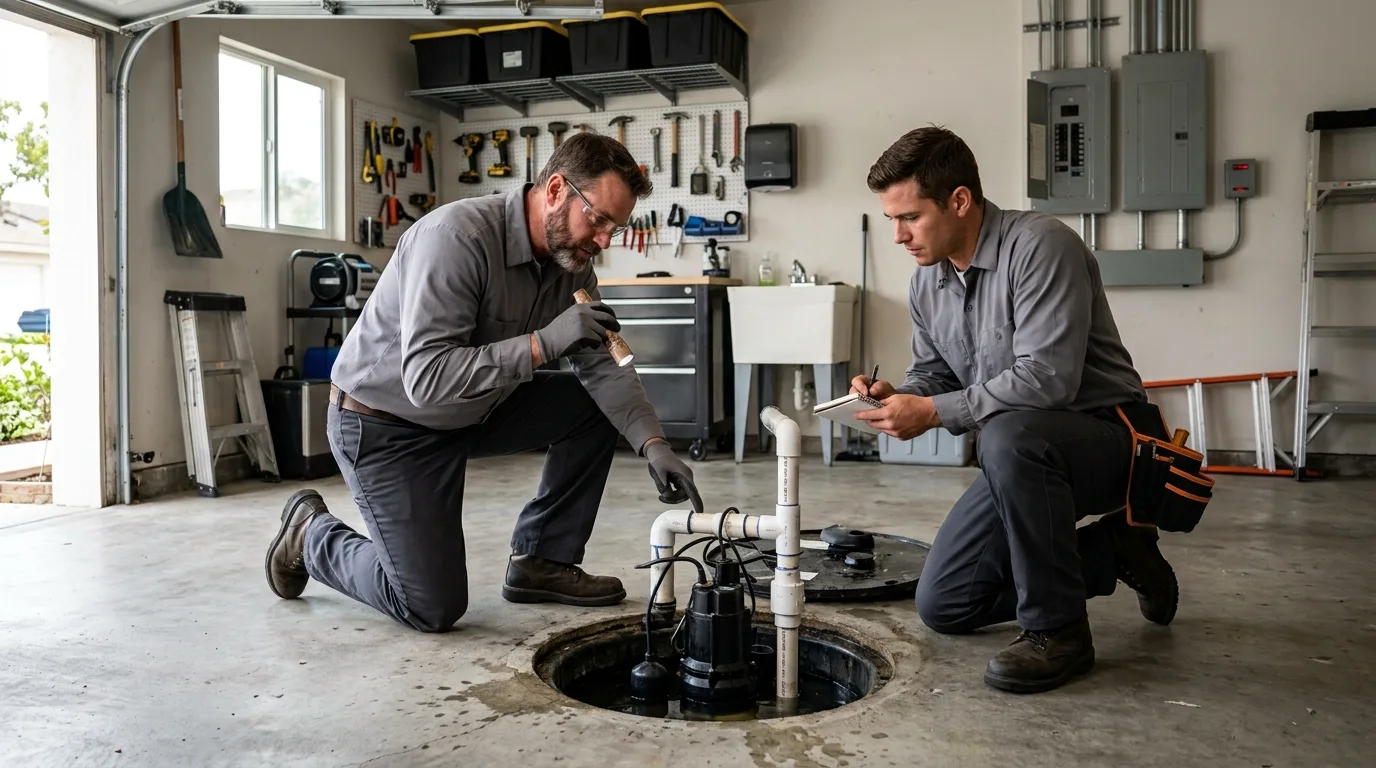
Camera inspections
Repeat backups diagnosed properly, with footage and a marked locate.
Brookhurst Street, Adams down to Hamilton
This is some of the flattest, lowest land in the city, close to the river channel and the wetlands. Drainage here has less fall to work with, and the sewer laterals show it.
Brookhurst call: 657-337-7830
Recurring slow drains with no obvious cause usually means a belly. A camera settles it.
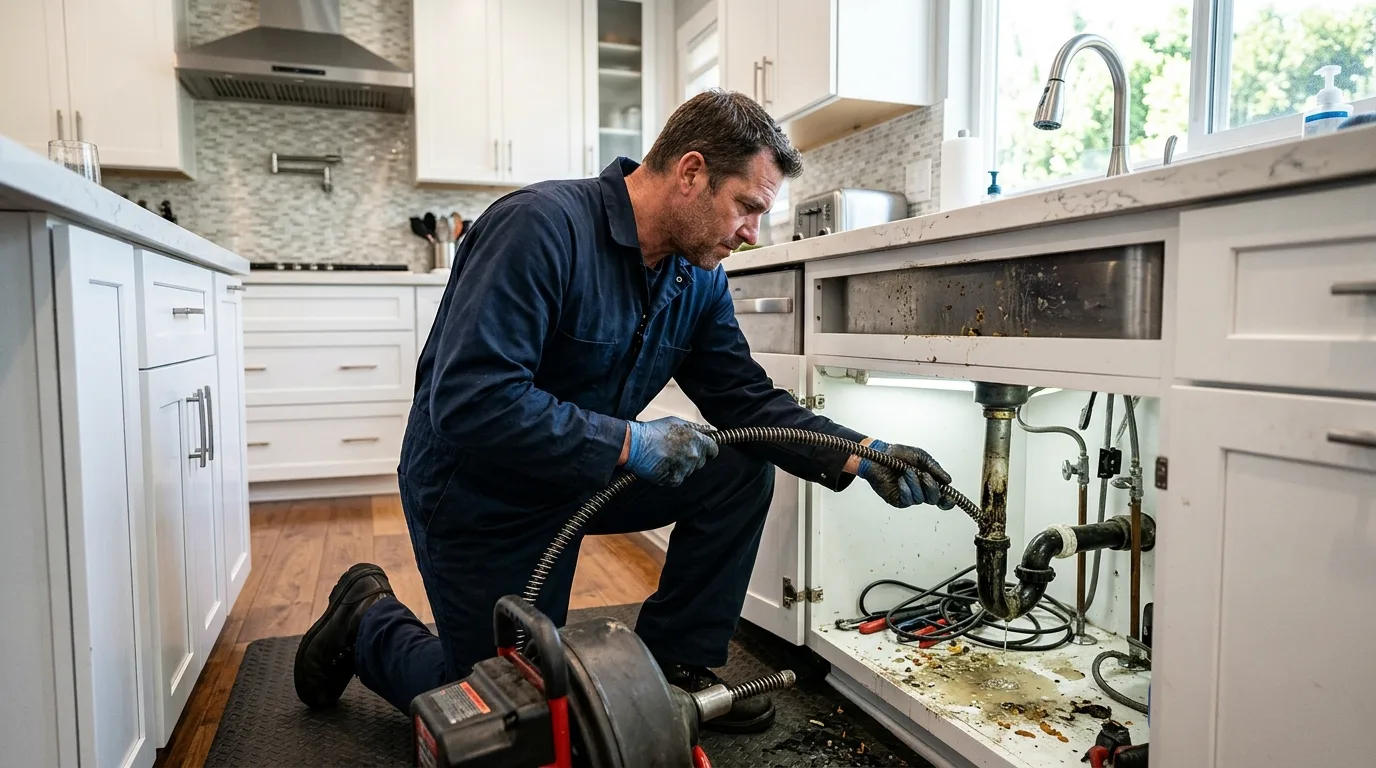
Settled ground creates sags that hold water and catch solids. Cabling never fixes them.
Low-lying fixtures are the first place a blocked main line finds an exit.
Same tract-era copper as the neighborhoods north, with damp soil accelerating it.
Sewage coming up inside a house is an emergency and gets treated as one.
On the ground
The Brookhurst corridor runs south from Adams through Indianapolis and Atlanta down to Hamilton, close to the Santa Ana River channel and the wetland edge. It is flat, low and built largely on fill over former agricultural and marsh ground. Every one of those facts shows up in the plumbing.
Bellies in the lateral. A sewer line needs consistent fall: conventionally about a quarter inch per foot: to carry solids. On ground that has settled unevenly, sections of the lateral sag below grade and form a belly that permanently holds water. Solids drop out there, and the line blocks again and again no matter how many times it is cabled. A camera with a locator is the only way to confirm a belly and mark where it sits.
Why cabling keeps failing here. A cable punches a hole through an obstruction. If the obstruction re-forms because the pipe cannot self-clear, you are buying the same service repeatedly. That is not the plumber’s fault the first time; it is the plumber’s fault the third time, if nobody has put a camera down the line.
Backflow into the lowest fixture. When a main line blocks, waste water leaves through the lowest opening available: typically a ground-floor shower pan, a tub, or a floor drain in a laundry. On single-story homes on flat ground that means it comes up inside the house rather than at a cleanout. A properly sited exterior cleanout, and in some cases a backwater valve, changes where that water goes.
High groundwater and damp soil. Water table is close to the surface in this part of the city. Damp soil against a slab accelerates corrosion of copper run in or under the concrete, and it makes an existing slab leak harder to spot because there is no dry ground for the moisture to show against.
Grease, roots and the usual suspects. None of the above removes the ordinary causes. Kitchen grease still lines a cold pipe, roots still find clay joints, and wipes still block everything. On a line with a belly, though, all three cause trouble faster because there is standing water for them to accumulate in. Jetting is the right tool for the accumulation; slope is a separate problem.
The neighborhoods either side of Brookhurst Street from Adams Avenue south through Indianapolis, Atlanta and Hamilton to the river channel, including the tracts running west toward Bushard and east to the Fountain Valley boundary.
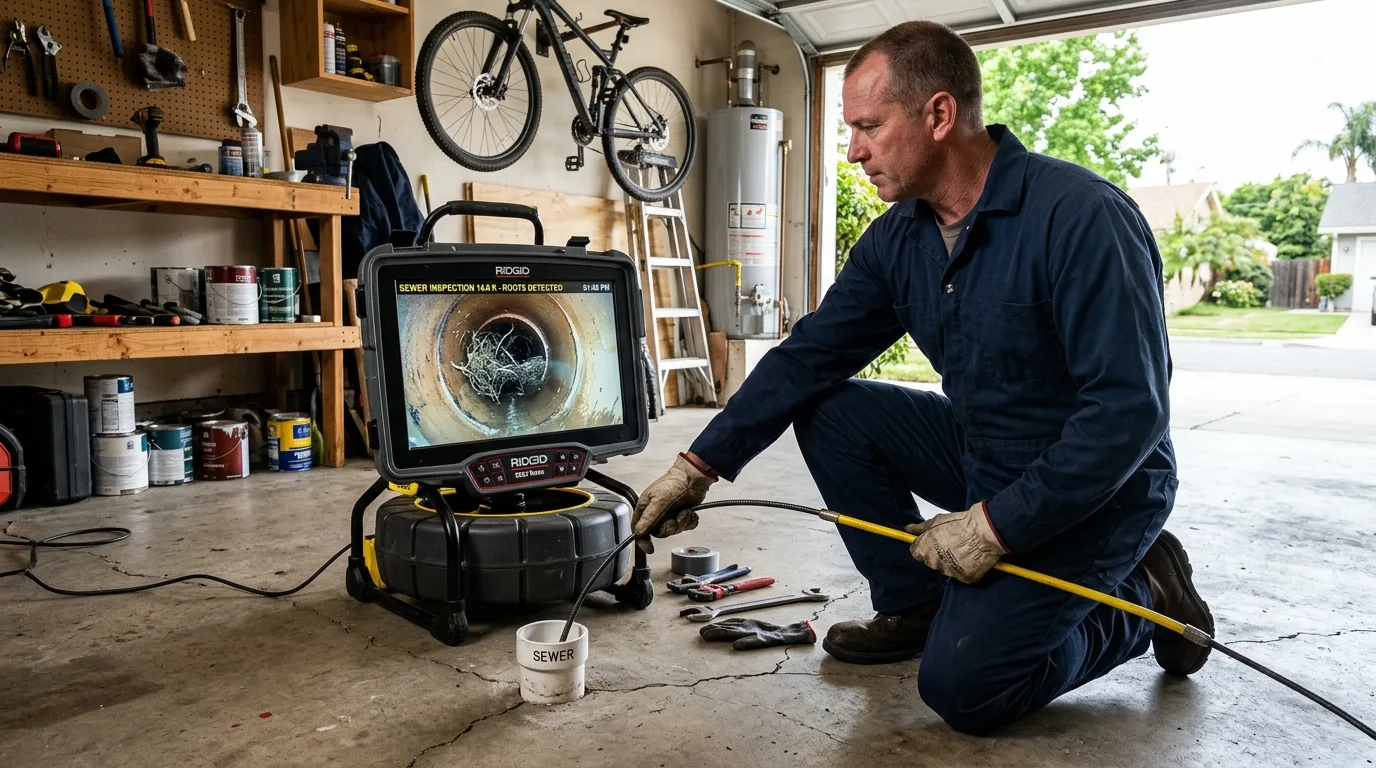
Three things worth paying for: what the blockage is, where it is, and what condition the pipe is in around it. Roots, grease, a foreign object, a crack, an offset joint and a belly all look different on screen and all lead to different work.
Ask for the footage and the locate distance. A reputable plumber gives you both without being pressed, and they turn an argument about what should be done into a conversation about what the pipe is doing. If someone declines to show you the recording, that is information too.
A belly cannot be lined away: a liner follows the existing grade, sag included. Correcting it means excavating that section and re-laying it to proper fall, which is real work with a real price attached.
Where the sag is minor, scheduled maintenance jetting is a legitimate way to live with it, and it is much cheaper than digging. What is not legitimate is selling a liner as a fix for a belly, or selling annual cabling without ever mentioning that the grade is the reason.
Calling from Brookhurst
How often it backs up, which fixtures first, and what has been done before.
Get drainage back so the house is usable, then stop and look properly.
Cause identified, position marked, and slope assessed rather than assumed.
Maintenance schedule versus excavation, both priced honestly against the findings.
Waste backing up inside the house is prioritized ahead of scheduled work.
Most requested here
Repeat backups diagnosed properly, with footage and a marked locate.
Backups into low fixtures, cleared and then investigated rather than left.
Sagged, cracked and offset sections re-laid to proper fall where jetting cannot help.
Scheduled cleaning as a deliberate strategy on lines with a known minor sag.
Tract-era copper in damp ground, located electronically before anything is opened.
Sewage inside the house, around the clock, with containment as the first priority.
Footage and locate distance provided. Ask for both.
Where we send plumbers
Brookhurst forms the eastern edge of the city here, with Fountain Valley across the street and Southeast Huntington Beach to the south and west.
Straight answers
A section that has sagged below the intended grade, usually because the ground under it settled. It holds standing water permanently, so solids drop out instead of being carried along.
The symptom is a line that blocks repeatedly at roughly the same interval, cleared easily each time. That pattern is the tell.
No, and anyone saying otherwise is worth questioning. A liner follows the host pipe, so it reproduces the sag rather than removing it. Restoring fall means excavating that section and re-laying it.
What can be done without digging is managing it: scheduled jetting keeps the low spot clear. That is a legitimate choice, provided it is presented as management rather than cure.
Stop using water everywhere in the house immediately: sinks, laundry, dishwasher, toilets. Every gallon you add has to go somewhere, and the shower pan is currently the lowest available exit.
Then call. Keep people and pets out of the affected area; sewage is a health matter, not just a mess.
Because a shower drain sits lower than a toilet rim. Water backing up a blocked main finds the lowest opening in the system, and on a single-story slab house that is almost always a ground-floor shower or tub.
It is a useful diagnostic sign: it tells you the blockage is downstream of everything, in the main line, not in one fixture’s branch.
On low-lying property it can be worth serious consideration. It closes against reverse flow, so a blockage or surcharge downstream does not push waste back into the house.
It needs proper siting, an accessible cover and periodic checking, and it does not substitute for fixing a failing lateral. Discussed properly, it is a sensible layer of protection here.
It matters a great deal. A properly placed exterior cleanout gives a blocked line somewhere to relieve itself outside the building, and gives a plumber direct access to the lateral.
Many older houses here have none, or have one buried under decades of landscaping. Installing or exposing one is a modest job that pays for itself the first time the line blocks.
Indirectly, yes. Damp soil around and under a slab is harder on buried copper, and it masks the surface signs that normally reveal a leak early.
It also means excavation work here often needs dewatering, which is worth knowing before a sewer repair quote surprises you. A plumber familiar with this ground should mention it unprompted.
It is common on this ground and it is not acceptable as a permanent arrangement without an explanation. Five cablings is more than enough to have paid for a camera several times over.
Get the line inspected. If the answer is a belly, you can then choose maintenance or repair knowingly, which is a much better position than paying annually for a mystery.
Generally the property owner is responsible for the lateral from the building to the connection at the main, and the agency is responsible for the main itself. The exact boundary varies.
A camera and locate establish where the problem sits relative to that line, which is exactly the evidence needed if the responsibility is genuinely in question.
One camera inspection usually costs less than two more visits.
Brookhurst
Tell us how often it happens and which fixture goes first. On this ground that usually points straight at the answer.
Serving every Huntington Beach neighborhood, plus the cities next door.