Copper poured into concrete
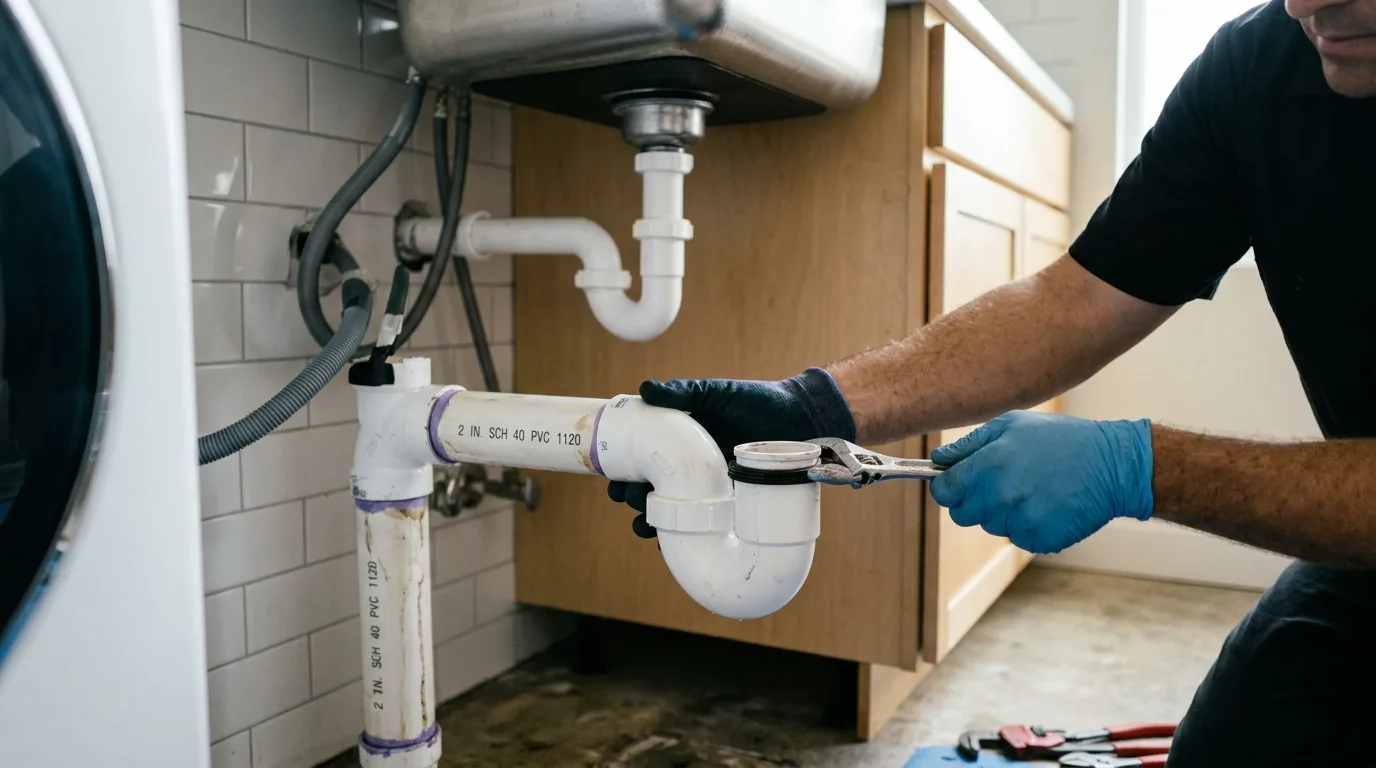
Tract homes built from the 1950s through the 1970s ran soft copper under and through the slab, often without sleeving. Concrete contact, soil chemistry and movement all work against that pipe.
Under-slab leaks • Located, then repaired
Nearly every postwar home in this city sits on a concrete slab, and a pinhole underneath it can run for months. Locating it accurately is what decides whether this is a small repair or a demolition project.
Meter still spinning? 657-337-7830
Bring your last two water bills to the call: a jump in usage with no change in habits is the strongest early clue.
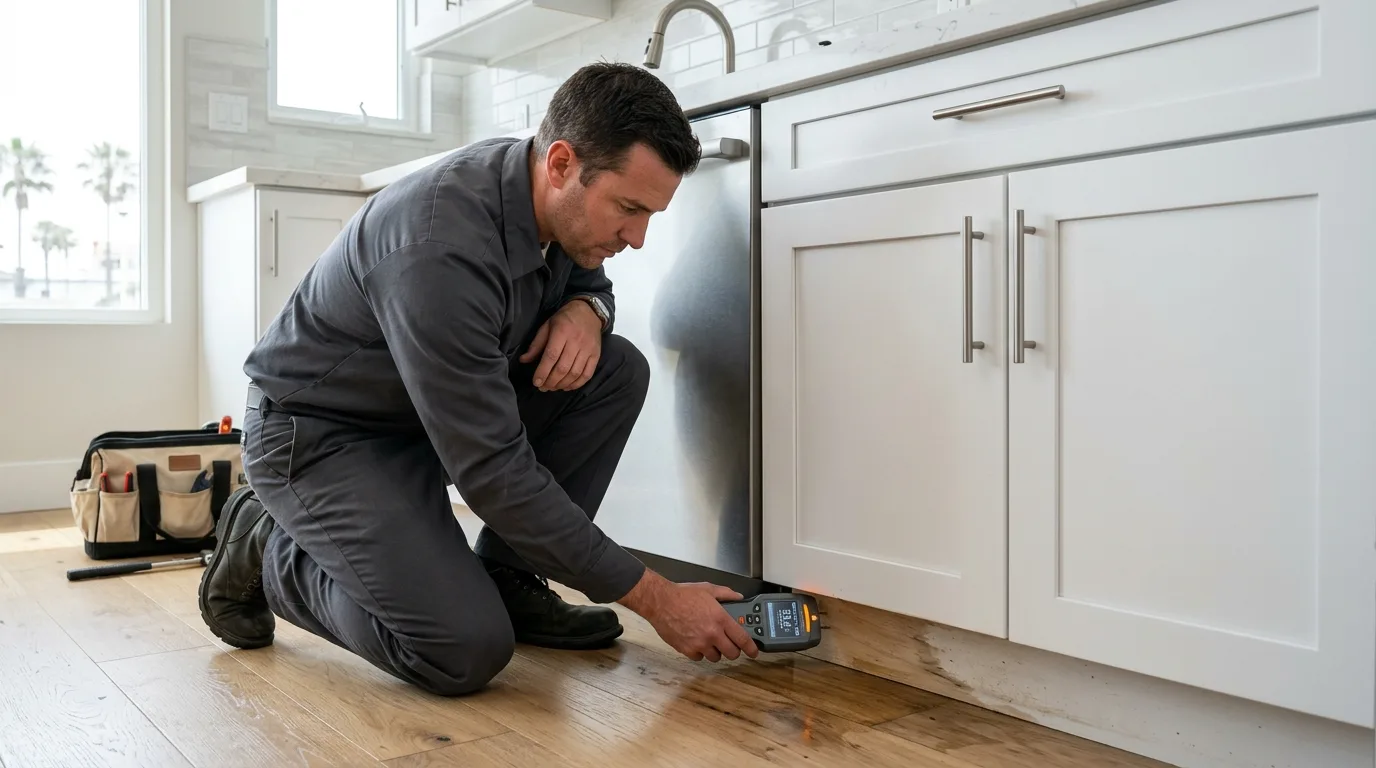
Acoustic listening, pressure isolation and thermal scanning narrow the leak to a spot, not a room.
Two real options, compared honestly. Open the slab at the leak, or abandon the run and reroute overhead.
Near the water, groundwater changes what is sensible underground. That shapes the recommendation.
Locating, repair method and cost are agreed before a saw touches your floor.
The tell-tales
Under-slab leaks are quiet by nature. The water has nowhere obvious to go, so it saturates the sub-base, follows the path of least resistance, and often surfaces far from the actual break. These are the signs worth acting on:
Any one of these on its own can have another explanation. Two or three together usually means water under the concrete, and that is worth a locate rather than a wait-and-see.
Locating
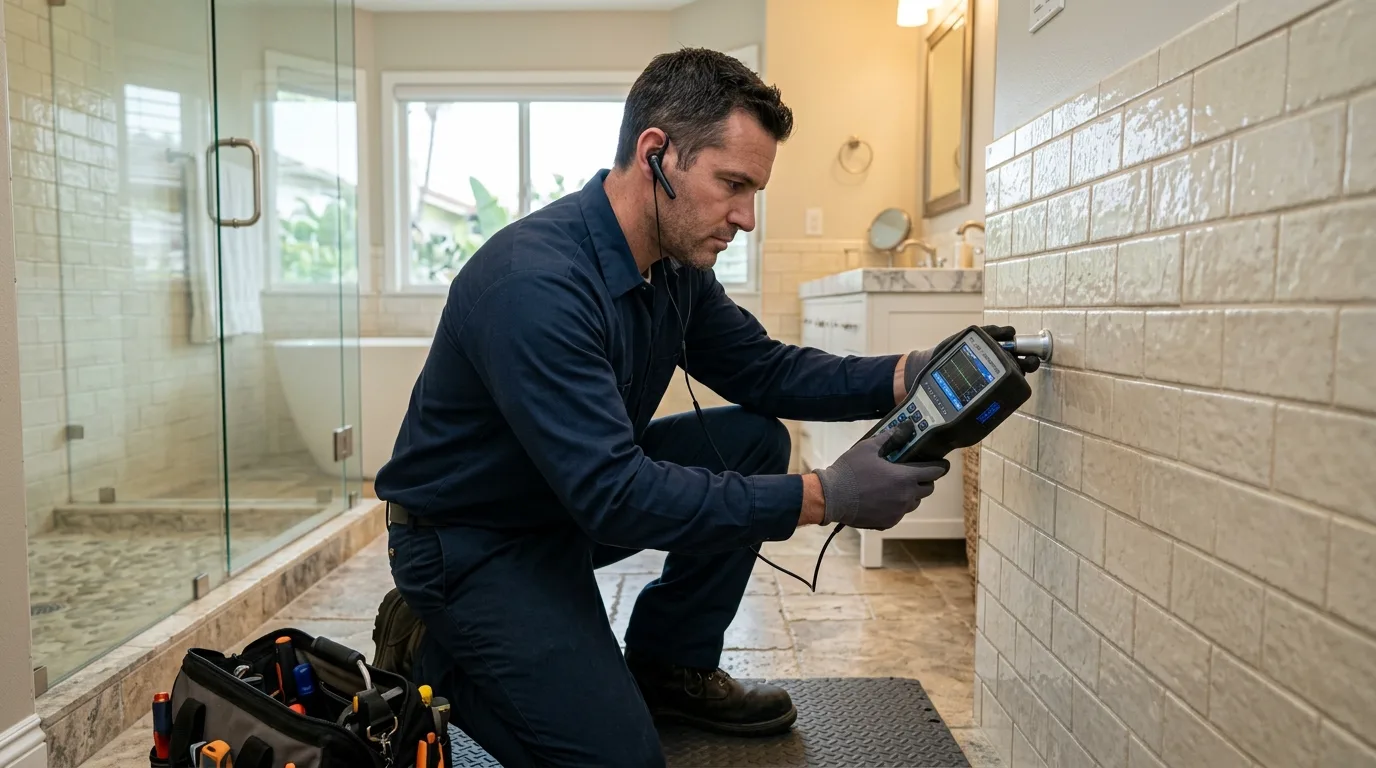
Locating is the part that earns its money. Cutting concrete in the wrong place costs you a floor and gets you no closer to a fix, so the sequence matters.
The plumber closes valves and pressurizes sections of the system independently to establish whether the loss is on the hot side, the cold side, or in the drainage rather than the supply. This single step rules out a large share of false alarms: including irrigation leaks and running toilets that mimic a slab leak on the meter.
Pressurized water escaping through a small hole makes a distinctive sound that carries through concrete. Ground microphones and amplified listening gear let the technician walk the floor and find where that signal peaks. On a quiet house it is remarkably precise; on a slab with heavy tile or a lot of ambient noise it is one input among several.
Where acoustics are inconclusive, the line can be drained and charged with an inert tracer gas that migrates up through the slab and is picked up by a sensitive detector at the surface. It is slower and more involved, and it is what gets used on stubborn locates instead of exploratory demolition.
An infrared camera reads the heat plume from a hot-water leak through flooring, which is fast confirmation on a warm-spot call. For drain-side suspicions, a camera goes down the line to look for breaks, bellies and root intrusion: a different problem with a different repair, covered under sewer camera inspection.
Once the leak is pinned, there are two legitimate paths and they suit different houses.
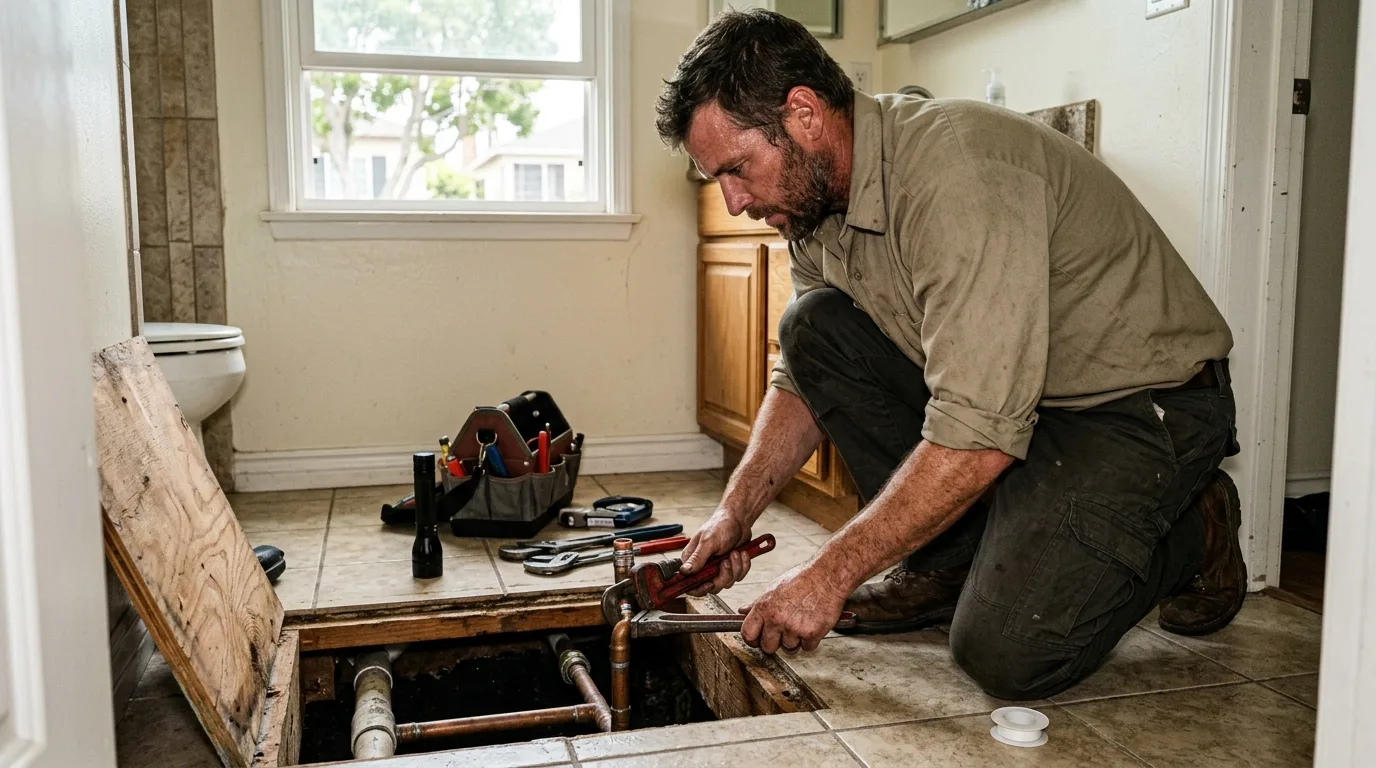
Spot repair through the slab. A section of concrete is cut, the soil excavated, the failed pipe replaced, and the floor restored. It keeps the original layout, needs the least new pipe, and is the sensible choice when the plumbing is otherwise in good condition and the leak sits somewhere you can reach without destroying a kitchen. The downsides are dust, noise, a day or more of disruption, and flooring that has to be repaired afterwards.
Overhead reroute. The affected run is abandoned in place and a new line is run through walls and attic space to the same fixtures. Nothing gets jackhammered, the new pipe is accessible forever, and the work happens above your floor instead of through it. It uses more material and puts patches in walls and ceilings instead of the floor.
Where the water table pushes the decision. Close to the beach, the Harbour and the Bolsa Chica wetlands, groundwater can be shallow enough that an excavation inside a slab fills as fast as it is dug. That makes a clean spot repair harder to guarantee and pushes many coastal repairs toward rerouting. Further inland, along Adams, Garfield and Brookhurst, spot repairs are more often straightforward.
If a home has had two or three slab leaks, the under-slab copper is telling you about its remaining life. At that point a full reroute of the distribution system: effectively a repipe that takes the pipe out of the concrete for good: usually costs less than the sequence of spot repairs that would otherwise follow.
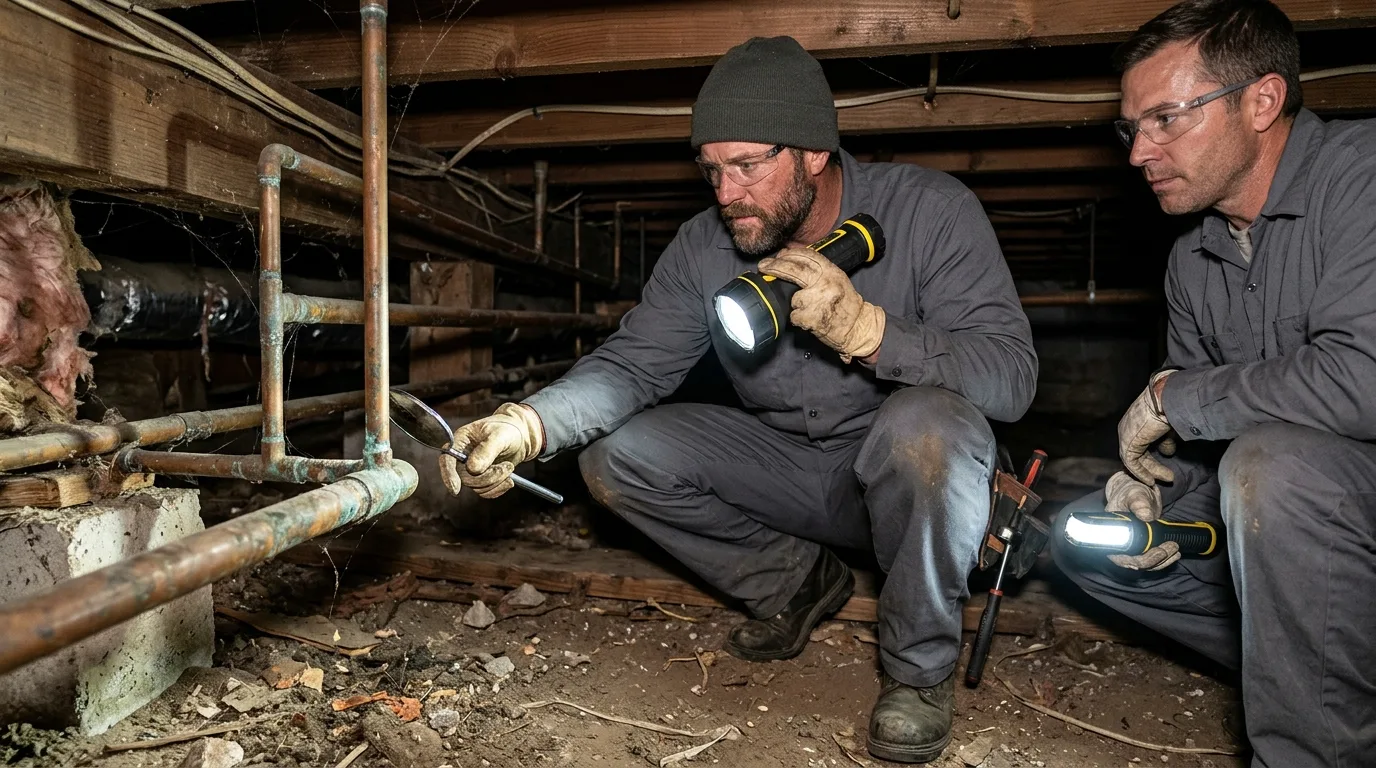
The process
Meter observation and isolation testing prove water is escaping and narrow it to hot, cold or drain before any locating gear comes out.
Acoustic listening, thermal imaging and, where needed, tracer gas mark the spot on the floor, with a margin measured in inches, not rooms.
Spot repair or reroute, with the trade-offs, the disruption and the cost of each laid out before anything is cut.
The new pipe is pressure tested before the opening is closed. Concrete is patched; finish flooring is a separate trade the plumber will tell you about honestly.
Bring the bill, the warm spot and the meter reading: it all shortens the diagnosis.
Why here, why now
This is one of the most common calls in the city, and the reason is construction history rather than bad luck.
Tract homes built from the 1950s through the 1970s ran soft copper under and through the slab, often without sleeving. Concrete contact, soil chemistry and movement all work against that pipe.
Heat accelerates corrosion and expansion cycles the pipe against the concrete. That is why the warm-spot call is far more common than a cold-side slab leak.
Coastal soils with salt content are harder on buried metal. Homes closest to the water see external pitting alongside the internal kind.
Pressure above roughly 80 psi shortens the life of every joint in the house, including the ones you cannot see under the floor.
Flooring jobs, sunroom conversions and post-tension anchors installed by someone in a hurry account for a real share of sudden slab leaks.
Some newer local construction uses post-tension slabs, where cutting concrete without locating the cables is genuinely dangerous. On those homes rerouting is often the only responsible option.
Locating is a fraction of the cost of guessing wrong.
Related work
Where we send plumbers
Slab-on-grade construction dominates South and Southeast Huntington Beach, the Adams, Garfield and Brookhurst corridors, Oak View and much of Goldenwest, and coastal groundwater shapes the repair in the Harbour, Bolsa Chica and Downtown blocks nearest the sand.
Straight answers
For a spot repair, typically a cut of a few square feet centered on the located leak, plus room to work in the excavation below it. Accurate locating is what keeps that opening small.
If the leak sits under cabinets, a tiled shower or a post-tension slab, the plumber may recommend an overhead reroute specifically to avoid taking up floor at all.
Often, yes, by rerouting the affected line through walls and attic space and abandoning the run in the slab. That trades floor damage for wall and ceiling patches.
Epoxy pipe lining is sometimes marketed as a no-dig option for supply lines. It has a real but narrow set of appropriate uses, and it is not a substitute for replacing a corroded run in aggressive soil. Ask any contractor proposing it to explain exactly why it suits your situation.
A straightforward locate and spot repair is commonly a one-day job, with concrete patching cured over the following days before finish flooring goes back.
A reroute of one or two branches usually runs one to two days. A full reroute of the whole distribution system takes longer and is scheduled rather than done as an emergency.
Many policies cover resulting water damage and the cost of accessing the leak, while excluding the pipe itself. Some specifically exclude damage that developed slowly, which is why the length of time a leak has been running matters to an adjuster.
Document everything: photos of the warm spot and damaged flooring, the water bills that show the spike, and the plumber’s written diagnosis. We cannot predict a carrier’s decision, but that file is what supports the claim.
A short-lived leak usually is not. A leak that has run for months can saturate and soften the sub-base, which allows slab movement, and that shows up as new cracking in tile, grout and stucco.
There is also a mold and air-quality dimension once moisture reaches carpet pad, baseboard and drywall. That is the practical reason not to sit on a suspected slab leak for a season.
Frequently. A running toilet flapper, an irrigation valve leaking underground, a failed pool fill valve or a dripping hose bib will all move a water meter and inflate a bill.
A competent locate starts by ruling those out with isolation testing. If a plumber wants to open concrete before proving the loss is under the slab, get a second opinion.
Significantly. Post-tension slabs contain steel cables under high tension, and cutting one is both dangerous and expensive to remedy. Any concrete work on that construction requires cable locating first.
In practice, most post-tension homes with a slab leak get rerouted overhead. It avoids the risk entirely and is usually the faster route to water back on.
Plumbing includes the pipe repair and patching the concrete. Replacing tile, wood, vinyl or carpet is a flooring trade, and matching an existing floor is specialist work best done by someone who does it daily.
The plumber will tell you upfront what the opening will look like when they leave, so you can line up flooring and drywall work rather than discovering it on the day.
Locating is priced as its own service because it takes specialised equipment and time. Relative to the repair, and certainly relative to opening the wrong part of a floor. It is the small number in the job.
You will hear the locating fee before dispatch and the repair price after the leak is found. Nothing gets committed in between.
On copper of the same age in the same soil with the same water, the odds are not in your favor. Many homes see a second leak within a few years of the first.
That is the argument for rerouting rather than repeatedly patching. If your plumber raises it, they are not upselling. Ask them to show you the condition of the section they cut out and decide from the evidence.
Two methods, real trade-offs, no pressure to pick the bigger one.
Warm floor, high bill
Tell us what you have noticed (the warm spot, the meter, the bill) and we will send a plumber who locates slab leaks in these neighborhoods every week.
Serving every Huntington Beach neighborhood, plus the cities next door.