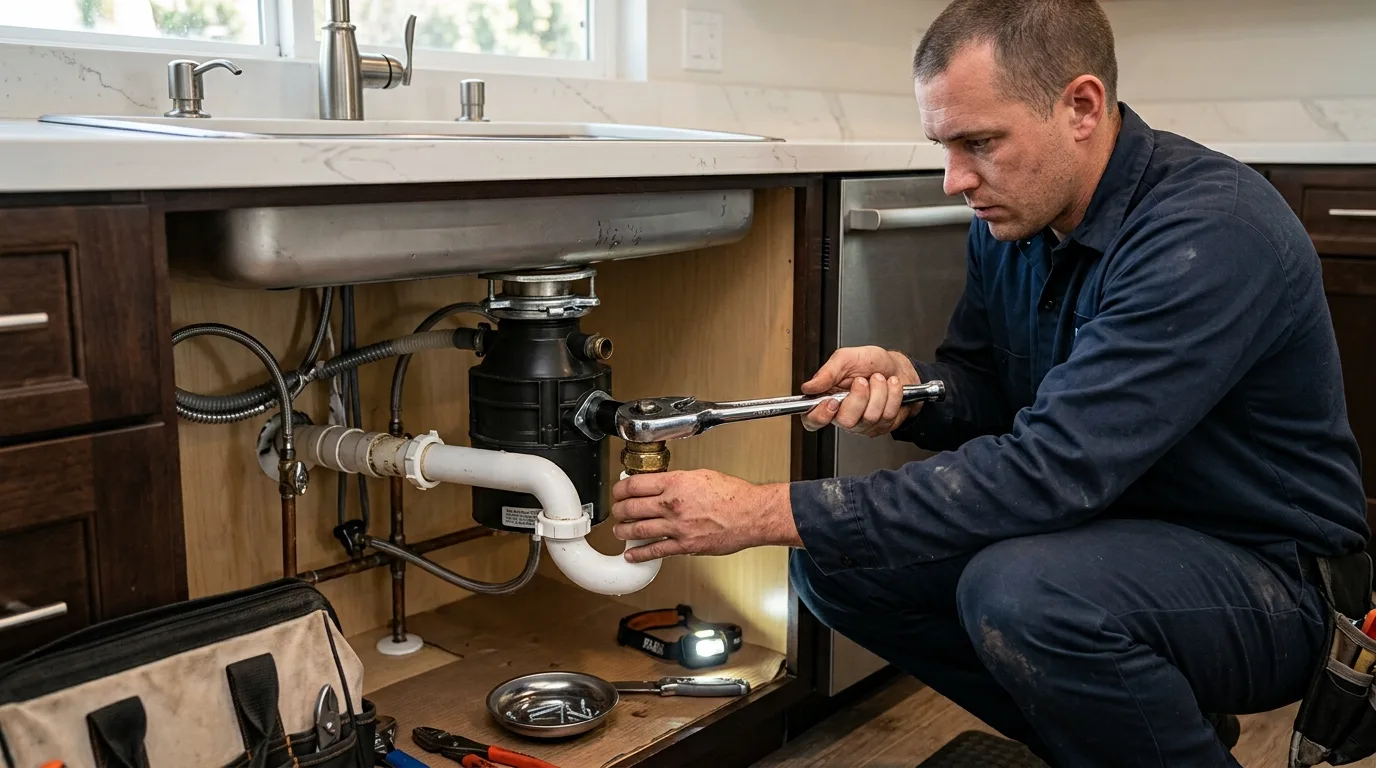
Meter to house • The buried line
Main water line repair in Huntington Beach: the pipe nobody thinks about
One pipe carries every drop your house uses, and it is buried in coastal soil where nobody looks. When it fails you get a soggy lawn, a startling bill, or no water at all.
Losing water outside? 657-337-7830
Close the house valve and watch the meter. If it still turns, the loss is in the buried line between the two.

At a glance
Meter-Side Diagnosis
Isolating the house valve proves whether the loss is inside, under the slab, or in the yard.
Repair or Replace
A single break gets a spot repair. An old galvanized or corroded run gets a new line, properly sized.
Pressure Checked Too
Service line work is the moment to test static pressure and the regulator that protects the whole house.
Restoration Discussed
Concrete, pavers and irrigation crossing the route are addressed in the quote, not afterwards.
Symptoms
How a buried service line tells you it is failing
The main water line, or service line, runs from the meter at the street to where it enters your house. In this city it may be copper, galvanized steel on older properties, or newer plastic. Because it is buried and pressurized, a failure shows up outside long before it shows up in a fixture.
- A wet or spongy strip across the yard, often with grass noticeably greener along one line. The classic service-line signature.
- Water surfacing at a driveway edge or sidewalk joint. Water follows the path of least resistance and emerges where the soil is confined.
- The meter turns with the house shut off. Close the house-side valve and watch: continued movement means the loss is between meter and valve.
- Pressure that has dropped everywhere at once. Not one fixture: the whole house, gradually, over months.
- Rusty or discolored water at every tap, which points at galvanized service pipe scaling from the inside.
- A bill that jumped hard with no change in habits, especially alongside any of the above.
- Total loss of water, which means a break, a seized valve or a failed regulator.
- Air or sputtering when a tap is opened after the line has been repaired or disturbed nearby.
The diagnostic that separates a service-line leak from a slab leak is simple and worth doing before you call: shut the house valve. If the meter stops, the problem is inside or under the house. See slab leak repair. If it keeps running, the buried line is losing water.
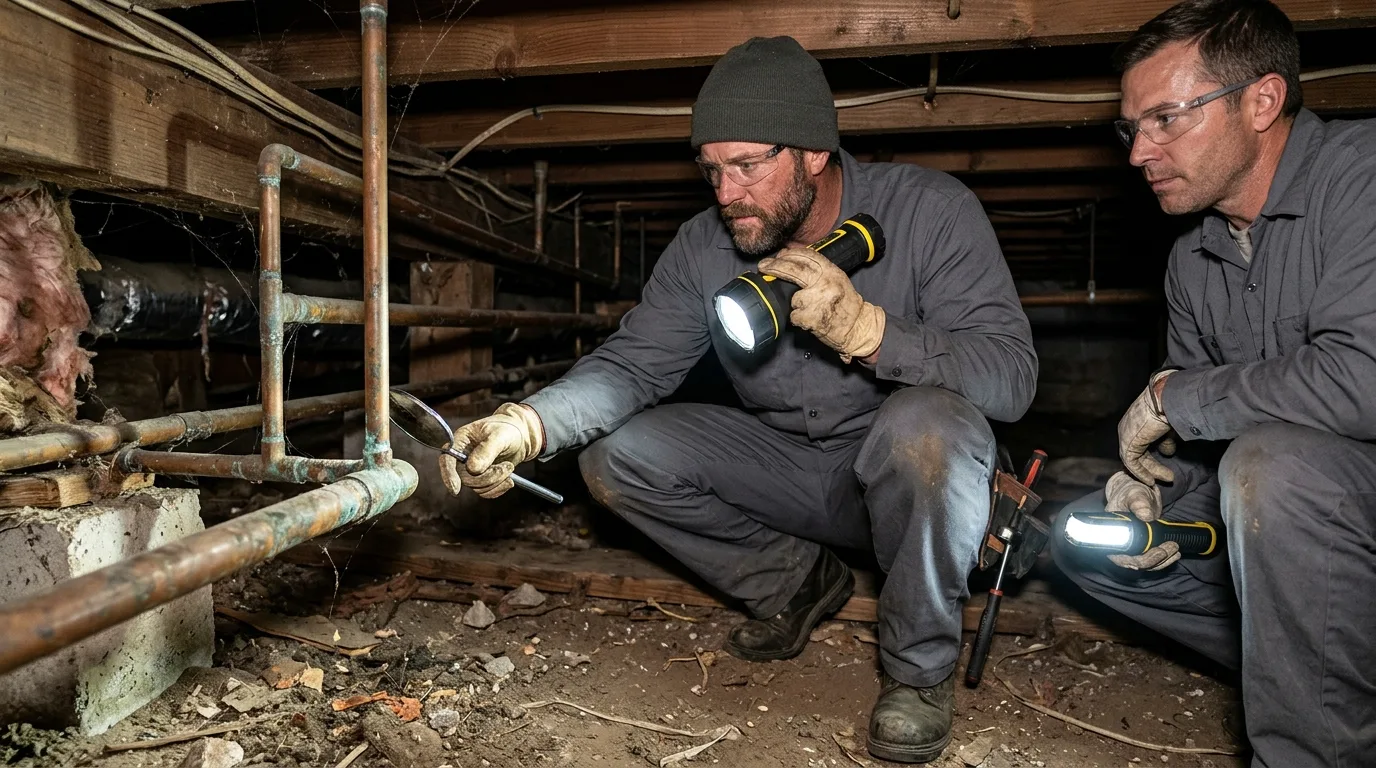
Causes
Why service lines fail in coastal Orange County
Galvanized steel reaching the end
Homes built before the 1970s often have a galvanized service line. Internal scale narrows the bore until pressure suffers, and external corrosion in damp, salty soil eats it from the outside. When both meet, you get pinholes and eventually a break. If your service line is galvanized, replacement rather than repair is usually the honest recommendation.
Aggressive, salty soil
Soil chemistry near the coast is harder on buried metal than inland ground. Copper service lines can develop external pitting, particularly where they pass through fill or under paving that traps moisture.
Ground movement and settling
Sandy soil moves. A line laid on poorly compacted fill, or crossing a trench cut later for another utility, is loaded unevenly and can shear at a fitting.
High static pressure
Municipal supply pressure in parts of the city runs high. Above roughly 80 psi, everything downstream ages faster, and a failing pressure regulator at the main is a common contributor to repeat failures.
Mechanical damage
A fence post, a tree stake, a landscaper’s trencher or a contractor’s auger. These are sudden, obvious and usually the least expensive repairs.
Undersized for the house
Additions, second bathrooms, ADUs and high-flow fixtures can outgrow an original half-inch or three-quarter-inch service. If pressure is fine at one fixture and poor when two run, the line may be the constraint rather than any single valve.
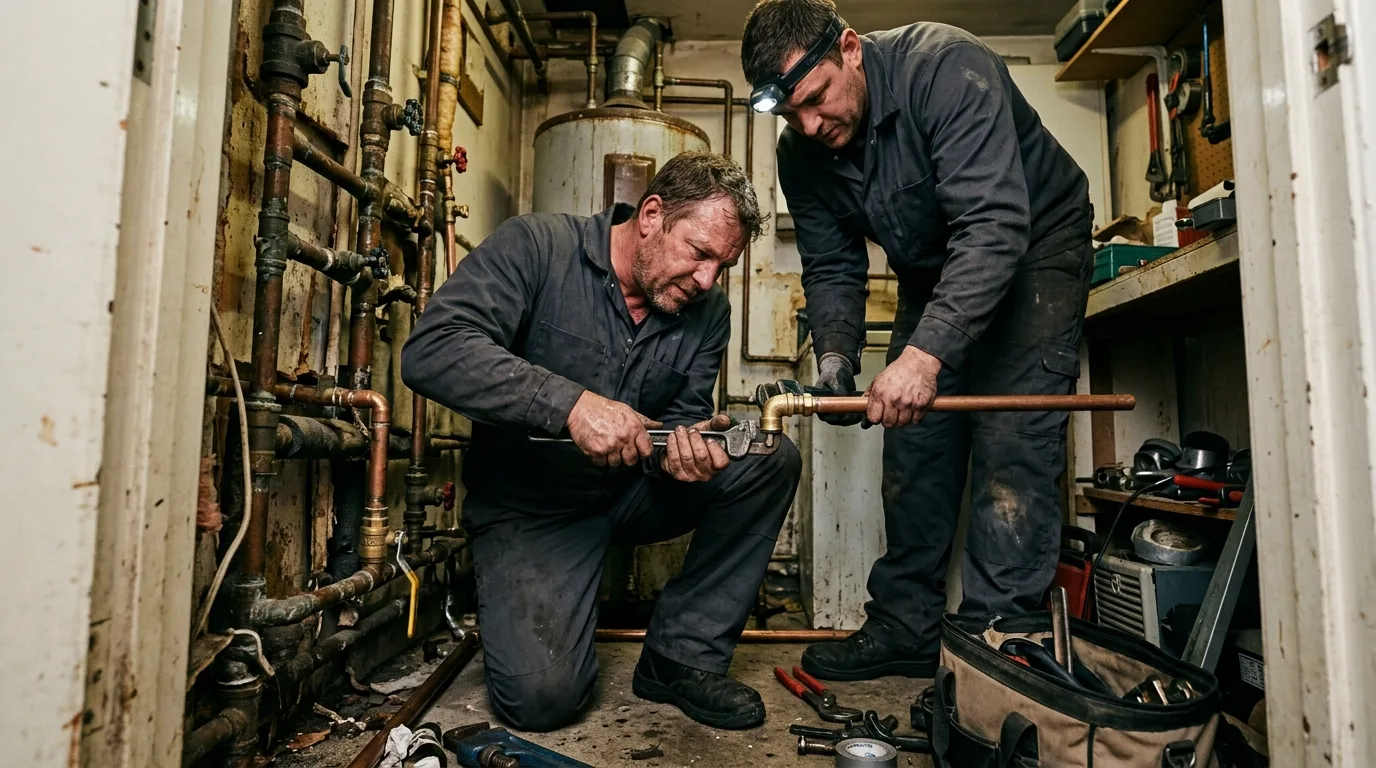
Repair options and what they involve
Spot repair. Locate the leak, excavate that point, cut out and replace the failed length. Right for mechanical damage or a single failure on otherwise sound pipe. Fast, contained, cheapest.
Full replacement by open trench. A new line laid along the route, usually in copper or approved plastic, correctly bedded and sleeved where it passes under paving. Straightforward, and the only option where the route has to change.
Directional boring. A new line pulled through a bore beneath the yard from a pit at each end. It spares driveways, decorative concrete and mature planting, and it is often the right call on a finished front yard. Not every route or soil suits it.
Reroute. Sometimes the shortest path is not the best one. Moving the line clear of a tree, a slab or a paved area can cost less over the long run than replacing it along the original route.
What else gets touched during the job
Service line work is the natural moment to deal with a corroded main shutoff, a missing or failed pressure regulator, and an accessible hose-bib tee. Adding a proper ball valve where a seized gate valve used to be is a small cost during an open excavation and a significant convenience during the next emergency.
Permits apply, and work in the parkway or sidewalk area involves the city. The meter itself and everything on the street side of it belong to the water utility. A plumber works from the meter into your property.
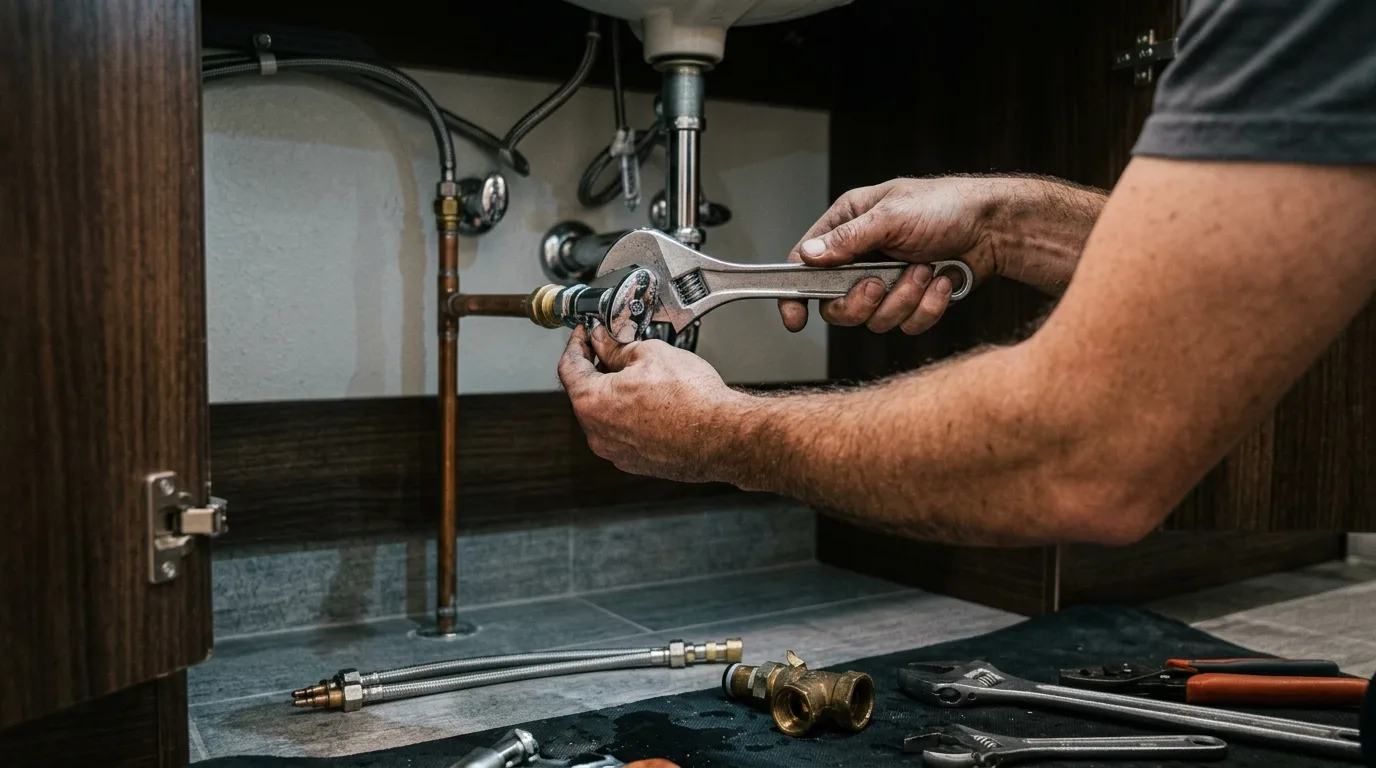
How the work runs
From wet lawn to new service
Prove where the loss is
Meter observation with the house valve open and closed separates a yard leak from an interior or under-slab leak in minutes.
Locate and mark
Acoustic locating finds the leak along the route, and the line is traced so any excavation is put in the right place.
Choose repair or replacement
Spot repair, open trench, bore or reroute, with restoration scope and pressure findings included in the quote.
Install, test, restore
The new line is pressure tested and disinfected where required, then the surface is backfilled and restored as agreed.
The house-valve test takes two minutes and tells us where to start.
Related work
What pairs with service line work
Where we send plumbers
Service line work across local soil and street conditions
Long front-yard runs in the postwar tracts along Adams, Garfield and Brookhurst; older galvanized services in Downtown, Oak View and Goldenwest; and damp, salty ground in the Harbour, Bolsa Chica and Sunset Beach.
Straight answers
Main water line questions
As a rule, everything from the meter into your property is the owner’s, and the meter and the main in the street belong to the water utility.
If water is surfacing in the street or around the meter box itself, report it to the city first. There is no sense paying to dig up your yard for their leak. A plumber can help you establish which side of the meter is losing water.
Close the house shutoff valve and watch the meter. Movement with the house isolated means the leak is in the buried line between meter and valve. No movement means the loss is inside or under the house.
That single test saves a great deal of diagnostic time, so do it before you call if you can safely reach both.
Often, with directional boring: a pit at each end and a new line pulled through beneath the surface. It suits finished front yards, driveways and decorative concrete.
Whether it is possible depends on the route, the depth, the soil and what other utilities are in the way. The plumber will tell you after tracing the line.
Copper and approved plastic service pipe are both used locally, and both are code compliant when installed correctly. Plastic resists the external corrosion that coastal soil causes; copper is proven and preferred by some inspectors and owners.
What matters as much as material is bedding, sleeving under paving, depth, and correct fittings at each end. Ask how the line will be protected where it passes under concrete.
Yes, for the working portion of the job. A spot repair may mean a few hours; a full replacement can mean most of a day.
The plumber will tell you the window in advance so you can fill containers and plan around it. On a hot summer day with a household of kids, that notice matters.
Sometimes. If the house has grown: an addition, a second bathroom, an ADU, high-flow fixtures. The original service may be the bottleneck, and upsizing during a replacement costs far less than doing it later.
It is not automatic. A plumber should base the recommendation on measured static pressure, flow at fixtures and the fixture count, not on a general preference for bigger pipe.
Yes. Water service replacement is permitted work in Huntington Beach, and anything extending into the parkway, sidewalk or street involves additional city requirements.
Ask for the permit number. Unpermitted buried work becomes your problem at resale, when a buyer’s agent asks for records that do not exist.
Backfill and compaction are part of the plumbing job. Finished restoration: concrete, pavers, sod, planting, irrigation repairs: varies by contractor and needs to be stated in the quote.
Get it in writing before work starts, including who repairs an irrigation line cut during excavation. That is the most common source of friction on yard work.
It can be. Galvanized service pipe scales internally, which reduces flow without any leak at all, and a failed pressure regulator produces the same complaint.
Testing separates them: a gauge on a hose bib reads static pressure, and comparing flow at different fixtures shows whether the restriction is general or local. That test comes before any digging.
More urgent than it feels. It is wasting water continuously, it is eroding soil beneath whatever sits above it, and small failures in corroded pipe do not stay small.
If it is losing enough to move the meter noticeably, treat it as a job for this week rather than this season.
Route, soil and paving decide it. We will explain which applies.
Soggy lawn, high bill
The line feeding your whole house deserves a proper diagnosis
Tell us what the meter does with the house valve closed. That one detail tells a plumber where the water is going before they arrive.
Serving every Huntington Beach neighborhood, plus the cities next door.