Disruption
Trenchless: two pits and equipment traffic. Open trench: a continuous excavation the length of the repair, plus a spoil pile beside it.
CIPP lining • Pipe bursting
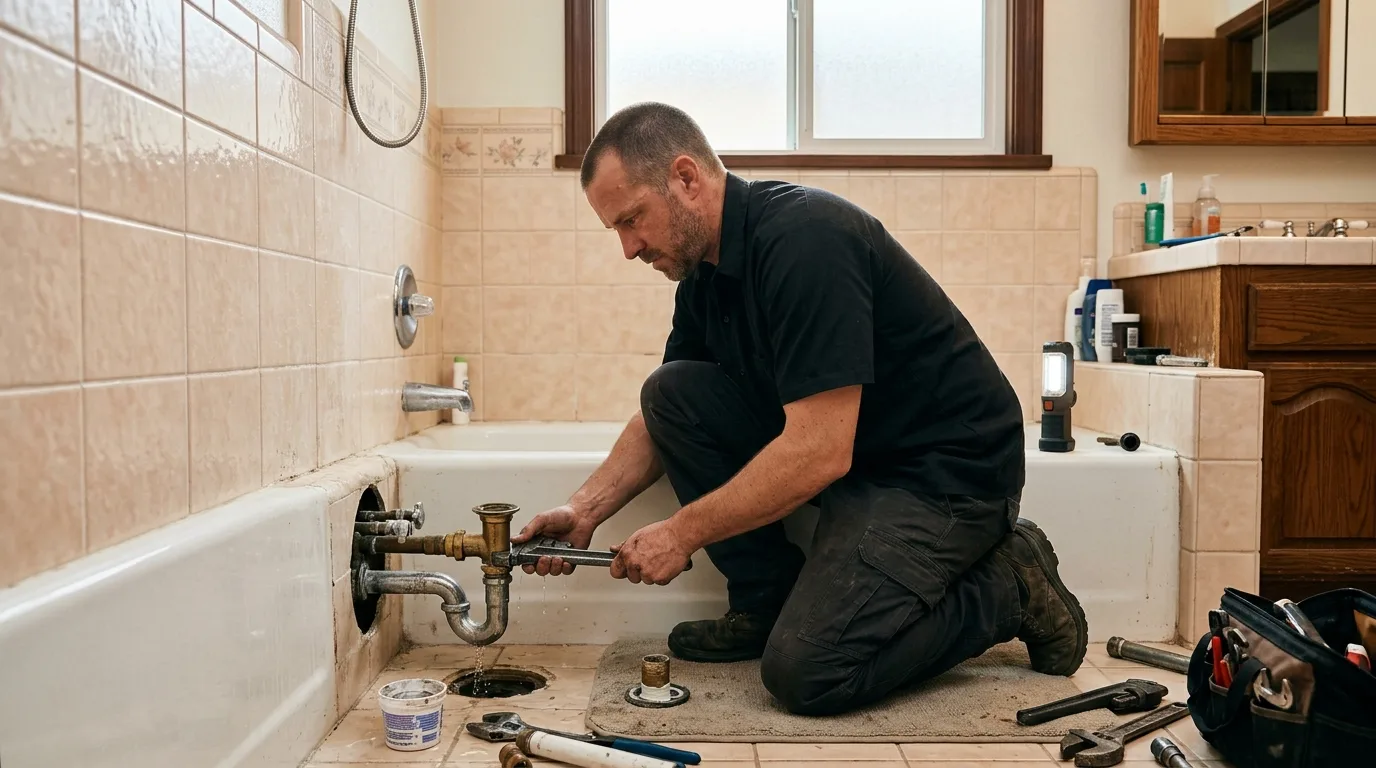
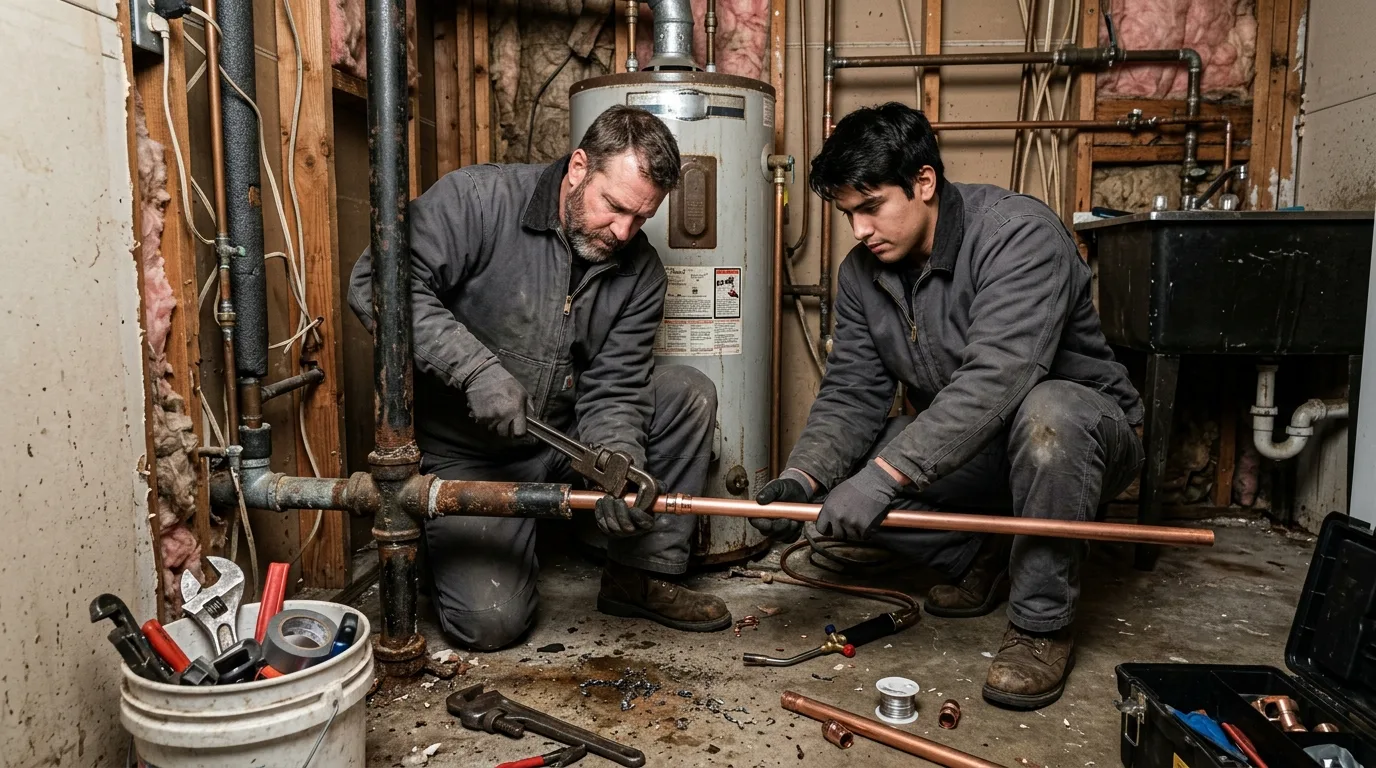
Replacing a lateral used to mean a trench across the front yard. On the right pipe, a cured liner or a bursting head does the same job from two access points.
Quoted for a trench? 657-337-7830
Trenchless is a method, not a miracle: the camera decides whether your pipe can host it.
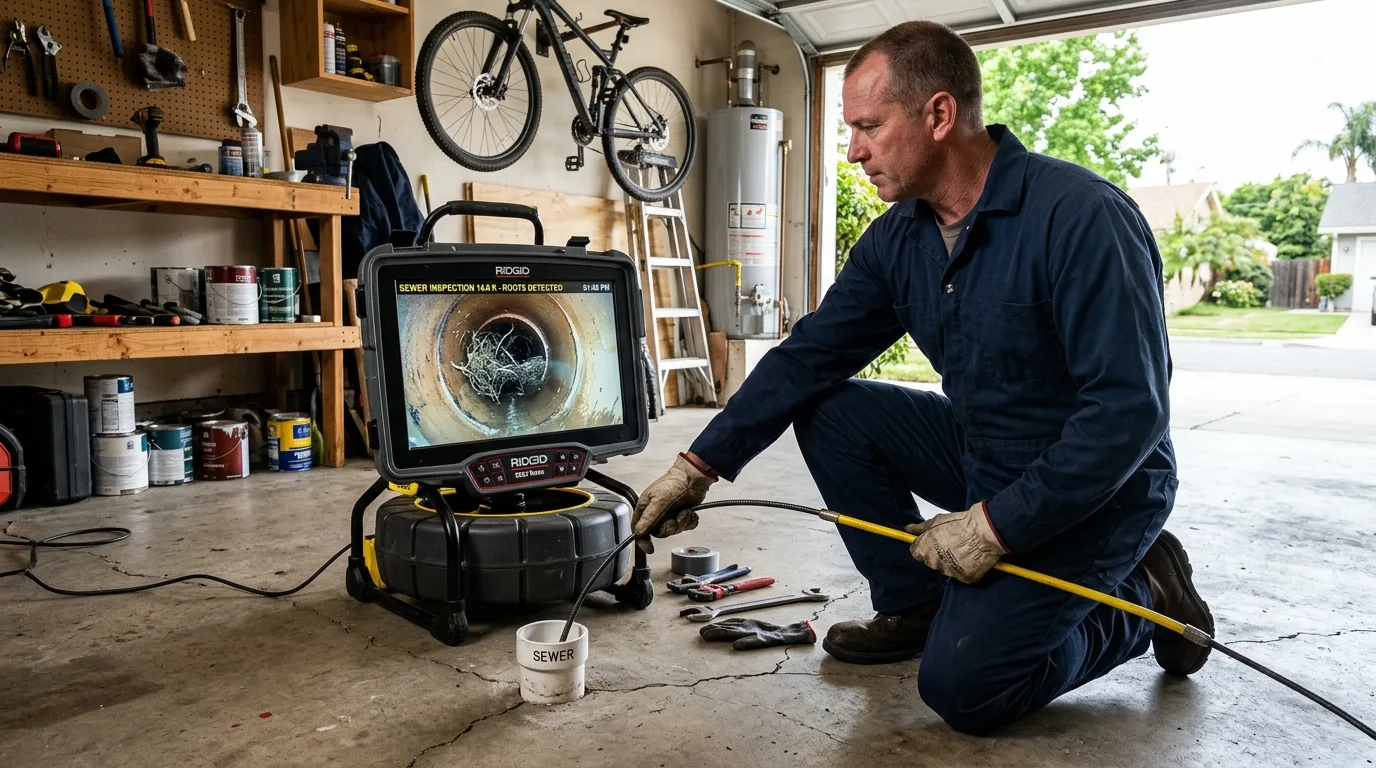
A cured liner has no joints for roots to re-enter, which is what ends the cycle of cutting them back.
Driveways, pavers, pool decks and mature planting over the line are generally left undisturbed.
Where coastal groundwater makes a deep trench difficult, trenchless is often the only sensible route.
Camera and locate confirm the host pipe can take a liner before anything is ordered.
The two methods
“Trenchless” covers two genuinely different techniques, and which one suits you depends on what the camera found.
Cured-in-place pipe (CIPP) lining. A felt or fiberglass liner saturated with resin is pulled or inverted into the existing pipe, inflated against the wall, and cured, with hot water, steam or UV light, into a hard, jointless pipe inside the old one. The host pipe becomes a mold. It seals cracks, stops root intrusion at joints, and bridges small offsets. It requires a host that still holds its shape, and it reduces internal diameter slightly, which rarely matters on a four-inch residential lateral.
Pipe bursting. A cone-shaped bursting head is winched through the old pipe, fracturing it outward into the surrounding soil while pulling a new fused HDPE pipe in behind it. This replaces rather than lines, so it works where the original pipe has failed structurally, and it can hold or increase diameter. It needs a pit at each end, enough soil room for the fragments to displace, and clearance from other utilities running alongside.
What neither can fix. A belly. If a section has sagged below grade, lining it produces a smooth pipe that still holds standing water, and bursting follows the same wrong path. Re-grading requires excavation, full stop. Any contractor offering to line away a belly is selling you a repeat visit.
Suitability
Root intrusion at multiple joints in otherwise round clay pipe. Cracked or corroded cast iron that still holds its shape. A line running under a finished driveway, a paved courtyard, a pool deck or mature landscaping. Long front-yard laterals where an open trench would mean rebuilding the whole yard. Properties near the water where a deep trench meets groundwater.
A collapsed section with no continuous host pipe. A significant belly needing re-grading. Severe offsets where the liner cannot pass or would leave a step. Deformed Orangeburg. Lines with multiple sharp bends that a liner cannot negotiate cleanly. In those cases open-cut replacement is not the contractor being lazy. It is the only method that produces a correct pipe.
Two local conditions push toward trenchless. First, groundwater: on the coastal side of the city: the Harbour, Sunset Beach, Downtown, the blocks behind Bolsa Chica. A deep trench can flood as fast as it is dug, requiring dewatering that adds cost and time. Second, hardscape: decades of front-yard improvement across the older tracts means driveways, decorative concrete and irrigated planting sit directly over most laterals.
Per foot, trenchless is usually more expensive than open trench. Total project cost frequently favors it, because the restoration line item: concrete, pavers, sod, irrigation, sometimes a tree: disappears. Compare quotes on the finished condition of your property, not on the plumbing alone.
Day one is preparation: the line is cleaned (usually jetted) so the liner bonds to pipe rather than to grease, and a final camera pass confirms the measurements. Access pits are opened, typically at the cleanout and near the city connection.
The liner is then wet out with resin, positioned and inflated. Curing takes a few hours depending on the method and pipe length, during which drainage is out of service. Plan for that, and for a portable toilet if the household is large. Once cured, service connections are reinstated and a verification camera run is recorded.
Expect equipment on the street or driveway, a boiler or UV rig running, and two modest excavations to backfill and restore. Most residential jobs run one to two days.
Lateral work is permitted and inspected in Huntington Beach, and work in the public right of way carries additional requirements. Ask for the permit number, and for the manufacturer’s liner warranty in writing alongside the contractor’s workmanship terms. They are separate documents with different lengths.
Keep the pre-repair and post-repair footage together. It is the record that the work was done properly, and it is the first thing a future buyer’s inspector will want.
How a trenchless job runs
The line is jetted and scoped so the liner bonds to bare pipe and the lengths are measured from real footage.
Pits at each end replace a trench along the run. Hardscape between them stays where it is.
The resin-saturated liner is positioned, inflated and cured in place. Drainage is offline for a few hours.
Connections are reopened, a camera pass is recorded, and the access pits are backfilled and restored.
Bring existing footage and we can often answer before dispatch.
Method comparison
Trenchless: two pits and equipment traffic. Open trench: a continuous excavation the length of the repair, plus a spoil pile beside it.
Trenchless: typically one to two days. Open trench: two days to a week depending on length, depth and groundwater.
Trenchless: minimal, confined to the pits. Open trench: concrete, pavers, sod, irrigation and planting along the whole run.
Trenchless: cracks, root intrusion, corrosion, minor offsets. Open trench: everything, including bellies and collapses.
Trenchless: none. It follows the existing path. Open trench: the line can be re-laid at the correct fall.
Lining: slightly reduced. Bursting: same or larger. Open trench: whatever the design calls for.
A contractor who only offers one method will only ever recommend one method.
Related work
Where we send plumbers
Finished front yards and driveways across South and Southeast Huntington Beach, the Adams and Garfield corridors and Seacliff, and high-groundwater ground in Huntington Harbour, Sunset Beach, Bolsa Chica and Downtown.
Straight answers
Manufacturers generally rate CIPP liners for a service life measured in decades, comparable to a new pipe, and the absence of joints removes the most common failure path.
Get the specific product warranty in writing. Terms differ between resin systems and between installers, and the contractor’s workmanship warranty is a separate document.
Slightly, in raw diameter. In practice flow often improves, because the new surface is smooth and the old pipe was narrowed by scale, roots or a rough interior.
On a standard residential lateral the reduction is not something you will notice. On an undersized commercial line it is worth calculating rather than assuming.
No, and that is the single most important thing to understand about trenchless. It needs a host pipe that still holds its shape and a path the liner can negotiate.
Collapses, significant bellies, severe offsets, deformed Orangeburg and multiple tight bends all point back to excavation. The camera and locate answer this before any money is committed.
Usually not. The point of the method is that hardscape between the two access pits is left alone.
The pits themselves have to go somewhere, and occasionally the best location for one is at the edge of paving. The contractor should show you where they intend to dig before you sign.
Typically a few hours during curing, sometimes longer on a large or complex job. You will be told the window in advance.
Plan for it the way you would plan for water being off: no laundry, no dishwasher, and for a big household ask about a portable toilet for the day.
Per foot of pipe, usually not. As a finished project, frequently yes: once you add back the concrete, pavers, sod, irrigation and planting that an open trench destroys.
Ask both quotes to state the restoration scope explicitly. That is where the real comparison lives.
Yes. Sewer lateral work in Huntington Beach is permitted and inspected regardless of method, and work extending into the public right of way carries extra requirements.
Ask for the permit number and who schedules inspection. A contractor avoiding permits is a contractor to avoid.
Not through the liner itself. It is jointless, which removes the openings roots exploit. That is the main structural benefit of the method.
Roots can still intrude at an unlined connection or beyond the lined section, which is why the extent of the lining matters and should be stated on the quote.
Yes. Sectional or “patch” liners repair a defined length, which suits a single cracked run in an otherwise sound line.
It is cheaper than a full-length liner, and it is only appropriate where the footage shows the rest of the pipe genuinely does not need work.
A post-installation camera pass, recorded and given to you, is the standard. It shows a continuous, smooth, correctly reinstated line.
Keep it with the pre-repair footage, the permit and both warranties. That file is worth real money when you sell the house.
The footage decides: not the equipment on the truck.
Before you lose the front yard
Send us what you have: footage, a quote, or just the symptoms. We will tell you whether trenchless is genuinely an option for your line.
Serving every Huntington Beach neighborhood, plus the cities next door.