Jams • Leaks • Replacements
Garbage disposal repair in Huntington Beach: unjammed today or replaced properly
A humming disposal is usually a jam and a five-minute fix. A leaking one is usually the end. Knowing which you have saves you buying a unit you did not need.
Sink out of action? 657-337-7830
Never put your hand in a disposal. Switch it off at the breaker first, and use the hex key underneath instead.
At a glance
Jams Cleared
Foreign objects, bone fragments and fibrous waste removed and the impellers freed.
Leaks Diagnosed
A sink flange, a drain connection and a cracked housing are three different problems with three different prices.
Electrical Checked
Reset switch, wiring, switch and outlet verified before anyone declares a motor dead.
Swap Priced Clearly
If the unit is finished, you get the replacement cost including fitting and the old unit removed.
Before you call
Three checks that fix half of these calls
Disposals fail in a small number of predictable ways, and two of them you can resolve yourself in a few minutes. Turn the switch off before doing any of this, and never put a hand inside the chamber.
1. The reset button. Underneath the unit there is a small red or black reset button. Thermal overload trips it when the motor is stressed, and pressing it back in restores a unit that seems completely dead. This is the single most common “my disposal died” call.
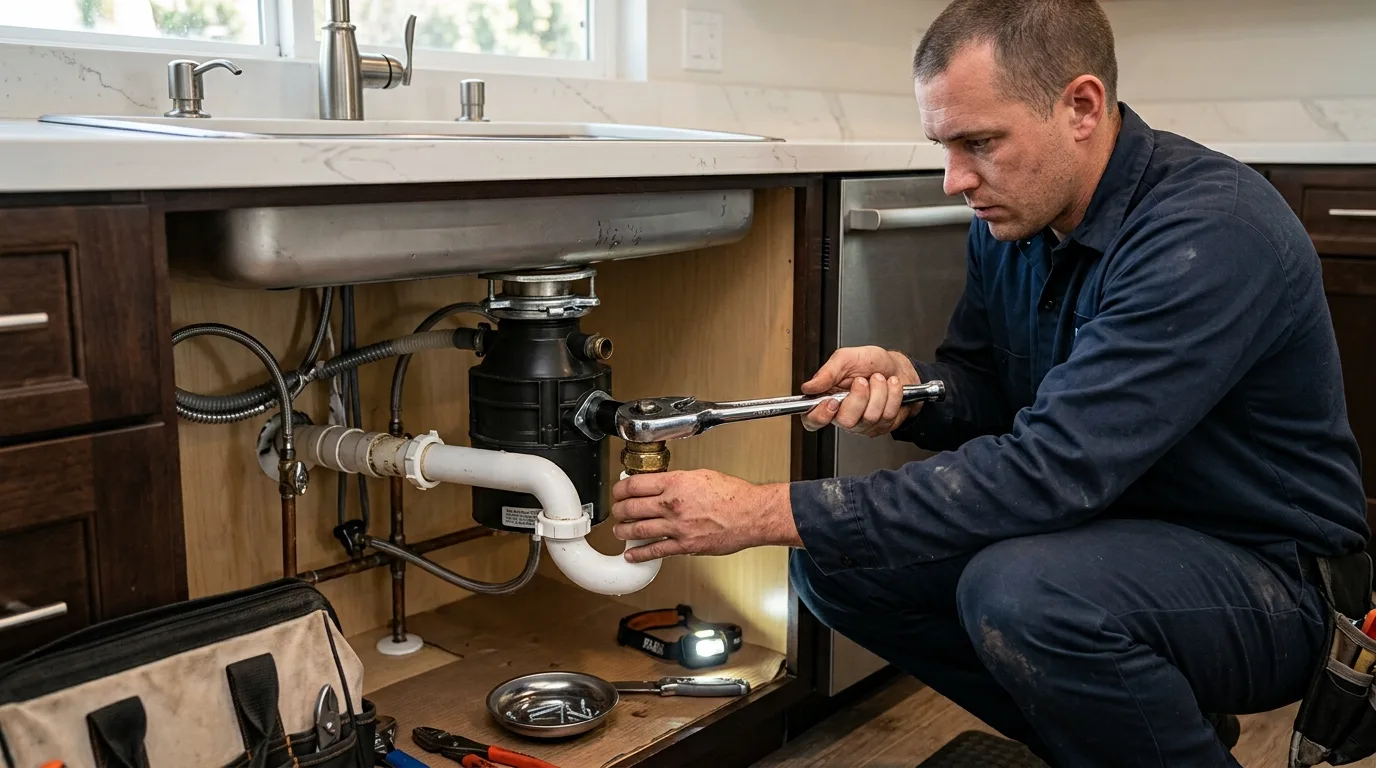
2. The hex key. If the unit hums but does not turn, the impeller plate is jammed. There is a hex socket in the center of the underside: the supplied key, or a quarter-inch Allen wrench, rocks the plate back and forth to free it. Then remove whatever caused the jam with tongs, not fingers.
3. The breaker and switch. Nothing at all: no hum, no click: often means a tripped breaker, a failed wall switch, or a disposal plugged into an outlet controlled by something else. Worth checking before anyone buys a motor.
What you should not do: run caustic drain cleaner into a disposal, force the impellers with a screwdriver through the drain opening, or keep flipping the switch on a humming unit. The last one burns motors.
If the unit still hums after freeing the plate, trips repeatedly, makes a grinding metallic noise, or is wet underneath, it needs a plumber.
Diagnosis
Repairable faults versus terminal ones
Repairable
Jams from cutlery, bottle caps, fruit pits or fibrous waste. Tripped thermal overload. A failed wall switch or wiring fault. A leaking sink flange, which is a reseat and new plumber’s putty. A leaking drain elbow or dishwasher inlet, which is a gasket or a fitting. A blocked discharge line, which is a drain problem rather than an appliance problem.
Terminal
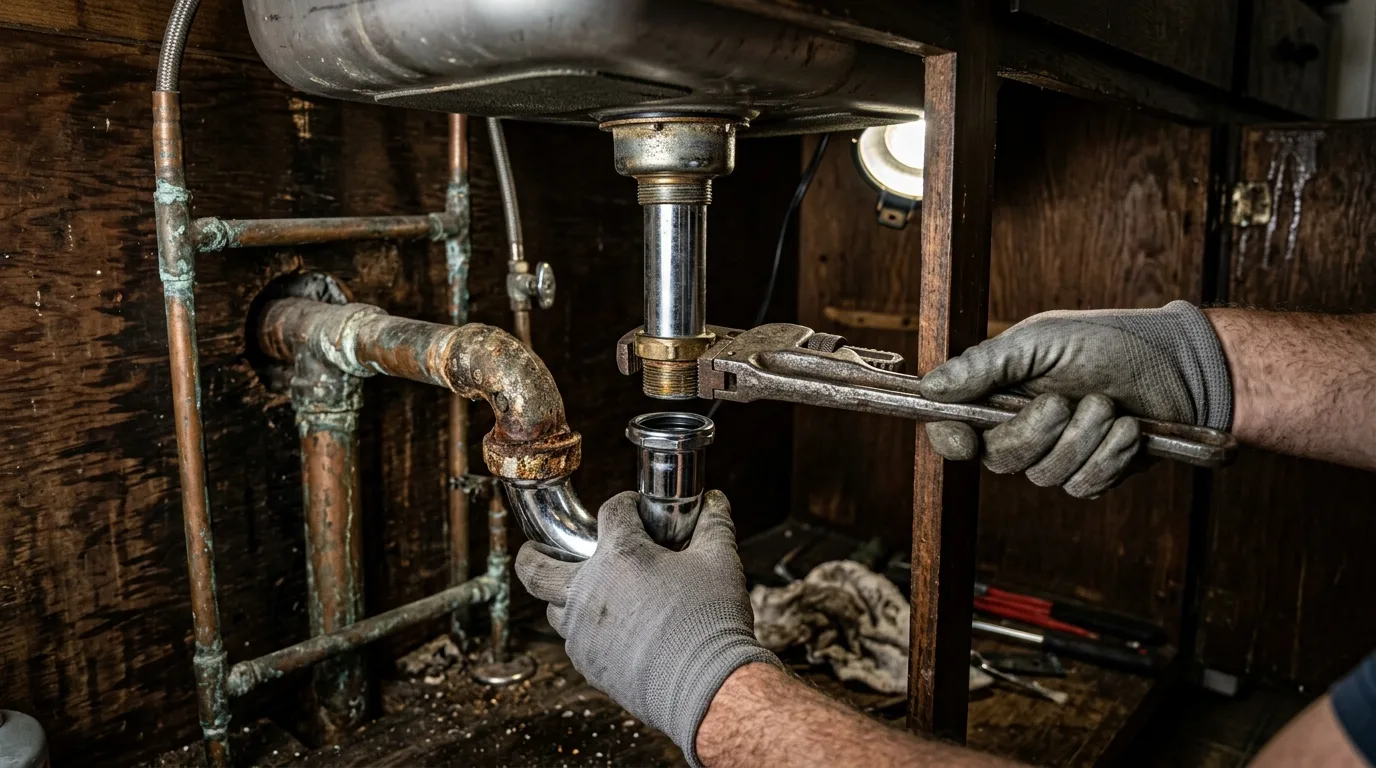
Water weeping from the body of the unit means the housing has corroded through, and no repair fixes that. A motor that hums with a freed plate, trips instantly, or grinds metal-on-metal is finished. Badly worn impellers that no longer break down waste are a replacement too, and on an old unit the economics almost never favor repair.
Choosing a replacement
Horsepower matters less than people think for a normal household: half to three-quarter horsepower suits most homes, and a full horsepower unit makes sense for heavy cooking or a large family. What matters more is grinding stages, sound insulation, and whether the mounting matches your existing sink assembly. Stainless grinding components resist corrosion better in this water.
Continuous-feed units are standard. Batch-feed models, operated by a stopper, are safer in households with young children and worth considering if that applies.
Septic and drainage considerations
Almost all local properties are on city sewer, so disposal use is normal here. What still matters is what goes down: grease, coffee grounds, eggshells and starchy waste contribute directly to the kitchen-line blockages described on our drain cleaning page. A disposal grinds food; it does not make grease disappear.
What a proper replacement includes
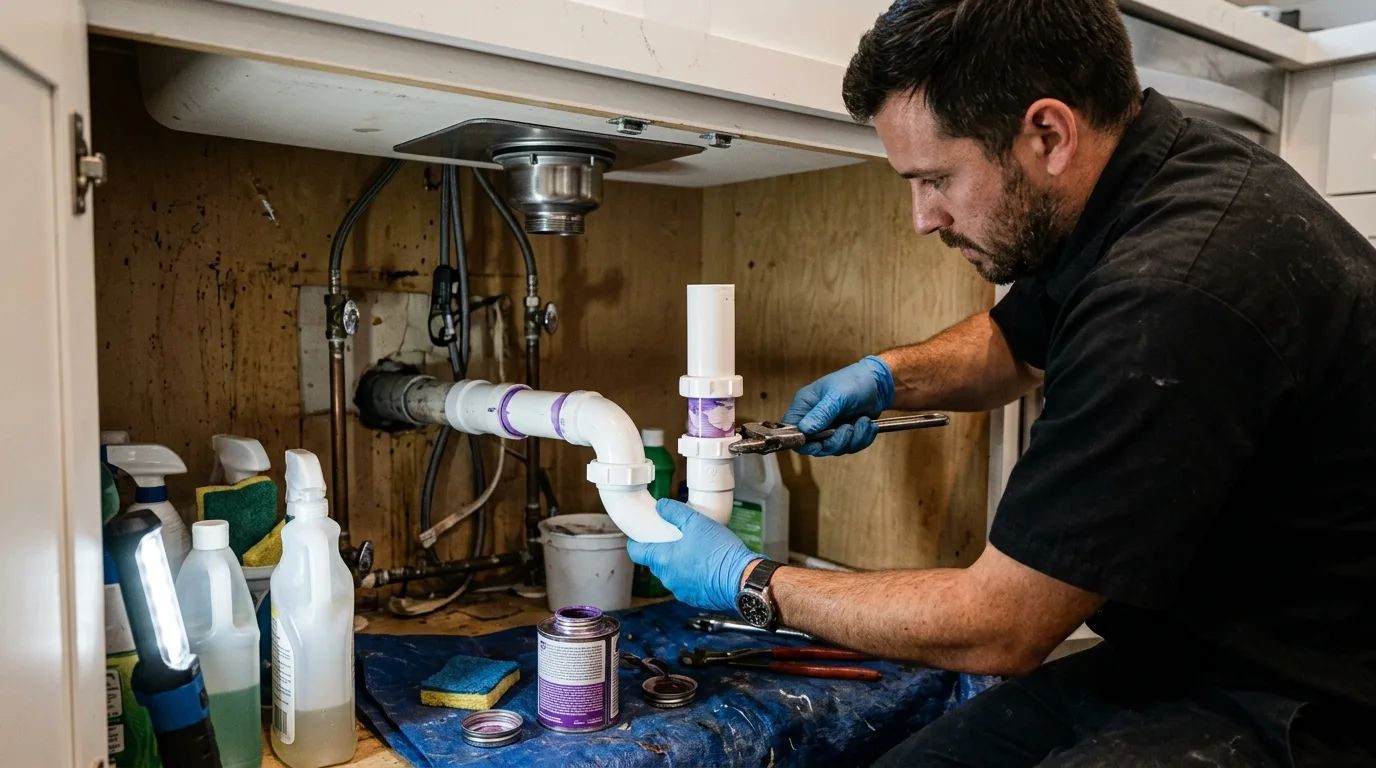
Power isolated at the breaker, old unit disconnected and removed, and the sink flange inspected rather than reused blindly. A corroded flange is the most common source of a leak that reappears after a new disposal is fitted.
New mounting assembly where the design differs, discharge tube and elbow fitted with fresh gaskets, dishwasher inlet connected correctly with the plug knocked out only when a dishwasher is present, and the trap arm checked for slope. Then a full water test with the unit running, watching every joint.
The electrical side is worth mentioning: hardwired units and cord-and-plug units are both common, and swapping between them properly is not a matter of twisting wires under a sink. A plumber will tell you when an electrician is the right call.
Rentals and vacation properties
Disposals in short-term rentals take abuse from guests who do not know the house, and jams are the single most common call from those properties. A robust unit with good overload protection, plus a small laminated note by the sink about what not to put down it, prevents a striking number of service visits.
What lives in the sink and should not
Cooking oil and grease, coffee grounds, eggshells, potato peel, celery and artichoke, rice and pasta, bones, fruit pits, and anything fibrous or stringy. Cold water while grinding, hot water after, and a habit of wiping greasy pans with a paper towel first will do more for your kitchen line than any appliance choice.
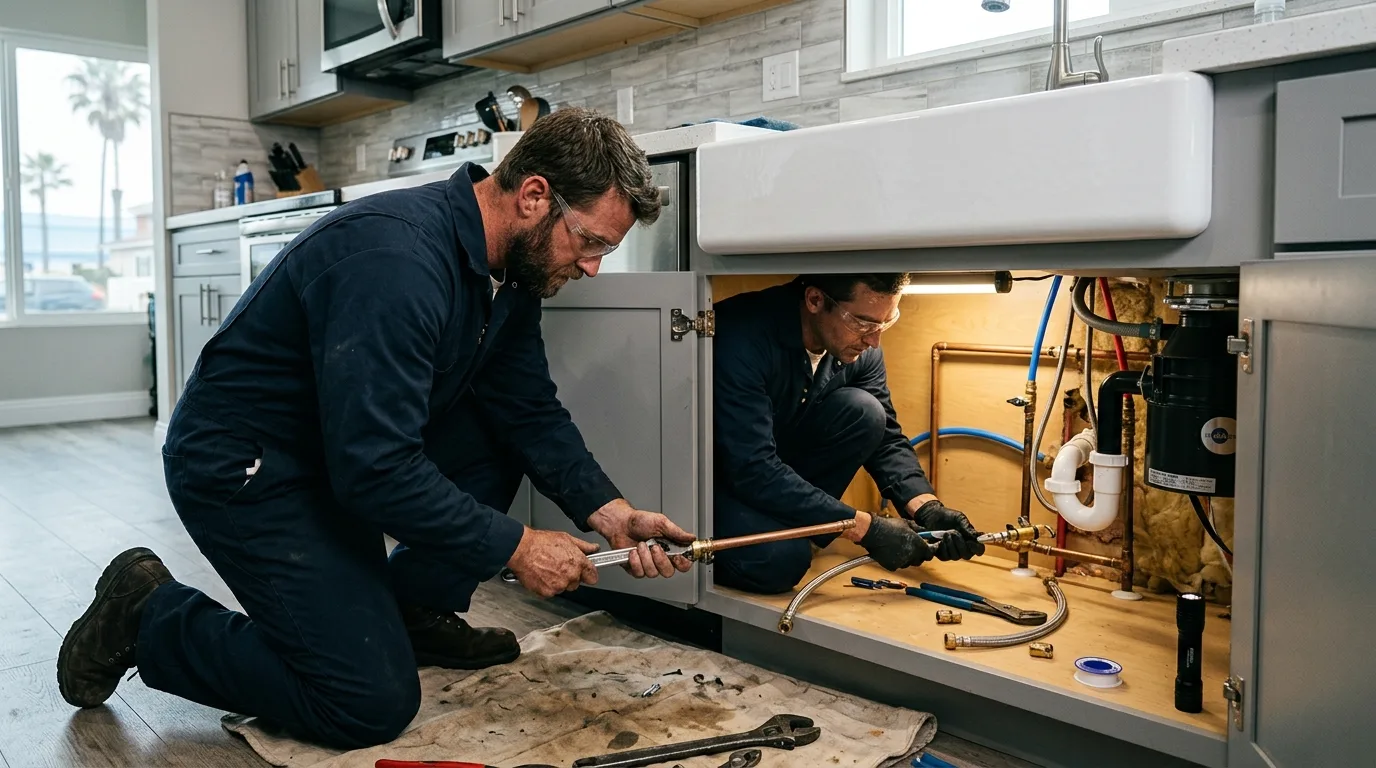
The visit
Diagnose before replacing
Electrical and reset checked
Breaker, switch, wiring and thermal overload verified first, because a dead unit is often a live problem elsewhere.
Jam cleared, plate freed
The chamber is cleared safely and the impellers freed and tested under load.
Leak source identified
Flange, drain elbow, dishwasher inlet or housing. Each is a different repair and a different cost.
Repair or replace, priced
If the unit is finished you get the swap price fitted, with the old one taken away.
Quick job, quick slot: usually same or next day.
Related work
Kitchen plumbing nearby
Where we send plumbers
Disposal calls across the city
Family kitchens throughout the inland tracts, heavy-use rentals near Downtown and the pier, and condo kitchens in Seacliff and the Harbour, plus the cities listed below.
Straight answers
Garbage disposal questions
Usually not. A hum with no rotation means the impeller plate is jammed, and freeing it with the hex socket underneath resolves most of these.
What kills motors is repeatedly flipping the switch on a jammed unit. Switch it off, free the plate, remove the obstruction with tongs, then press the reset button.
The reset button underneath first: thermal overload trips more often than anything else fails. Then the breaker, then the wall switch.
A surprising number of “dead disposal” calls turn out to be a failed switch or a tripped breaker, which is why the plumber checks the electrical side before condemning the appliance.
It depends where from. A leak at the sink flange, the drain elbow or the dishwasher inlet is a repair: gaskets, putty and correct reassembly.
Water weeping from the body of the unit is different: the housing has corroded through and it needs replacing.
A decent unit in a normal household lasts many years. Heavy use, hard water and a diet of grease and fibrous waste shorten that considerably.
Rentals see the shortest lives, mostly because guests put things down them that no disposal is designed for.
Half to three-quarter horsepower suits most households comfortably. A full horsepower unit is worth it for heavy cooking, a large family, or a property where a jam is genuinely disruptive.
Grinding stages, sound insulation and corrosion-resistant components matter as much as raw power. So does whether the mount matches your existing sink assembly.
No. Caustic products sit in the chamber and the trap, attack metal components and seals, and create a hazard for whoever opens the plumbing next.
If a disposal drains slowly, the problem is the line rather than the appliance. That is drain work, not appliance work.
Because a disposal grinds food but does nothing about grease. Fats coat the pipe wall and trap the ground particles the disposal produces.
On a line that has clogged repeatedly, jetting removes the coating rather than just boring through it. Cabling alone tends to buy a few months.
Usually, provided there is a suitable sink opening, room in the cabinet and appropriate electrical supply nearby. The drain arrangement may also need adjusting.
If new wiring or a switch is required, that is electrical work. The plumber will tell you what is needed before starting.
They are meaningfully safer in a household with young children, because the unit only runs with the stopper in place.
The trade-off is convenience: you cannot feed waste continuously while it runs. It is a genuine choice rather than a compromise.
Commonly, yes: the dishwasher discharges into an inlet on the disposal. The plug in that inlet has to be knocked out during installation, and a forgotten plug is a classic cause of a dishwasher that will not drain.
If you have no dishwasher, that inlet stays plugged. Mention it either way when you book so the fitting is right first time.
Repair cost versus replacement, stated honestly on the phone where possible.
Sink out of action
Most disposal calls are cheaper than people expect
Tell us whether it hums, trips, leaks or does nothing at all. That one detail usually tells the plumber what to bring.
Serving every Huntington Beach neighborhood, plus the cities next door.